

Small businesses face an unprecedented challenge in 2026: protecting their digital assets from an ever-expanding range of threats. Data protection systems have evolved from simple backup solutions into comprehensive frameworks that safeguard information through multiple layers of security, recovery capabilities, and compliance measures. For organizations in Lethbridge and across Alberta, understanding these systems isn't just about avoiding disaster, it's about maintaining operational continuity and customer trust. The right approach combines technology, processes, and expertise to create a resilient information infrastructure that supports business growth while minimizing risk.
Understanding Data Protection Systems Architecture
Modern data protection systems encompass far more than traditional backup software. These integrated platforms combine multiple technologies to protect information throughout its lifecycle, from creation to deletion.
Core Components of Effective Protection
A comprehensive system includes several critical elements working in harmony. Backup infrastructure captures data at regular intervals, creating recovery points that allow businesses to restore operations after incidents. Encryption mechanisms protect information both at rest and in transit, ensuring unauthorized parties cannot access sensitive data. Access controls regulate who can view, modify, or delete specific information, implementing the principle of least privilege across the organization.
The foundation of any robust system lies in its ability to address multiple threat vectors simultaneously:
- Ransomware attacks that encrypt business data
- Hardware failures that compromise storage devices
- Human errors that result in accidental deletion
- Natural disasters affecting physical infrastructure
- Insider threats from malicious or negligent employees

Data Classification and Priority Levels
Not all information requires the same level of protection. Effective data protection systems implement classification schemes that categorize information based on sensitivity and business impact. Critical data includes customer records, financial information, and intellectual property that demands the highest level of protection with minimal recovery time objectives. Important data encompasses operational information that supports daily activities but allows for slightly longer recovery windows. Standard data includes general business correspondence and documents with lower sensitivity requirements.
| Data Category | Recovery Time Objective | Backup Frequency | Retention Period |
|---|---|---|---|
| Critical | 1-4 hours | Continuous/Hourly | 7+ years |
| Important | 4-24 hours | Daily | 3-5 years |
| Standard | 24-72 hours | Weekly | 1-2 years |
This classification approach allows organizations to allocate resources efficiently while ensuring compliance with data security standards and industry regulations.
Implementing Backup and Recovery Strategies
The 3-2-1 backup rule remains a cornerstone principle for data protection systems in 2026, though many organizations now extend it to 3-2-1-1-0 for enhanced security.
Modern Backup Methodologies
Full backups create complete copies of all data at specific points in time, providing comprehensive recovery options but requiring significant storage capacity and time. Incremental backups capture only changes since the last backup, optimizing storage and speed while complicating restoration processes. Differential backups copy all changes since the last full backup, balancing storage efficiency with recovery simplicity.
Cloud-based data protection systems have transformed how small businesses approach backup infrastructure. Organizations no longer need to maintain expensive on-premises equipment or manage complex tape rotation schedules. Instead, automated systems continuously replicate data to secure offsite locations, providing geographic redundancy without manual intervention.
The evolution toward immutable backups has become essential for defending against ransomware. These protected copies cannot be encrypted, deleted, or modified even if attackers gain administrative access to primary systems. This capability has become a standard requirement rather than an optional feature.
Recovery Testing and Validation
Creating backups represents only half the equation. Regular testing ensures data protection systems will perform when needed most. Quarterly recovery drills validate that backup files remain intact and restoration procedures work as designed. Annual disaster recovery simulations test the entire organization's ability to resume operations using protected data.
Many businesses discover gaps in their protection only when attempting actual recovery. Testing schedules should include:
- File-level restoration from various recovery points
- Complete system restoration to different hardware
- Database recovery and consistency verification
- Application functionality validation post-recovery
- Documentation review and procedure updates
Organizations that partner with managed IT service providers gain access to specialized expertise and testing resources that internal teams often lack. For businesses exploring comprehensive solutions, reviewing options at Delphi Systems Inc. can provide insights into professional-grade protection strategies.
Security Measures Within Protection Frameworks
Data protection systems must defend information against both external attacks and internal vulnerabilities through multiple security layers.
Encryption and Access Management
Encryption at rest protects stored data from unauthorized access if storage media is stolen or improperly disposed. Encryption in transit secures information moving between systems, preventing interception during transmission. Modern data protection systems implement AES-256 encryption as a baseline standard, with many adding additional layers for highly sensitive information.
According to research on data leakage protection systems, organizations must address multiple sharing, communicating, and computing environments to prevent unauthorized data exposure. This holistic view informs how comprehensive systems approach security across the entire information lifecycle.
Access management extends beyond simple passwords. Multi-factor authentication requires users to verify their identity through multiple means before accessing protected data. Role-based access controls ensure employees can only reach information necessary for their specific job functions. Audit logging tracks who accessed what data and when, creating accountability and enabling forensic analysis after incidents.

Threat Detection and Response
Advanced data protection systems incorporate behavioral analysis that identifies unusual access patterns or data transfer activities. User and entity behavior analytics (UEBA) establish baseline patterns for how employees interact with data, flagging anomalies that might indicate compromised credentials or insider threats. Data loss prevention (DLP) tools monitor and block attempts to transfer sensitive information outside approved channels.
Real-time alerting capabilities notify administrators of potential security events:
- Multiple failed login attempts from single accounts
- Large-scale data downloads outside normal patterns
- Access attempts from unusual geographic locations
- Privilege escalation activities
- Modifications to backup configurations
Response protocols should define specific actions for different alert types, ensuring rapid containment of potential breaches before significant damage occurs.
Compliance and Regulatory Considerations
Data protection systems must align with industry regulations and privacy laws that govern how organizations handle sensitive information.
Regulatory Requirements by Sector
Healthcare organizations must comply with privacy regulations protecting patient information, requiring specific security controls and breach notification procedures. Financial institutions face stringent requirements around customer data protection and transaction security. Professional service firms handling client information must demonstrate adequate safeguards to maintain confidentiality.
The Advanced Data Protection Control specification provides standardized mechanisms for enhancing personal data protection and consent management, particularly relevant for businesses handling customer information across digital channels.
| Regulation Type | Key Requirements | Retention Period | Encryption Standard |
|---|---|---|---|
| Privacy Laws | Consent management, breach notification | Varies by jurisdiction | AES-256 minimum |
| Financial | Transaction logging, audit trails | 7 years | FIPS 140-2 |
| Healthcare | Access controls, de-identification | 6+ years | HIPAA-compliant |
Documentation and Audit Trails
Compliance demands comprehensive documentation of data protection policies, procedures, and implementation details. Data inventory catalogs identify what information the organization collects, where it resides, and how it's protected. Processing activity records document how data flows through systems and which parties have access. Incident response plans outline steps for detecting, containing, and recovering from security events.
Regular compliance audits verify that data protection systems operate according to documented procedures and regulatory requirements. These assessments identify gaps before they become violations, allowing proactive remediation. Third-party auditors often provide additional credibility when demonstrating compliance to customers, partners, or regulatory bodies.
Integration With Business Operations
Effective data protection systems support business objectives rather than hindering productivity through excessive restrictions or complexity.
Balancing Security and Usability
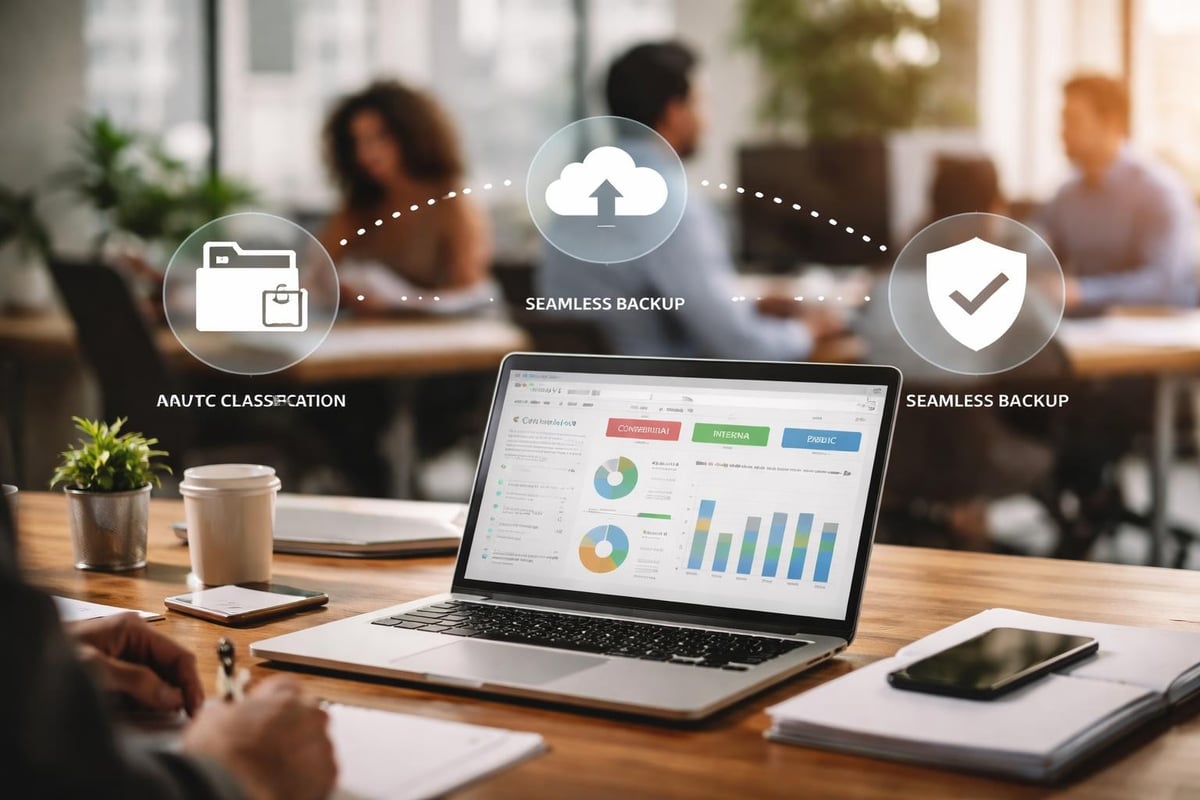
Automated workflows minimize manual intervention while maintaining protection standards. Systems should automatically classify new data based on content analysis, apply appropriate protection measures, and initiate backup processes without requiring employee action. Seamless authentication allows authorized users to access needed information without frustrating delays or complicated procedures.
Small businesses particularly benefit from managed solutions that handle complexity behind the scenes. Organizations can maintain enterprise-grade protection without dedicating internal resources to constant monitoring and maintenance. For insights on comprehensive IT management approaches, the Delphi Systems blog offers practical guidance tailored to small business needs.
Scalability and Future-Proofing
Data protection systems must accommodate business growth without requiring complete replacement. Modular architectures allow organizations to add capacity and features as needs expand. Cloud-native platforms eliminate concerns about physical infrastructure limitations, scaling resources dynamically based on current requirements.
Technology evolution demands systems that adapt to emerging threats and capabilities. Regular updates should introduce new security features, protection mechanisms, and integration options without disrupting existing operations. Vendor partnerships ensure access to latest capabilities while maintaining stability of proven components.
Cost Optimization Strategies
Investment in data protection systems delivers measurable returns through risk mitigation and operational efficiency gains.
Total Cost of Ownership Analysis
Direct costs include software licenses, storage infrastructure, and network capacity required for backup operations. Indirect expenses encompass staff time for system management, testing activities, and compliance documentation. Opportunity costs reflect resources diverted from revenue-generating activities to data protection tasks.
Managed service models transform unpredictable capital expenditures into consistent operational expenses. Fixed-rate structures provide budget certainty while ensuring access to enterprise-grade capabilities typically beyond small business budgets. This approach eliminates costs associated with hiring specialized security personnel or maintaining redundant infrastructure.
Consider these factors when evaluating protection investments:
- Average cost per incident without adequate protection
- Regulatory fines for compliance failures
- Revenue loss during extended downtime
- Reputational damage from data breaches
- Customer churn following security incidents
Resource Allocation and Prioritization
Strategic investment focuses resources on protecting information that drives business value. Risk assessments identify which data losses would cause the most significant business impact, guiding allocation decisions. Cost-benefit analysis compares protection expenses against potential loss scenarios, ensuring rational investment levels.
Organizations should review protection spending annually, adjusting allocations based on changing threat landscapes and business priorities. Emerging technologies sometimes offer superior protection at lower costs than legacy approaches, making periodic reassessment valuable.
Selecting the Right Protection Partner
Choosing appropriate data protection systems and support providers significantly impacts security outcomes and operational efficiency.
Evaluation Criteria for Solutions
Technical capabilities must align with specific business requirements, including supported data sources, recovery time objectives, and integration options. Reliability metrics demonstrate system uptime, successful backup percentages, and recovery success rates. Support quality ensures rapid response when issues arise, particularly during critical recovery scenarios.
Guidance from authoritative sources on system protection emphasizes the importance of reliable information repositories and data integrity measures. These principles should guide selection criteria for business-critical protection systems.
Vendor evaluation should examine:
- Proven track record with similar organizations
- Financial stability ensuring long-term viability
- Investment in research and development
- Customer satisfaction ratings and references
- Certification and compliance credentials
Local Expertise and Responsiveness
Geographic proximity matters when rapid response is essential. Providers familiar with local business environments understand regional compliance requirements, common infrastructure configurations, and industry-specific challenges. This knowledge translates into more effective solutions and faster problem resolution.
Service level agreements should specify maximum response times for various incident types, escalation procedures, and guaranteed uptime percentages. Clear communication channels ensure businesses can reach support personnel when needed most, without navigating complex phone trees or waiting for callbacks during emergencies.
Data protection systems represent essential infrastructure for modern businesses, combining backup capabilities, security controls, and compliance measures into comprehensive frameworks that safeguard critical information assets. The investment in proper protection delivers measurable value through risk reduction, operational continuity, and customer confidence. For small businesses in Lethbridge seeking professional-grade data protection without the complexity of self-management, Delphi Systems Inc. offers tailored managed IT services with fixed-rate pricing that transforms protection from a burden into a competitive advantage, allowing you to focus on growing your business while experts ensure your data remains secure and accessible.

