

Small businesses increasingly rely on cloud infrastructure to drive efficiency, scalability, and remote collaboration. However, this digital transformation introduces significant security challenges that demand strategic planning and continuous vigilance. Organizations migrating critical systems to the cloud must understand that security is no longer confined to physical network perimeters but extends across distributed environments, multiple access points, and various service providers. Establishing robust cloud and network security protocols protects sensitive data, ensures business continuity, and maintains customer trust in an increasingly hostile threat landscape.
Understanding the Shared Responsibility Model
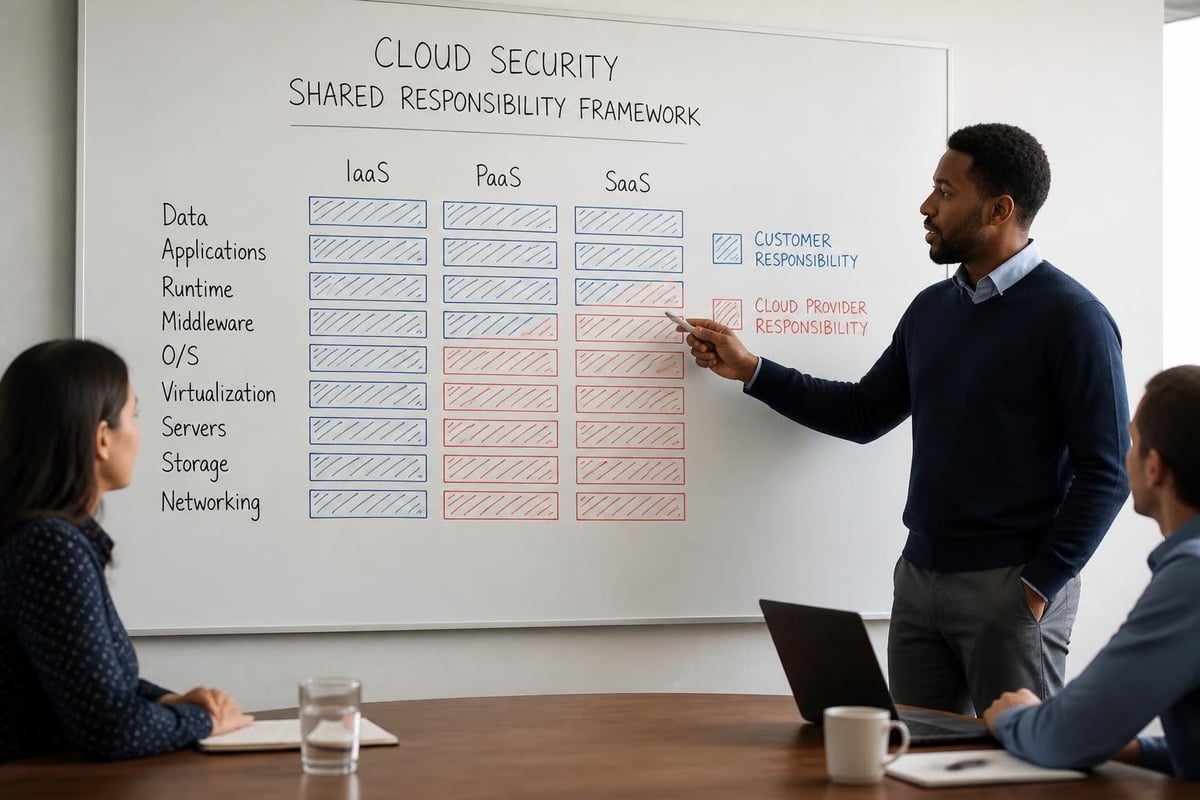
When businesses adopt cloud services, they enter a partnership where security obligations are divided between the provider and the customer. Cloud platforms manage infrastructure security, including physical data centers, hypervisors, and network backbone protection. Customers retain responsibility for securing their data, applications, user access, and configuration settings within the cloud environment.
This division creates potential gaps if organizations assume providers handle all security aspects. The shared responsibility model in cloud security varies across service types, with infrastructure-as-a-service (IaaS) requiring more customer involvement than software-as-a-service (SaaS) solutions. Understanding these boundaries prevents critical security oversights.
Key Responsibility Areas
Organizations must actively manage several critical security domains regardless of their cloud service model:
- Identity and access management controls who can access resources and what actions they can perform
- Data encryption both in transit and at rest protects information from unauthorized disclosure
- Application security ensures software vulnerabilities don't compromise the broader environment
- Configuration management maintains secure settings across cloud resources and services
- Compliance monitoring verifies adherence to industry regulations and internal policies
Small businesses often lack dedicated security teams to manage these responsibilities effectively. Partnering with experienced providers helps bridge this expertise gap while maintaining control over critical assets.
Implementing Zero-Trust Architecture
Traditional security models assumed threats originated outside the network perimeter. Modern cloud and network security requires abandoning this assumption and verifying every access request regardless of origin. Zero-trust architecture operates on the principle "never trust, always verify," treating all users, devices, and applications as potentially compromised.
This approach requires continuous authentication, micro-segmentation of network resources, and least-privilege access controls. According to Google Cloud’s network security guidance, implementing zero-trust principles significantly reduces attack surfaces and limits lateral movement during breaches.
Core Zero-Trust Components
| Component | Function | Business Impact |
|---|---|---|
| Multi-factor authentication | Requires multiple verification methods before granting access | Reduces credential-based attacks by 99% |
| Micro-segmentation | Divides networks into isolated zones with specific access rules | Limits breach scope and prevents lateral movement |
| Continuous monitoring | Analyzes user behavior and system activities in real-time | Detects anomalies and threats before damage occurs |
| Least-privilege access | Grants minimum permissions necessary for job functions | Minimizes potential damage from compromised accounts |
Implementing these components requires careful planning and gradual deployment to avoid disrupting business operations. Starting with critical assets and expanding coverage systematically ensures security improvements don't compromise productivity.
Data Protection Best Practices
Data represents the most valuable asset for small businesses, containing customer information, financial records, intellectual property, and operational intelligence. Protecting this data requires layered security controls addressing various threat vectors and compliance requirements.
Encryption serves as the foundational protection mechanism. Microsoft’s security recommendations emphasize encrypting data both during transmission and storage, using strong algorithms and proper key management practices. However, encryption alone proves insufficient without complementary controls.
Comprehensive Data Security Strategy
- Classification and inventory identifies sensitive information and applies appropriate protection levels
- Access controls restrict data exposure based on business needs and user roles
- Backup and recovery ensures business continuity despite security incidents or system failures
- Data loss prevention monitors and blocks unauthorized data transfers or sharing
- Regular audits verify controls remain effective and identify improvement opportunities
Cloud environments introduce unique data security challenges, including multi-tenancy risks, limited visibility into provider infrastructure, and complex compliance requirements. Organizations must select reputable providers, understand their security certifications, and implement additional controls addressing residual risks.
Small businesses benefit from managed services that provide enterprise-grade data protection without requiring extensive internal expertise. Delphi Systems Inc. offers comprehensive backup and recovery solutions tailored to small business needs, ensuring critical data remains protected and accessible.
Managing AI-Driven Security Risks
Artificial intelligence adoption accelerates across business functions, introducing powerful capabilities alongside novel security challenges. AI tools process vast data volumes, automate complex tasks, and enhance decision-making speed. However, they also create new attack vectors and amplify existing vulnerabilities if improperly secured.
Research indicates AI is fueling unprecedented cloud security risks, particularly through excessive permissions, inadequate data controls, and rapid deployment without security reviews. Organizations implementing AI solutions must address these concerns proactively rather than reactively.
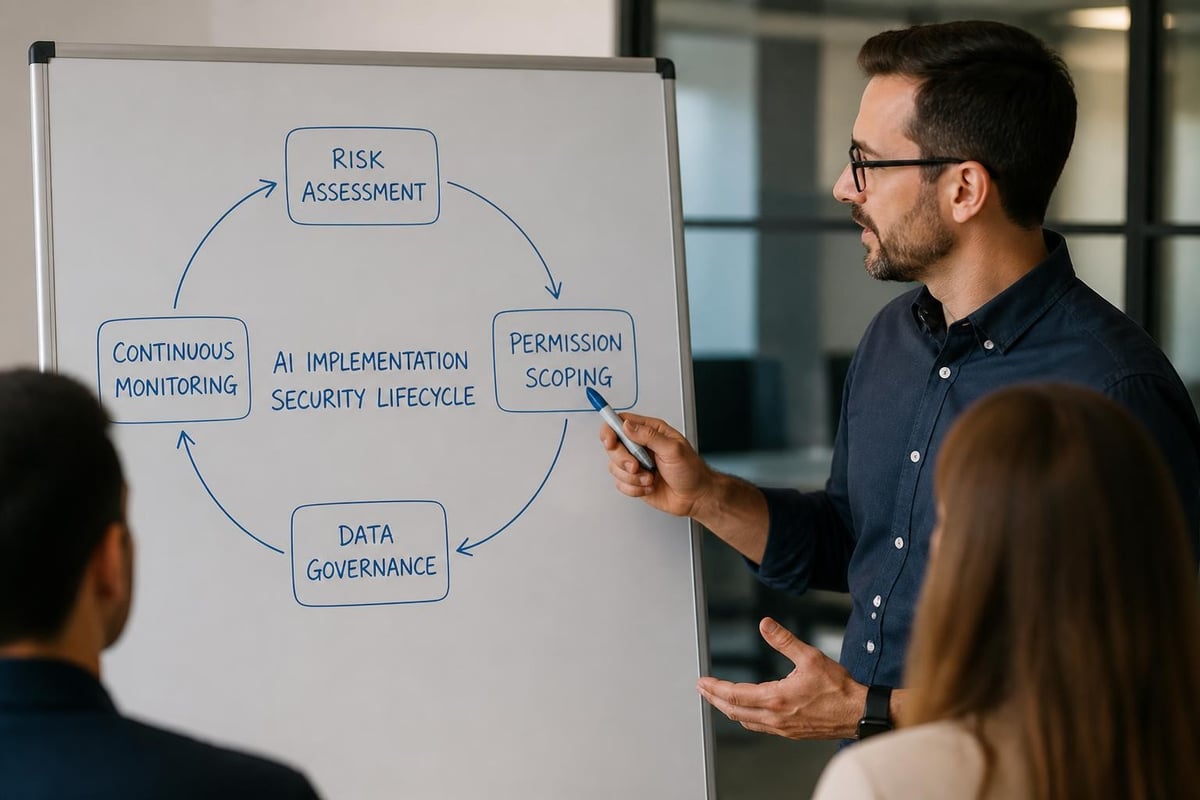
AI Security Considerations
- Permission scope: Grant AI systems minimum access required for intended functions
- Data governance: Control what information AI tools can access, process, and store
- Model security: Protect AI algorithms from theft, manipulation, or poisoning attacks
- Audit logging: Track AI system activities for accountability and threat detection
- Vendor assessment: Evaluate third-party AI service providers' security practices
The rapid evolution of AI capabilities outpaces security framework development, creating gaps that attackers exploit. Organizations must balance innovation benefits against security risks, implementing controls that enable safe AI adoption while protecting critical assets.
Network Segmentation Strategies
Flat network architectures where all systems communicate freely create catastrophic breach scenarios. Once attackers penetrate the network perimeter, they move laterally accessing sensitive systems and data. Cloud and network security requires segmentation strategies that compartmentalize resources and contain threats.
Modern segmentation extends beyond physical network boundaries to include virtual networks, cloud environments, and application layers. Each segment operates with specific security policies, access controls, and monitoring capabilities tailored to its risk profile and function.
Effective Segmentation Approaches
| Strategy | Implementation | Use Case |
|---|---|---|
| VLAN segmentation | Creates isolated network zones using virtual LANs | Separates departments, guest networks, and IoT devices |
| Cloud VPC isolation | Uses virtual private clouds for workload separation | Isolates production, development, and testing environments |
| Application micro-segmentation | Applies policies at individual application level | Protects critical applications from compromise |
| Zero-trust network access | Requires authentication for every resource access | Secures remote work and third-party connections |
Segmentation complexity increases maintenance overhead and potential misconfiguration risks. Organizations should design segmentation schemes balancing security benefits against operational efficiency, documenting policies clearly and testing configurations regularly.
Detecting and Responding to Breaches
Despite preventive measures, security incidents remain inevitable as attack sophistication increases and human errors occur. Effective cloud and network security requires robust detection capabilities and practiced response procedures that minimize breach impact.
Many organizations discover breaches months after initial compromise, allowing attackers extensive time to exfiltrate data and establish persistence. Comprehensive monitoring systems analyze network traffic, system logs, user behavior, and application activities to identify suspicious patterns warranting investigation. Cloud security breach detection demands specialized tools and expertise many small businesses lack internally.
Breach Response Framework
- Detection and analysis confirms security incidents and determines scope
- Containment isolates affected systems preventing further damage
- Eradication removes attacker presence and closes vulnerability exploits
- Recovery restores systems and validates normal operations
- Lessons learned documents incident details and implements improvements
Response speed directly correlates with breach cost reduction. Automated response capabilities handle common incidents rapidly while escalating complex situations to human analysts. Regular tabletop exercises and simulated incidents prepare teams for real emergencies, improving coordination and reducing panic.

Addressing Cloud Complexity Challenges
Cloud adoption often begins with single-platform migrations but evolves into multi-cloud environments using various providers and services. This complexity creates security management challenges as each platform features unique controls, monitoring tools, and configuration requirements.
Security teams struggle tracking assets, maintaining consistent policies, and correlating events across disparate platforms. Closing the cloud complexity gap requires unified security platforms providing centralized visibility and control over hybrid environments without requiring platform-specific expertise.
Managing Multi-Cloud Security
- Centralized monitoring aggregates logs and alerts from all cloud platforms
- Policy automation enforces consistent security controls across environments
- Asset inventory tracks all cloud resources and their configurations
- Compliance reporting verifies adherence to regulations across platforms
- Unified access management controls user permissions consistently
Organizations benefit from managed service providers experienced with multiple cloud platforms and integration challenges. These partners implement unified security frameworks while allowing businesses to leverage best-of-breed services from various providers.
Identity and Access Management
User credentials represent the most commonly exploited attack vector, with compromised passwords enabling unauthorized access to sensitive systems and data. Strong identity and access management (IAM) practices form critical components of comprehensive cloud and network security strategies.
IAM encompasses authentication methods, authorization policies, privilege management, and access monitoring. Multi-factor authentication requirements, password complexity enforcement, and regular credential rotation reduce successful credential attacks significantly.
IAM Best Practices
| Practice | Implementation | Security Benefit |
|---|---|---|
| Multi-factor authentication | Requires password plus biometric or token | Prevents 99% of automated attacks |
| Single sign-on | Centralizes authentication across applications | Reduces password fatigue and reuse |
| Privileged access management | Controls and monitors administrative accounts | Limits damage from compromised admin credentials |
| Regular access reviews | Audits permissions quarterly removing unnecessary access | Enforces least-privilege principles |
| Automated provisioning | Links access to employment status | Eliminates orphaned accounts from terminated employees |
Cloud platforms offer sophisticated IAM capabilities that small businesses can leverage without building custom solutions. However, these tools require proper configuration and ongoing management to remain effective as organizational needs evolve.
Network Monitoring and Threat Intelligence
Passive security controls prove insufficient against determined attackers using advanced techniques and zero-day exploits. Active monitoring systems analyze network traffic patterns, system behaviors, and threat intelligence feeds to identify and respond to emerging threats before significant damage occurs.
Modern monitoring solutions employ machine learning algorithms that establish baseline behaviors and detect anomalies indicating potential compromises. These systems reduce false positives while identifying subtle indicators that human analysts might miss during manual reviews.
Monitoring Components
- Traffic analysis examines network communications identifying suspicious patterns
- Log aggregation collects and correlates events from distributed systems
- Threat intelligence integrates external data about emerging attacks and vulnerabilities
- Behavioral analytics detects unusual user or system activities warranting investigation
- Automated alerting notifies security teams of high-priority incidents requiring immediate action
Effective monitoring requires appropriate tool selection, proper configuration, and skilled interpretation of results. Many small businesses lack resources for 24/7 security operations centers but can leverage managed detection and response services providing continuous monitoring at predictable costs.
Compliance and Regulatory Requirements
Industry regulations and data protection laws impose specific security requirements that organizations must satisfy regardless of infrastructure location. Cloud migrations don't eliminate compliance obligations but can complicate evidence collection and audit processes.
Common frameworks including PCI DSS, HIPAA, SOC 2, and GDPR mandate specific controls, documentation, and reporting procedures. Organizations must understand which regulations apply to their operations and implement appropriate technical and administrative safeguards.
Compliance Considerations
- Data residency ensures information storage complies with geographic restrictions
- Audit logging maintains detailed records of system access and modifications
- Encryption standards implements approved algorithms and key management practices
- Access controls restricts data exposure based on regulatory requirements
- Regular assessments verifies ongoing compliance through audits and testing
Cloud providers offer compliance certifications demonstrating their infrastructure meets various standards. However, organizations remain responsible for configuring services appropriately and managing their security obligations under shared responsibility models.
Building Security Culture
Technical controls provide necessary but insufficient protection against modern threats. Human factors including employee awareness, security priorities, and organizational culture significantly impact overall security posture and incident frequency.
Security training programs educate employees about phishing recognition, password management, data handling procedures, and incident reporting. Regular training reinforces key concepts while addressing emerging threats and attack techniques.
Cultural Elements
| Element | Description | Implementation |
|---|---|---|
| Leadership commitment | Executive support for security initiatives | Include security in strategic planning and budgets |
| Clear policies | Document expected behaviors and procedures | Create accessible, understandable security guidelines |
| Regular training | Educate employees about threats and responsibilities | Conduct quarterly security awareness sessions |
| Positive reinforcement | Reward good security practices | Recognize employees who identify and report threats |
| Incident response | Encourage reporting without fear of punishment | Treat security mistakes as learning opportunities |
Organizations with strong security cultures experience fewer successful attacks and faster incident detection. Employees become active security participants rather than passive policy followers, significantly strengthening overall defenses.
Vendor and Third-Party Risk Management
Business operations increasingly depend on external vendors, contractors, and service providers who require network access or handle sensitive data. These third parties introduce security risks that organizations must assess and mitigate through formal risk management programs.
Vendor security assessments evaluate potential partners' security practices, certifications, incident history, and compliance status before granting access. Ongoing monitoring ensures vendors maintain appropriate security levels throughout the relationship.
Vendor Security Assessment
- Security questionnaires gather information about vendor controls and practices
- Certification review verifies relevant security and compliance certifications
- Contract provisions establish security requirements and breach notification obligations
- Access restrictions limits vendor permissions to minimum necessary levels
- Regular audits confirms ongoing compliance with security agreements
Cloud and network security extends beyond organizational boundaries to encompass entire supply chains and partner ecosystems. Comprehensive programs address these extended risks while enabling necessary business relationships and collaborations.
Protecting cloud and network infrastructure requires comprehensive strategies addressing technology, processes, and people across distributed environments. Small businesses in Lethbridge and surrounding areas can implement enterprise-grade security without extensive internal resources by partnering with experienced managed service providers. Delphi Systems Inc. delivers complete cloud and network security solutions tailored to small business needs, combining proactive monitoring, expert support, and predictable pricing that allows you to focus on core business activities while maintaining robust IT infrastructure protection.

