
Small businesses face increasing pressure to maintain robust technology infrastructures while managing limited resources and budgets. IT operations managed services provide a strategic solution by transferring the responsibility of maintaining, monitoring, and optimizing technology systems to specialized providers. This approach allows organizations to access enterprise-level expertise and tools without the overhead costs of building internal IT departments, enabling them to focus on core business objectives while ensuring their technology foundation remains secure and operational.
Understanding IT Operations Managed Services
IT operations managed services represent a comprehensive approach to technology management where external providers assume responsibility for the day-to-day operation of IT infrastructure and end-user systems. This model shifts technology management from a reactive, break-fix approach to a proactive, preventive strategy that minimizes downtime and maximizes efficiency.
The scope of these services extends far beyond simple technical support. Providers monitor networks continuously, implement security protocols, manage software updates, maintain backup systems, and ensure compliance with industry regulations. By outsourcing these critical functions, businesses gain access to specialized knowledge and cutting-edge tools that would be prohibitively expensive to maintain internally.
Core Components of Service Delivery
Modern it operations managed services encompass several interconnected elements that work together to maintain technology health. Network monitoring forms the foundation, with providers tracking performance metrics, identifying bottlenecks, and addressing issues before they impact business operations. Security management includes firewall configuration, threat detection, patch management, and vulnerability assessments that protect against evolving cyber threats.
- Proactive system monitoring with 24/7 network surveillance
- Automated patch management for operating systems and applications
- Help desk support for end-user technical issues
- Backup and disaster recovery with regular testing protocols
- Performance optimization through continuous analysis

Data backup and recovery services ensure business continuity by creating redundant copies of critical information and testing restoration procedures regularly. Help desk support provides employees with responsive assistance for technical problems, reducing productivity losses from technology frustrations. These components integrate to create a comprehensive safety net for business technology.
Strategic Benefits for Small Business Operations
Organizations that implement it operations managed services experience measurable improvements across multiple business dimensions. Cost predictability stands out as a primary advantage, with fixed monthly fees replacing unpredictable emergency repair expenses and eliminating the need for full-time IT staff salaries, benefits, and training costs.
According to IBM’s comprehensive analysis of IT operations, effective management of technology infrastructure directly correlates with improved business agility and reduced operational risk. Small businesses gain access to enterprise-grade capabilities previously available only to larger competitors, leveling the competitive playing field.
Financial and Operational Advantages
The economic impact of managed services extends beyond simple cost reduction. Businesses avoid capital expenditures for monitoring tools, security software, and specialized diagnostic equipment. Staff productivity increases when employees spend less time troubleshooting technology problems and more time on revenue-generating activities.
| Benefit Category | Traditional IT | Managed Services |
|---|---|---|
| Cost Structure | Variable, unpredictable | Fixed monthly rate |
| Expertise Access | Limited to staff skills | Team of specialists |
| Response Time | Business hours only | 24/7 monitoring |
| Technology Updates | Reactive, delayed | Proactive, scheduled |
| Scalability | Requires new hires | Adjusts with business |
Risk mitigation represents another significant advantage. Professional providers maintain current knowledge of emerging threats, compliance requirements, and industry best practices. They implement tested disaster recovery plans, ensuring businesses can resume operations quickly after disruptions. Insurance costs may decrease when organizations demonstrate robust cybersecurity and data protection measures.
Cybersecurity Integration and Protection
Security challenges have intensified dramatically in recent years, with small businesses becoming primary targets for cybercriminals who perceive them as vulnerable due to limited security resources. IT operations managed services address this vulnerability by implementing comprehensive security frameworks that protect against ransomware, phishing attacks, data breaches, and other threats.
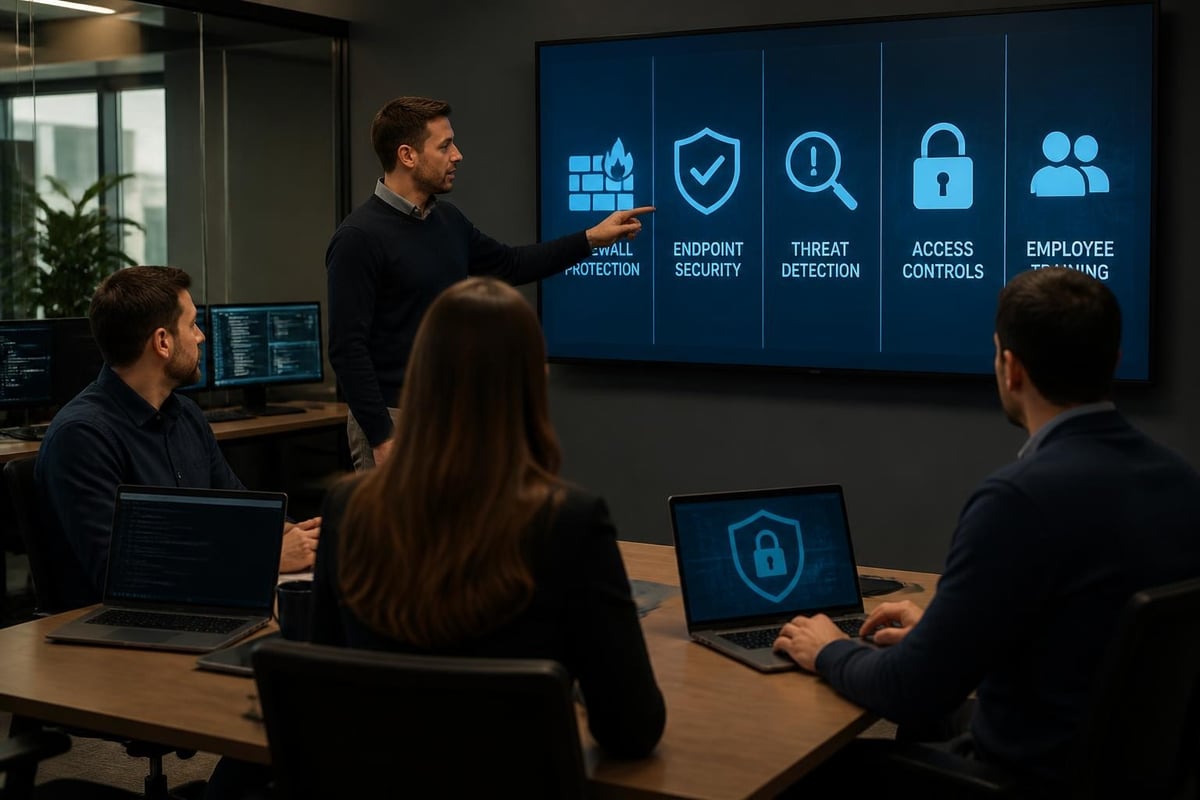
Multi-layered security approaches combine several protective technologies and practices. Firewalls create barriers between internal networks and external threats. Antivirus and anti-malware software detect and neutralize malicious code. Intrusion detection systems identify suspicious activity patterns that might indicate breach attempts.
Advanced Threat Detection Methods
Modern managed security services leverage artificial intelligence and machine learning to identify anomalous behavior that traditional rule-based systems might miss. Research into AI for IT Operations (AIOps) demonstrates how machine learning algorithms can analyze vast amounts of operational data to predict and prevent failures before they occur.
Security information and event management (SIEM) platforms aggregate logs from multiple sources, correlating events to identify coordinated attack patterns. Vulnerability scanning runs continuously, identifying software weaknesses that require patching. Regular penetration testing simulates real-world attack scenarios to expose security gaps.
- Email filtering to block phishing and malware delivery
- Endpoint protection for laptops, desktops, and mobile devices
- Access control management with multi-factor authentication
- Security awareness training for employees
- Incident response planning with defined escalation procedures
Employee education forms a critical security component. Human error remains the leading cause of security breaches, making regular training essential. Managed service providers often include security awareness programs that teach staff to recognize social engineering attempts, handle sensitive data properly, and follow secure password practices.
Cloud Operations and Infrastructure Management
Cloud computing has transformed business technology, and it operations managed services have evolved to support hybrid and cloud-native environments. Providers manage cloud infrastructure, optimize resource allocation, monitor performance, and control costs associated with cloud services from platforms like Microsoft Azure, Amazon Web Services, and Google Cloud.
Migration to cloud environments requires careful planning and execution. Managed service providers assess existing applications, determine cloud readiness, develop migration strategies, and execute transitions with minimal business disruption. They configure cloud security settings, establish backup procedures, and optimize resource allocation to prevent cost overruns.
Hybrid Environment Coordination
Many businesses operate hybrid environments that combine on-premises systems with cloud resources. PwC’s analysis of cloud operations managed services highlights how automation and continuous innovation drive operational excellence in these complex environments.
Managing these hybrid configurations requires specialized expertise. Providers ensure seamless integration between cloud and local systems, maintain consistent security policies across environments, and optimize data flow between locations. They monitor performance metrics specific to cloud services, including latency, availability, and resource utilization.
| Cloud Service Model | Provider Responsibilities | Business Responsibilities |
|---|---|---|
| Infrastructure (IaaS) | Virtual machines, storage, networking | Applications, data, security |
| Platform (PaaS) | Development tools, databases | Application code, data |
| Software (SaaS) | Complete applications | User management, configuration |
Cost optimization represents a significant challenge in cloud environments where resources scale dynamically. Managed service providers implement automated controls that adjust capacity based on demand, eliminate unused resources, and recommend reserved instances for predictable workloads. Regular cost reviews identify optimization opportunities and prevent budget surprises.
Service Level Agreements and Performance Standards
Service level agreements (SLAs) define the commitments between managed service providers and their clients, establishing clear expectations for response times, uptime percentages, and resolution procedures. These contractual obligations create accountability and provide measurable standards for evaluating service quality.
Understanding IT operations service management frameworks helps businesses establish realistic expectations and meaningful metrics. Common SLA components include guaranteed uptime percentages (typically 99.5% to 99.99%), maximum response times for different priority levels, and resolution time targets based on issue severity.
Measuring Provider Performance
Effective SLAs specify measurement methodologies, reporting frequencies, and remediation procedures when standards aren't met. Priority classification systems categorize issues based on business impact, with critical problems affecting multiple users or core systems receiving immediate attention.
- Critical incidents (complete system failure): 15-minute response, 4-hour resolution target
- High-priority issues (significant impact): 1-hour response, 8-hour resolution target
- Medium-priority requests (limited impact): 4-hour response, 24-hour resolution target
- Low-priority items (minimal impact): 8-hour response, 48-hour resolution target
Monthly reporting provides transparency into service delivery performance. Reports typically include ticket volume and resolution times, system uptime percentages, security incident summaries, backup success rates, and recommendations for infrastructure improvements. These metrics enable data-driven discussions about service quality and strategic planning.
Selecting the Right Managed Service Provider
Choosing an it operations managed services partner requires careful evaluation of technical capabilities, service models, and cultural fit. Small businesses in specific geographic areas benefit from providers with local presence who understand regional business conditions and can provide onsite support when necessary.
Technical expertise should align with business technology needs. Providers serving specific industries bring valuable context about compliance requirements, common challenges, and proven solutions. Delphi Systems Inc. exemplifies this approach by focusing on small business needs in Lethbridge and surrounding areas, offering fixed-rate pricing that supports budget predictability.
Evaluation Criteria and Questions
Geographic proximity matters for several reasons. Local providers respond faster to onsite needs, understand regional infrastructure considerations, and contribute to the local economy. They build long-term relationships based on community connections rather than transactional service delivery.
- What security certifications does the provider maintain?
- How do they handle after-hours emergencies?
- What is their average client retention rate?
- Can they provide references from similar businesses?
- How do they approach technology planning and strategy?
- What tools do they use for monitoring and reporting?

Financial stability and longevity indicate a provider's ability to maintain consistent service delivery. Companies with established track records demonstrate proven processes and reliable operations. Contract terms should balance commitment periods with flexibility to adjust services as business needs evolve.
Implementation Process and Transition Planning
Onboarding to it operations managed services requires structured planning to ensure smooth transitions without disrupting ongoing business operations. The process typically begins with comprehensive discovery where providers document existing infrastructure, applications, security configurations, and pain points.
Assessment results inform the service design phase, where providers develop customized monitoring plans, backup strategies, security policies, and support procedures tailored to specific business requirements. Migration planning establishes timelines, identifies risks, and defines success criteria for the transition.
Phased Rollout Strategy
Most successful implementations follow phased approaches that minimize risk. Initial phases might focus on monitoring and backup services that layer onto existing systems without requiring immediate changes. Subsequent phases introduce security enhancements, cloud migrations, or infrastructure upgrades after establishing working relationships and baseline performance metrics.
- Discovery and assessment (1-2 weeks): Document current state and requirements
- Service design (1 week): Develop customized monitoring and support plans
- Initial deployment (2-4 weeks): Implement monitoring tools and backup systems
- Knowledge transfer (ongoing): Train staff on new procedures and contacts
- Optimization (continuous): Refine services based on performance data
Communication planning ensures all stakeholders understand the transition timeline, their responsibilities, and what changes to expect. Regular status updates during implementation maintain transparency and allow for course corrections if issues arise. User training prepares employees for new support procedures, ticketing systems, or security requirements.
Technology Trends Shaping Service Delivery
The managed services industry continues evolving as new technologies create opportunities for improved service delivery and expanded capabilities. Artificial intelligence and machine learning enable predictive maintenance that identifies potential failures before they occur, reducing downtime and emergency repairs.
Automation handles repetitive tasks like patch deployment, system monitoring, and ticket routing, freeing human experts to focus on complex problem-solving and strategic planning. TechTarget’s resource center on IT operations provides best practices for implementing these emerging technologies in operational contexts.
Integration with Business Processes
Modern it operations managed services increasingly integrate with broader business systems, connecting technology management with workflows, customer service, and productivity tools. This integration provides holistic visibility into how technology impacts business outcomes rather than treating IT as an isolated function.
Remote work normalization has accelerated demand for services that support distributed teams. Providers now manage virtual desktop infrastructure, secure remote access systems, collaboration platform administration, and endpoint protection for devices in home offices. These capabilities enable businesses to maintain productivity regardless of where employees work.
Zero-trust security models represent another significant trend, replacing traditional perimeter-based approaches with continuous verification of user identities and device health before granting access to resources. Managed service providers implement these frameworks, managing identity platforms, device compliance checking, and conditional access policies that protect against modern threat vectors.
Compliance and Regulatory Considerations
Many industries face specific regulatory requirements for data protection, privacy, and system security. IT operations managed services help businesses maintain compliance by implementing required controls, generating audit documentation, and staying current with evolving regulations.
Healthcare organizations must comply with HIPAA requirements for patient data protection. Financial services face regulations around data retention and customer privacy. Retailers processing credit cards must maintain PCI DSS compliance. Managed service providers familiar with these frameworks implement appropriate technical controls and documentation procedures.
Audit Preparation and Documentation
Regular compliance assessments identify gaps between current practices and regulatory requirements. Providers develop remediation plans to address deficiencies and implement ongoing monitoring to maintain compliance status. Documentation systems capture evidence of control effectiveness for audit purposes.
| Regulation | Industry | Key Requirements |
|---|---|---|
| HIPAA | Healthcare | Patient data encryption, access controls, breach notification |
| PCI DSS | Retail/Finance | Cardholder data protection, network segmentation, logging |
| GDPR | Any (EU data) | Data privacy rights, consent management, breach reporting |
| SOX | Public companies | Financial system controls, audit trails, separation of duties |
Managed service providers generate compliance reports demonstrating adherence to relevant standards. These reports support audit processes and provide evidence of due diligence in technology risk management. Regular training ensures provider staff understand compliance obligations and implement controls correctly.
Building Long-Term Technology Strategy
Strategic it operations managed services partnerships extend beyond tactical support to include technology planning and business alignment. Providers become trusted advisors who help businesses leverage technology for competitive advantage rather than simply maintaining existing systems.
Technology roadmaps align IT investments with business objectives, prioritizing initiatives based on expected returns and strategic importance. KPMG’s research on managed services emphasizes how the integration of people and technology drives ongoing business transformation.
Quarterly business reviews create forums for discussing technology performance, upcoming needs, and strategic opportunities. These sessions review service metrics, assess emerging technologies, evaluate vendor relationships, and adjust service levels based on changing requirements. They transform provider relationships from vendor transactions to strategic partnerships.
Capacity planning ensures infrastructure scales appropriately with business growth. Providers monitor utilization trends, forecast future needs, and recommend upgrades before performance problems occur. This proactive approach prevents the crisis management that characterized traditional break-fix IT support models.
IT operations managed services enable small businesses to compete effectively by providing enterprise-level technology capabilities without the associated overhead costs, while proactive monitoring and security measures minimize downtime and protect against evolving threats. For businesses in Lethbridge and surrounding areas seeking to optimize their technology infrastructure with predictable costs and expert support, Delphi Systems Inc. offers comprehensive managed IT services designed specifically for small business needs, allowing you to focus on growing your business while maintaining secure, efficient technology operations.

