

The modern business landscape demands constant vigilance against cyber threats that evolve daily. A robust cyber security operation serves as the foundation for protecting sensitive data, maintaining customer trust, and ensuring business continuity. For small businesses in particular, establishing effective security operations can mean the difference between thriving in a digital economy and becoming another statistic in the growing list of cyberattack victims. Understanding how to structure, implement, and optimize these operations has become essential for organizations of all sizes.
Understanding the Core Components of Security Operations
A cyber security operation encompasses the people, processes, and technologies that work together to detect, analyze, and respond to security threats. This coordinated approach requires careful planning and resource allocation to ensure comprehensive protection.
The Human Element in Security Operations
Security analysts form the backbone of any effective operation. These professionals monitor systems, investigate alerts, and respond to incidents with expertise gained through continuous training and hands-on experience. Small businesses often struggle to maintain dedicated security teams, which makes understanding the roles crucial for effective outsourcing or hybrid approaches.
The typical security operations team includes:
- Tier 1 Analysts: Monitor alerts and perform initial triage
- Tier 2 Analysts: Conduct deeper investigations and threat hunting
- Tier 3 Analysts: Handle complex incidents and develop response strategies
- Security Engineers: Design and implement security controls
- SOC Managers: Oversee operations and strategic planning
Microsoft’s comprehensive guide on Security Operations explains how these roles interconnect to create effective threat detection and response capabilities.
Technology Infrastructure for Modern Operations
Technology platforms enable security teams to monitor vast amounts of data and identify anomalies that could indicate threats. The right toolset amplifies human expertise rather than replacing it.

Key technological components include Security Information and Event Management (SIEM) systems that aggregate logs from across the network, Endpoint Detection and Response (EDR) tools that monitor individual devices, and threat intelligence platforms that provide context about emerging risks.
| Technology Type | Primary Function | Business Value |
|---|---|---|
| SIEM | Centralized log analysis | Unified threat visibility |
| EDR | Endpoint monitoring | Device-level protection |
| SOAR | Automated response | Faster incident resolution |
| Threat Intelligence | Risk context | Proactive defense |
Establishing Processes That Drive Operational Success
Process frameworks give structure to cyber security operations, ensuring consistent responses and continuous improvement. Without documented procedures, even skilled teams struggle to maintain effectiveness during high-pressure incidents.
Incident Response Planning and Execution
Every organization needs a clear incident response plan that defines roles, responsibilities, and action steps. This plan should outline how teams detect incidents, contain threats, eradicate malicious presence, recover systems, and learn from each event.
The incident response lifecycle typically follows these stages:
- Preparation: Establishing policies, tools, and training
- Detection and Analysis: Identifying and validating security events
- Containment: Limiting threat spread and impact
- Eradication: Removing malicious elements from systems
- Recovery: Restoring normal operations safely
- Lessons Learned: Documenting findings and improving processes
Small businesses benefit from simplified yet comprehensive response plans that acknowledge resource constraints while maintaining security rigor. Best practices for security operations emphasize the importance of automation in streamlining these processes.
Continuous Monitoring and Threat Detection
A cyber security operation must maintain vigilance around the clock, as threats don't adhere to business hours. Continuous monitoring involves collecting and analyzing security data from networks, applications, cloud environments, and endpoints.
Effective monitoring strategies include:
- Real-time log analysis to identify suspicious patterns
- Behavioral analytics that detect deviations from normal activity
- Network traffic inspection for malicious communications
- Vulnerability scanning to identify security gaps
- User activity monitoring to catch insider threats
The challenge lies not in collecting data but in filtering noise to surface genuine threats. This requires tuning detection rules, establishing baselines for normal activity, and regularly updating threat signatures.
Implementing Security Operations in Small Business Environments
Small businesses face unique challenges when building cyber security operations. Limited budgets, smaller IT teams, and competing priorities can make comprehensive security seem unattainable. However, right-sized approaches deliver strong protection without enterprise-level complexity.
Leveraging Managed Security Services
Partnering with managed service providers offers small businesses access to enterprise-grade security capabilities. These partnerships provide continuous monitoring, expert analysis, and rapid incident response without the overhead of building internal teams.
Managed security services typically include:
- 24/7 security monitoring and alert management
- Threat intelligence integration and analysis
- Incident investigation and response coordination
- Regular security assessments and reporting
- Compliance support and documentation
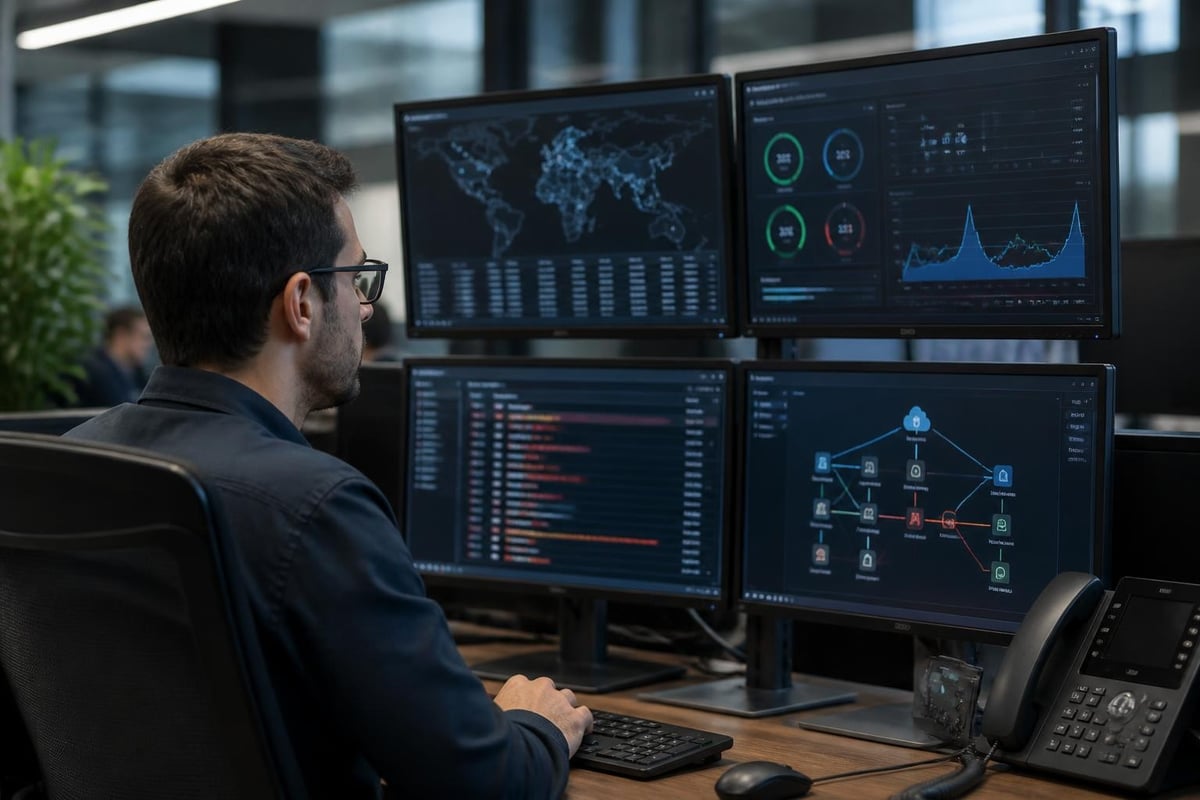
This approach allows businesses to maintain focus on core operations while ensuring their IT infrastructure receives expert security oversight.
Building a Security-Aware Culture
Technology and processes alone cannot fully protect organizations. A cyber security operation succeeds when every employee understands their role in maintaining security.
Security awareness programs should address:
- Phishing recognition and reporting procedures
- Password hygiene and multi-factor authentication
- Safe browsing and email practices
- Physical security for devices and facilities
- Incident reporting processes and expectations
Regular training sessions, simulated phishing exercises, and clear communication channels help embed security into organizational culture. When employees become active participants in security operations, the entire defense posture strengthens.
Frameworks and Standards for Operational Excellence
Industry frameworks provide proven blueprints for structuring cyber security operations. These guidelines help organizations build comprehensive programs aligned with recognized best practices.
The NIST Cybersecurity Framework
The NIST Cybersecurity Framework offers a flexible, risk-based approach to managing cybersecurity that organizations worldwide have adopted. This framework organizes security activities into five core functions: Identify, Protect, Detect, Respond, and Recover.
Each function contains categories and subcategories that guide implementation:
| Function | Focus Area | Operational Impact |
|---|---|---|
| Identify | Asset and risk understanding | Foundation for security decisions |
| Protect | Safeguards implementation | Preventive controls deployment |
| Detect | Anomaly identification | Threat detection capabilities |
| Respond | Incident management | Containment and mitigation |
| Recover | Resilience planning | Business continuity assurance |
Small businesses can adopt this framework incrementally, focusing first on critical assets and highest-probability risks before expanding coverage.
Maturity Models for Progressive Improvement
Cyber security operation maturity evolves through distinct stages, from reactive to proactive to predictive capabilities. Understanding current maturity helps organizations plan realistic improvement paths.
Initial stages focus on basic hygiene: implementing firewalls, antivirus software, and backup systems. Intermediate maturity introduces monitoring, logging, and documented response procedures. Advanced operations incorporate threat hunting, automated response, and continuous optimization.
CloudSEK’s best practices for 2026 highlight how automation maturity and scalable architecture enable organizations to progress through these stages efficiently.
Metrics and Performance Measurement
Effective cyber security operations require measurement to validate effectiveness and guide improvement efforts. The right metrics provide visibility into operational health without creating meaningless reporting overhead.
Key Performance Indicators for Security Operations
Meaningful KPIs track both efficiency and effectiveness. Efficiency metrics measure how quickly teams respond, while effectiveness metrics assess how well operations reduce risk and prevent incidents.
Critical metrics include:
- Mean Time to Detect (MTTD): Average time between threat occurrence and detection
- Mean Time to Respond (MTTR): Average time from detection to containment
- Alert Quality: Percentage of alerts representing genuine threats
- Coverage Percentage: Proportion of assets under active monitoring
- Incident Recurrence Rate: Frequency of similar incidents over time
These measurements help identify bottlenecks, justify investments, and demonstrate security value to leadership.
Dashboard Design and Reporting
Security dashboards translate complex data into actionable insights for different audiences. Technical teams need detailed metrics about alert volumes and investigation status, while executives require high-level risk indicators and trend analysis.

Effective dashboards update in real-time, highlight critical issues prominently, and provide drill-down capabilities for investigation. Regular reporting cadences keep stakeholders informed without overwhelming them with constant updates.
Automation and Orchestration in Modern Operations
The volume of security alerts modern businesses face exceeds human capacity to manually investigate each one. Automation becomes essential for scaling cyber security operations without proportionally expanding teams.
Security Orchestration, Automation, and Response (SOAR)
SOAR platforms connect disparate security tools and automate repetitive tasks. These systems can automatically enrich alerts with threat intelligence, correlate events across multiple sources, and execute predefined response actions.
Common automation use cases include:
- Alert enrichment: Automatically gathering context about suspicious IP addresses or file hashes
- Ticket creation: Generating standardized incident tickets for analyst review
- Containment actions: Isolating compromised systems from the network
- Evidence collection: Gathering logs and forensic data automatically
- Reporting generation: Creating standardized incident summaries
Cyber defense operation tactics emphasize how automation reduces human error and accelerates response times, particularly for high-volume, low-complexity tasks.
Balancing Automation with Human Judgment
Automation enhances human capabilities rather than replacing them. Complex investigations, strategic decision-making, and novel threat analysis still require experienced analysts. The goal is freeing skilled professionals from repetitive tasks so they can focus on activities that truly need human expertise.
Successful automation strategies start with well-documented manual processes, identify suitable automation candidates, and implement changes incrementally with continuous validation.
Threat Intelligence Integration
Context transforms raw security data into actionable intelligence. A cyber security operation must understand not just what happened but who might attack, why they target specific industries, and how they typically operate.
Types and Sources of Threat Intelligence
Threat intelligence comes from various sources and serves different purposes. Strategic intelligence informs long-term planning and risk assessment. Tactical intelligence reveals attacker techniques and procedures. Operational intelligence provides specific indicators of compromise.
Organizations access threat intelligence through:
- Commercial feeds offering curated, analyzed threat data
- Open-source repositories providing community-shared indicators
- Industry sharing groups facilitating peer-to-peer intelligence exchange
- Government bulletins warning about national security threats
- Internal analysis deriving insights from past incidents
Effective integration requires matching intelligence sources to specific operational needs rather than collecting everything available.
Operationalizing Intelligence for Detection
Intelligence becomes valuable when it drives action. Security teams must translate threat data into detection rules, update security controls based on emerging techniques, and prioritize vulnerabilities that active threat actors exploit.
The intelligence lifecycle includes collection, processing, analysis, dissemination, and feedback. Each stage ensures information remains relevant, accurate, and actionable for defenders.
Compliance and Regulatory Considerations
Many industries face regulatory requirements that mandate specific security controls and operational practices. A cyber security operation must address compliance obligations while focusing on genuine risk reduction.
Common Regulatory Frameworks
Different sectors face different requirements, but common themes emerge across frameworks. Most regulations require organizations to identify sensitive data, implement appropriate protections, monitor for unauthorized access, and maintain incident response capabilities.
| Regulation | Primary Scope | Key Requirements |
|---|---|---|
| GDPR | Personal data of EU residents | Breach notification, data protection |
| HIPAA | Healthcare information | Access controls, audit trails |
| PCI DSS | Payment card data | Network segmentation, monitoring |
| SOC 2 | Service organization controls | Security, availability, confidentiality |
Small businesses often encounter compliance requirements through customer contracts or industry membership, making it essential to understand applicable standards.
Documentation and Audit Readiness
Compliance audits verify that documented policies match actual practices. Maintaining current documentation streamlines audits and demonstrates due diligence. This includes policy documents, procedure guides, system diagrams, access control matrices, and incident logs.
Regular self-assessments identify gaps before external auditors arrive, allowing teams to address issues proactively. Google Cloud’s SOC framework overview details how organizations can structure operations to meet various compliance requirements effectively.
Challenges and Solutions in Security Operations
Even well-designed cyber security operations encounter obstacles that can undermine effectiveness. Recognizing common challenges helps organizations develop strategies to overcome them.
Alert Fatigue and False Positives
Security tools generate thousands of alerts daily, many representing benign activity misidentified as threats. Analysts overwhelmed by false positives may miss genuine incidents buried in noise. This alert fatigue reduces both effectiveness and job satisfaction.
Solutions include:
- Tuning detection rules based on environmental baselines
- Implementing tiered alert severity to prioritize investigation
- Automating low-risk alert handling
- Regularly reviewing and retiring ineffective detection rules
- Correlating multiple weak signals into higher-confidence alerts
Continuous refinement gradually improves signal-to-noise ratios, allowing analysts to focus on genuine threats.
Skills Gaps and Workforce Development
The cybersecurity industry faces a significant talent shortage, with demand for skilled professionals far exceeding supply. Small businesses particularly struggle to attract and retain specialized security talent.
Research on cyber security operations centers identifies workforce challenges as a primary factor in operational inefficiencies, highlighting the need for training programs, knowledge sharing, and career development paths.
Practical approaches include cross-training existing IT staff, partnering with educational institutions, leveraging managed services for specialized capabilities, and creating mentorship programs that develop junior analysts into experienced investigators.
Cloud Security Operations Considerations
As businesses migrate to cloud environments, cyber security operations must adapt to protect distributed, dynamic infrastructures. Traditional network perimeter defenses give way to identity-centric security models.
Shared Responsibility Models
Cloud providers secure the underlying infrastructure, while customers protect their data, applications, and configurations. Understanding exactly where provider responsibility ends and customer responsibility begins prevents security gaps. This boundary varies across Infrastructure-as-a-Service (IaaS), Platform-as-a-Service (PaaS), and Software-as-a-Service (SaaS) models.
Security operations in cloud environments require:
- Continuous configuration monitoring to prevent misconfigurations
- Identity and access management with least-privilege principles
- Cloud-native logging and monitoring integration
- Data encryption for both storage and transmission
- Regular compliance validation for cloud resources
Multi-Cloud and Hybrid Complexity
Many organizations operate across multiple cloud platforms plus on-premises infrastructure. A cyber security operation must maintain visibility and consistent security policies across this heterogeneous environment. Unified monitoring platforms and standardized security frameworks help manage this complexity.
Building Resilience Through Testing and Exercises
The true test of cyber security operations comes during actual incidents. Regular testing validates capabilities and identifies weaknesses before adversaries exploit them.
Tabletop Exercises and Simulations
Tabletop exercises walk teams through incident scenarios without technical execution. These discussion-based sessions test communication, decision-making, and coordination while requiring minimal resources.
Effective exercises should:
- Reflect realistic threat scenarios relevant to the business
- Involve all stakeholders who would participate in real incidents
- Document gaps and action items for improvement
- Occur regularly with varying scenarios to test different capabilities
- Include leadership to ensure understanding of business impact
Red Team and Purple Team Engagements
Red team exercises simulate realistic attacks against systems and processes, testing both technical controls and human responses. Purple team exercises add collaboration between attackers (red team) and defenders (blue team) to maximize learning opportunities.
These advanced testing methods reveal blind spots in detection capabilities, validate incident response procedures, and build analyst skills through realistic practice. While resource-intensive, they deliver significant improvements in operational readiness.
Effective cyber security operations require ongoing commitment to people, processes, and technology working in harmony to protect business assets and maintain operational resilience. Small businesses can achieve robust security through right-sized approaches that prioritize critical assets and leverage external expertise where needed. Delphi Systems Inc. helps Lethbridge area businesses build and maintain comprehensive security operations through managed IT services that include continuous monitoring, threat detection, and expert incident response, allowing you to focus on growing your business while we ensure your IT infrastructure remains secure and efficiently managed.

