
Small businesses face increasingly sophisticated cyber threats that require specialized knowledge and resources to combat effectively. While many organizations lack dedicated security teams, they can leverage the expertise and resources provided by various cyber security agencies operating at national and international levels. These governmental and non-governmental organizations develop frameworks, issue threat advisories, and provide guidance that helps businesses of all sizes strengthen their security posture. Understanding what these agencies offer and how to access their resources represents a critical step in building comprehensive cyber defense strategies.
Understanding the Role of Cyber Security Agencies
Cyber security agencies serve as central authorities that coordinate threat intelligence, develop security standards, and provide guidance to both public and private sector organizations. These entities operate at multiple levels, from international coalitions to national agencies and industry-specific organizations.
The primary functions of these agencies include monitoring emerging threats, analyzing attack patterns, issuing timely advisories, and creating frameworks that organizations can implement to protect their assets. By centralizing expertise and threat intelligence, they enable even small businesses with limited resources to access enterprise-level security knowledge.
Government Agencies Leading Cyber Defense
Several prominent government agencies have established themselves as authoritative sources for cybersecurity guidance. The Cybersecurity and Infrastructure Security Agency (CISA) operates as America's primary civilian cybersecurity organization, providing real-time alerts about vulnerabilities and coordinating responses to major incidents.
Key government cyber security agencies include:
- Cybersecurity and Infrastructure Security Agency (CISA) in the United States
- National Cyber Security Centre (NCSC) in the United Kingdom
- Canadian Centre for Cyber Security serving Canadian organizations
- European Union Agency for Cybersecurity (ENISA) for EU member states
- Australian Cyber Security Centre (ACSC) protecting Australian interests
These organizations work collaboratively, sharing threat intelligence across borders to address the global nature of cyber threats. For small businesses in Lethbridge and surrounding areas, Canadian and American agencies provide particularly relevant resources.

Framework Development and Standards Setting
One of the most valuable contributions cyber security agencies make involves developing comprehensive frameworks that organizations can adopt. The National Institute of Standards and Technology (NIST) has created widely adopted frameworks that provide structured approaches to managing cybersecurity risk.
NIST Cybersecurity Framework Components
The NIST framework organizes security activities into five core functions that create a complete security lifecycle:
- Identify – Develop understanding of systems, assets, data, and capabilities
- Protect – Implement safeguards to ensure delivery of critical services
- Detect – Develop and implement activities to identify cybersecurity events
- Respond – Take action regarding detected cybersecurity incidents
- Recover – Maintain resilience plans and restore capabilities impaired during incidents
| Framework Function | Small Business Application | Agency Resources |
|---|---|---|
| Identify | Asset inventory, risk assessments | CISA vulnerability databases |
| Protect | Access controls, security training | NCSC guidance materials |
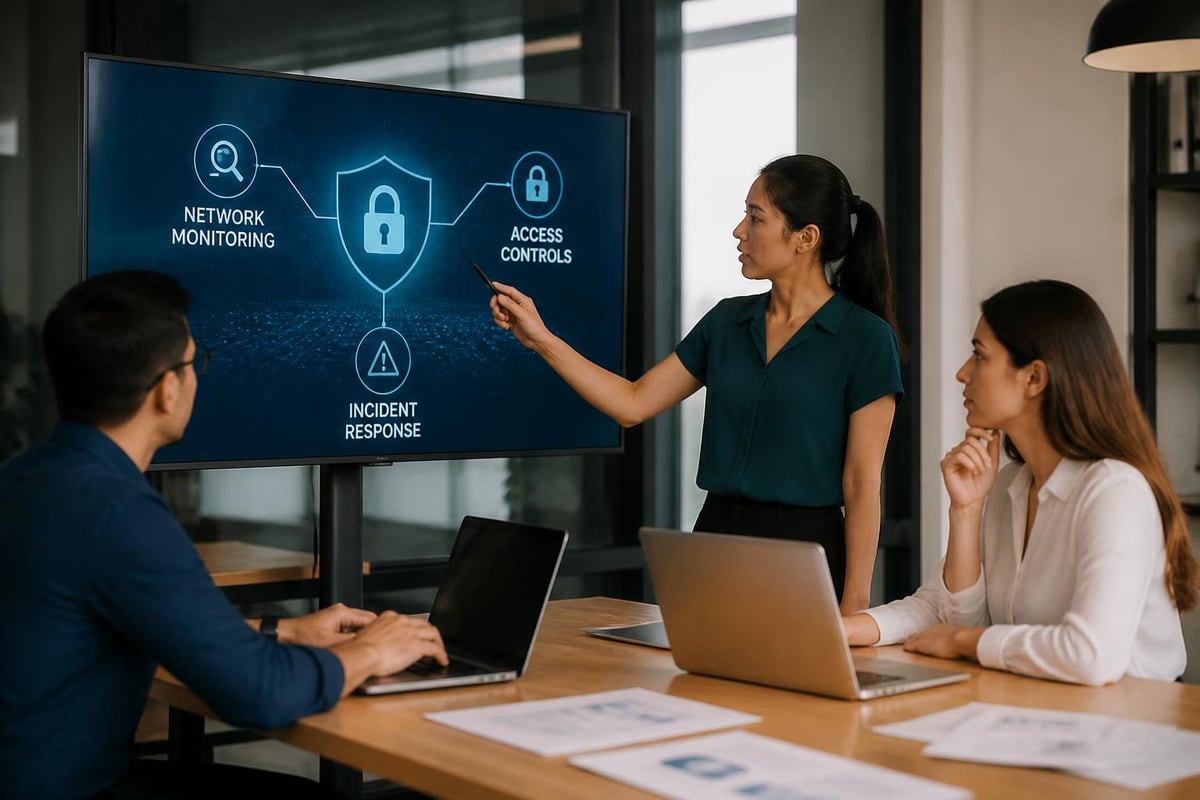
| Detect | Network monitoring, log analysis | Canadian Centre advisories |
| Respond | Incident response plans | DHS coordination support |
| Recover | Backup systems, business continuity | CIS recovery benchmarks |
These frameworks provide actionable structures that managed IT service providers can implement for their clients, translating complex security concepts into practical operational procedures.
Threat Intelligence and Advisory Services
Cyber security agencies continuously monitor the threat landscape, analyzing attack patterns and issuing advisories when new vulnerabilities emerge. This intelligence gathering represents a resource that individual businesses could never replicate independently.
The Canadian Centre for Cyber Security provides Canadian businesses with localized threat intelligence relevant to their regulatory environment and regional threat actors. Similarly, the Department of Homeland Security coordinates across multiple agencies to provide comprehensive threat assessments.
Types of Advisories and Alerts
Vulnerability Disclosures inform organizations about newly discovered security flaws in software, hardware, or protocols before attackers can widely exploit them.
Threat Actor Profiles describe the tactics, techniques, and procedures used by specific hacking groups, helping organizations recognize and defend against targeted attacks.
Sector-Specific Warnings alert industries facing elevated risk levels, such as healthcare during ransomware campaigns or financial services during credential stuffing attacks.
These advisories enable proactive defense rather than reactive damage control. Small businesses that subscribe to these alerts through their IT service providers gain access to intelligence previously available only to large enterprises with dedicated security operations centers.

Resources for Small and Medium Businesses
While cyber security agencies often focus on critical infrastructure and large organizations, they provide extensive resources specifically designed for smaller businesses with limited security expertise and budgets.
The Center for Internet Security has developed CIS Controls, a prioritized set of actions that provide specific and actionable ways to defend against common attack patterns. These controls are explicitly designed to be implementable by organizations without large security teams.
Essential Resources Available to SMBs
- Security assessment tools that scan networks for common vulnerabilities
- Configuration benchmarks for securing operating systems and applications
- Training materials for employee security awareness programs
- Incident response templates for handling security events
- Compliance mapping guides connecting frameworks to regulatory requirements
Many of these resources are available at no cost, representing significant value for businesses operating on constrained budgets. Partnering with a managed IT services provider ensures these resources are properly implemented rather than simply downloaded and ignored.
Coordination Among Security Organizations
Recent research analyzing coordination among cyber defense agencies through joint cybersecurity advisories reveals how different organizations collaborate to address complex threats. This coordination ensures comprehensive coverage without duplication of effort.
Cyber security agencies frequently co-author advisories when threats span multiple jurisdictions or sectors. This collaboration produces more comprehensive guidance than any single agency could develop independently.
Inter-Agency Collaboration Models
| Collaboration Type | Participants | Output Examples |
|---|---|---|
| Bilateral | Two national agencies | Joint vulnerability advisories |
| Multilateral | Multiple government agencies | Coordinated threat campaigns |
| Public-Private | Agencies + industry groups | Sector-specific frameworks |
| International | Cross-border agencies | Global threat intelligence |
For businesses, this coordination means receiving unified guidance rather than conflicting recommendations from multiple sources. It also ensures that threat intelligence moves quickly across organizational boundaries.
Implementing Agency Guidance Effectively
Access to resources from cyber security agencies provides value only when properly implemented within business operations. Translation from high-level frameworks to practical controls requires technical expertise and ongoing attention.
Implementation priorities for small businesses include:
- Subscribe to relevant advisory feeds from appropriate agencies
- Map business operations to framework components
- Prioritize controls based on actual risk exposure
- Document security policies and procedures
- Train employees on security responsibilities
- Test incident response capabilities regularly
- Review and update security measures quarterly
Many small businesses lack the internal resources to execute these steps effectively. This is where managed IT service providers bridge the gap, bringing expertise in translating agency guidance into operational security controls.
Selecting Relevant Agencies and Resources
Not all cyber security agencies provide equally relevant resources for every business. Canadian businesses should prioritize Canadian Centre for Cyber Security advisories for compliance and regulatory alignment, while also monitoring CISA alerts for threats affecting North American organizations.
The UK’s National Cyber Security Centre offers excellent technical guidance for professionals implementing security controls, regardless of geographic location. Their resources often provide more detailed implementation guidance than high-level framework documents.
Regulatory Compliance Support
Cyber security agencies increasingly align their guidance with regulatory requirements, helping businesses satisfy compliance obligations while improving actual security posture. This dual benefit makes agency resources particularly valuable for regulated industries.
Privacy regulations like PIPEDA in Canada require specific technical and administrative safeguards. Agency frameworks provide implementation roadmaps that satisfy auditor requirements while building genuine security capabilities.
Compliance-Framework Alignment
Financial Services can map agency controls to requirements from financial regulators, demonstrating due diligence in protecting customer data and transaction systems.
Healthcare Organizations use agency guidance to satisfy privacy requirements while protecting electronic health records from ransomware and data breaches.
Professional Services leverage frameworks to meet client security requirements and professional liability standards.
This alignment reduces compliance costs by eliminating duplicate effort between security implementation and regulatory documentation.
Incident Response Coordination
When security incidents occur, cyber security agencies provide coordination services that help businesses respond effectively and minimize damage. Reporting incidents to appropriate agencies also contributes to broader threat intelligence.
CISA operates a 24/7 coordination center that assists organizations experiencing active cyber attacks. While primarily focused on critical infrastructure, they provide guidance to any organization facing significant incidents.
The Canadian Centre for Cyber Security similarly offers incident response assistance, helping organizations contain breaches and recover operations. They also analyze incidents to identify patterns that inform future advisories.
Benefits of agency coordination during incidents:
- Access to specialized expertise during crisis situations
- Connection to law enforcement when criminal activity occurs
- Technical analysis of attack methods and attribution
- Guidance on disclosure obligations and communication
- Intelligence sharing that protects other potential targets
For small businesses, knowing these resources exist before an incident occurs enables faster, more effective response when time is critical.
Training and Certification Programs
Beyond frameworks and advisories, cyber security agencies support workforce development through training programs and professional certifications. These initiatives address the persistent shortage of qualified security professionals.
Several agencies offer free or low-cost training covering fundamental security concepts, threat analysis, and defensive technologies. These programs help businesses develop internal security awareness and technical capabilities.
Available Training Resources
| Program Type | Provider | Target Audience | Cost |
|---|---|---|---|
| Security awareness | CISA | All employees | Free |
| Technical training | CIS | IT staff | Free/Paid |
| Management courses | Canadian Centre | Business leaders | Free |
| Certification prep | NIST | Security professionals | Free materials |
Managed IT service providers often complete these training programs to maintain current knowledge of emerging threats and defensive techniques, then apply that knowledge across their client base.
Emerging Technologies and Future Threats
Cyber security agencies invest heavily in research addressing emerging technologies and anticipating future threat landscapes. Their forward-looking analysis helps businesses prepare for challenges that haven't yet materialized.
Current research areas include artificial intelligence in both attack and defense, quantum computing implications for encryption, Internet of Things security challenges, and cloud security architectures.
By monitoring agency publications on these topics, businesses can make informed technology adoption decisions that consider security implications from the outset rather than retrofitting protections later.
Emerging threat areas receiving agency attention:
- Deepfake technology enabling sophisticated social engineering
- Supply chain attacks compromising trusted software vendors
- Ransomware evolution toward data extortion models
- State-sponsored espionage targeting smaller organizations
- Automated attack tools reducing barrier to entry for criminals
Understanding these trends enables proactive defense posture development rather than reactive scrambling when attacks occur.
Practical Application for Small Businesses
Small businesses in Lethbridge and similar communities might question how resources from national cyber security agencies apply to their operations. The reality is that cyber threats target businesses of all sizes, and attackers often prefer smaller targets with weaker defenses.
Implementing even basic controls recommended by cyber security agencies significantly reduces risk exposure. Simple measures like multi-factor authentication, regular software updates, employee training, and data backups address the majority of common attack vectors.
Working with a managed IT service provider ensures these controls are properly configured and maintained. The provider monitors agency advisories, implements recommended updates, and adjusts security postures as threats evolve.
This partnership model brings enterprise-level security expertise to small business budgets. Instead of hiring security specialists, businesses access that expertise through their IT service relationship while focusing internal resources on core business activities.
Cyber security agencies provide invaluable resources that level the playing field between small businesses and sophisticated threat actors. By leveraging frameworks, advisories, and guidance from these organizations, businesses can implement effective security measures without maintaining expensive internal security teams. Delphi Systems Inc. translates these agency resources into practical security implementations for small businesses throughout Lethbridge, monitoring threat intelligence, applying security updates, and maintaining protective controls so you can focus on growing your business with confidence that your IT infrastructure remains secure and compliant.

