

Small businesses face an increasingly dangerous digital landscape where cyber threats evolve faster than most internal teams can counter them. IT cyber security services have become essential infrastructure rather than optional insurance, providing the specialized expertise and around-the-clock monitoring that modern organizations need to survive. For businesses in Lethbridge and across Canada, understanding how these services work and what they deliver makes the difference between proactive protection and costly reactive crisis management.
Understanding Modern IT Cyber Security Services
IT cyber security services encompass a comprehensive suite of protective measures designed to safeguard business networks, data, and systems from unauthorized access, malware, and other digital threats. These services go far beyond simple antivirus software, incorporating multiple layers of defense that adapt to emerging attack vectors.
Modern security services typically include:
- Network monitoring and intrusion detection
- Endpoint protection for devices and workstations
- Email security and spam filtering
- Vulnerability assessments and penetration testing
- Security awareness training for staff
- Incident response and recovery planning
The NIST guide to information technology security services provides valuable frameworks for implementing these protective measures across organizational IT infrastructure.
The Shift from Reactive to Proactive Security
Traditional IT support models addressed security issues after they occurred. Today's it cyber security services focus on prevention through continuous monitoring, threat intelligence, and predictive analytics. This proactive approach identifies vulnerabilities before attackers exploit them.
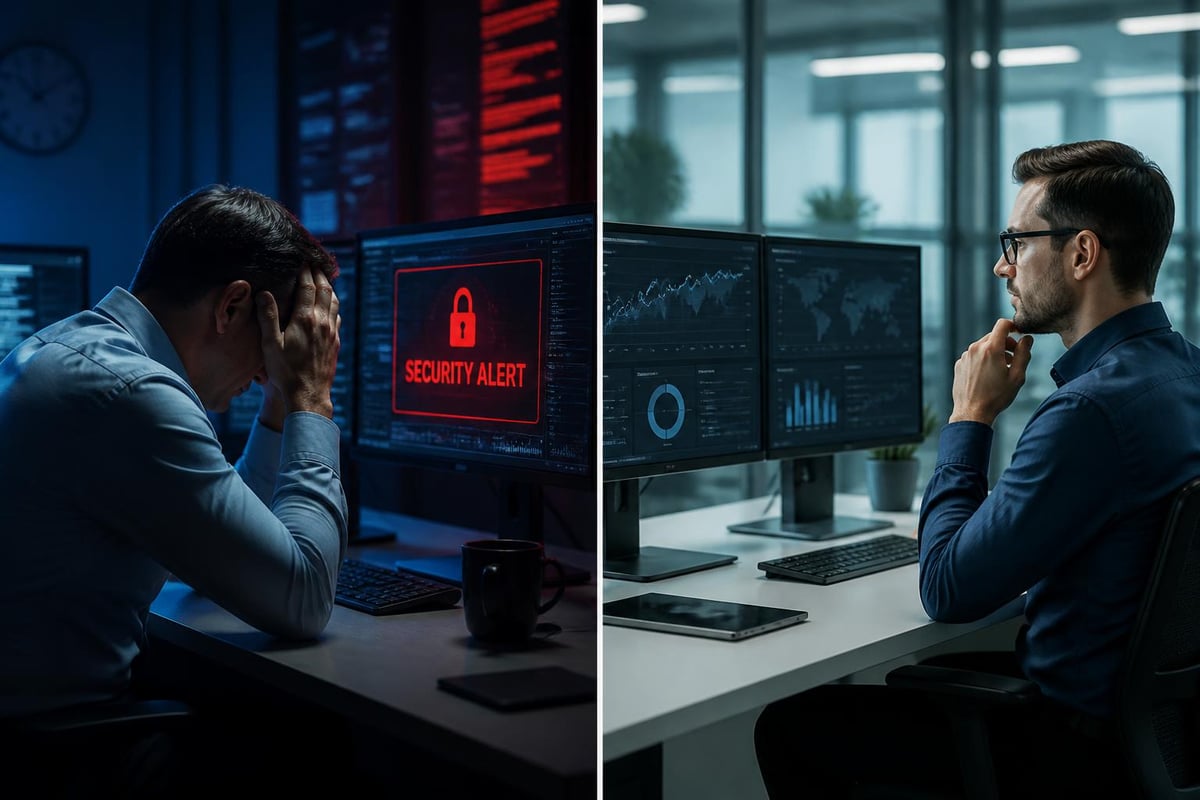
Security operations centers (SOCs) now serve as the nerve center for managed security services, providing 24/7 surveillance of network activity. These centers employ advanced tools to detect anomalies that might indicate breach attempts or malware infections.
Core Components of Comprehensive Security Services
Network Security and Perimeter Defense
Network security forms the foundation of effective it cyber security services. Firewalls, intrusion prevention systems, and secure gateway solutions create barriers between trusted internal networks and the broader internet.
| Security Layer | Function | Business Benefit |
|---|---|---|
| Next-Gen Firewalls | Deep packet inspection and application control | Blocks sophisticated threats at entry points |
| VPN Services | Encrypted remote access tunnels | Secure connection for remote workers |
| Network Segmentation | Isolated zones for different operations | Limits damage from any single breach |
| DNS Filtering | Blocks access to malicious websites | Prevents malware downloads and phishing |
These perimeter defenses work in concert to filter traffic before it reaches critical business systems. For small businesses without dedicated security staff, managed providers deliver enterprise-grade protection at accessible price points.
Endpoint Detection and Response
Every device connecting to your network represents a potential entry point for attackers. Endpoint detection and response (EDR) solutions monitor laptops, desktops, mobile devices, and servers for suspicious behavior.
EDR platforms go beyond traditional antivirus by analyzing behavioral patterns. When a workstation begins encrypting files rapidly, EDR systems recognize this as potential ransomware activity and automatically isolate the device.
Key EDR capabilities include:
- Real-time threat detection across all endpoints
- Automated response to contain infections
- Forensic data collection for incident analysis
- Remote device management and patching
- Application whitelisting and control
Email and Communication Security
Email remains the primary vector for cyberattacks, with phishing campaigns becoming increasingly sophisticated. IT cyber security services incorporate advanced email filtering that identifies threats traditional spam filters miss.
Modern email security examines sender reputation, analyzes links and attachments in sandbox environments, and applies machine learning to detect social engineering attempts. Organizations benefit from research like the comprehensive review of explainable AI methods in cybersecurity, which improves threat detection accuracy while reducing false positives.
Managed Security Services for Small Businesses
Why Internal Security Teams Fall Short
Small businesses typically cannot justify full-time security specialists. The shortage of qualified cybersecurity professionals, combined with high salary demands, makes internal teams prohibitively expensive for organizations with limited IT budgets.
Beyond cost, security requires 24/7 vigilance. Threats don't respect business hours, and many attacks occur during nights and weekends when offices are empty. Managed it cyber security services fill this gap with continuous monitoring and immediate response capabilities.
The Managed Security Service Provider Model
Managed Security Service Providers (MSSPs) deliver enterprise-level protection through shared infrastructure and expertise. This model distributes costs across multiple clients while maintaining strict data separation and confidentiality.

MSSPs typically offer tiered service packages that scale with business needs:
| Service Tier | Included Features | Ideal For |
|---|---|---|
| Essential | Firewall management, antivirus, email filtering | Startups, micro-businesses |
| Professional | EDR, SIEM monitoring, vulnerability scanning | Growing SMBs with 10-50 employees |
| Enterprise | 24/7 SOC, threat hunting, compliance support | Organizations with regulatory requirements |
The fixed-rate fee structure common among MSSPs provides budget predictability while ensuring comprehensive coverage. This contrasts sharply with the unpredictable costs of breach response and recovery.
Risk Assessment and Vulnerability Management
Effective it cyber security services begin with understanding your specific risk profile. Every business faces unique threats based on industry, data types, technology stack, and operational patterns.
Conducting Comprehensive Security Assessments
Professional security assessments examine technical vulnerabilities and human factors. Penetration testing simulates real-world attacks to identify weaknesses before criminals exploit them.
Assessment components include:
- Network architecture review
- Application security testing
- Social engineering resistance evaluation
- Physical security inspection
- Policy and procedure analysis
Results guide prioritized remediation efforts, focusing resources on the most critical vulnerabilities. The CISA Trusted Internet Connections initiative demonstrates how systematic security architecture review strengthens overall defense posture.
Continuous Vulnerability Scanning
Threats evolve continuously as attackers discover new exploits and software vendors release patches. Monthly or quarterly assessments cannot keep pace with this rapid change.
Modern it cyber security services incorporate automated vulnerability scanning that runs continuously or on scheduled intervals. These scans identify missing patches, misconfigurations, and newly discovered weaknesses across your entire technology estate.
Organizations using platforms like Censys for infrastructure visibility gain deeper insights into their external attack surface, discovering shadow IT and forgotten assets that create security gaps.
Data Protection and Backup Integration
Backup as a Security Control
While often considered disaster recovery tools, backup systems serve critical security functions. Ransomware attacks encrypt production data, making comprehensive backups the last line of defense against extortion demands.
IT cyber security services integrate backup systems into broader security architecture, ensuring backup repositories remain isolated from production networks. This prevents attackers from encrypting both primary data and its backups simultaneously.
Effective backup security requires:
- Immutable backup copies that cannot be altered
- Offsite or cloud storage for geographic separation
- Regular restoration testing to verify data integrity
- Encryption of backup data both in transit and at rest
- Access controls limiting who can delete backups
Encryption and Access Controls
Data protection extends beyond backups to encompass all information storage. Encryption renders stolen data useless without corresponding decryption keys, protecting businesses even when perimeter defenses fail.
Full-disk encryption secures laptops and mobile devices against physical theft. Database encryption protects customer information and financial records. File-level encryption adds granular protection for particularly sensitive documents.
Access controls work alongside encryption to ensure only authorized personnel reach protected information. Role-based access control (RBAC) systems grant permissions based on job functions rather than individual requests, simplifying management while improving security.
Compliance and Regulatory Requirements
Industry-Specific Security Mandates
Many businesses face regulatory requirements dictating minimum security standards. Healthcare organizations must comply with privacy legislation protecting patient information. Financial institutions follow banking regulations governing transaction security and customer data protection.
IT cyber security services help navigate these complex requirements by implementing controls that satisfy regulatory auditors. Managed providers familiar with specific industry standards accelerate compliance while reducing the risk of costly violations.
The UK’s National Cyber Security Centre assured services program demonstrates how government agencies validate security providers meeting established standards, helping organizations identify qualified partners.
Documentation and Audit Support
Compliance involves more than technical controls. Regulators require documented policies, procedures, and evidence of consistent application. Security service providers maintain audit trails, generate compliance reports, and assist during regulatory examinations.
Compliance documentation typically includes:
- Security policies and acceptable use guidelines
- Incident response procedures and playbooks
- Access control matrices and user provisioning records
- Vulnerability scan results and remediation tracking
- Training completion records for staff awareness programs
Security Awareness and Human Factors
Technology alone cannot eliminate security risks. Employees remain the weakest link in most security architectures, falling victim to phishing emails, using weak passwords, and inadvertently exposing sensitive information.
Building a Security-Conscious Culture
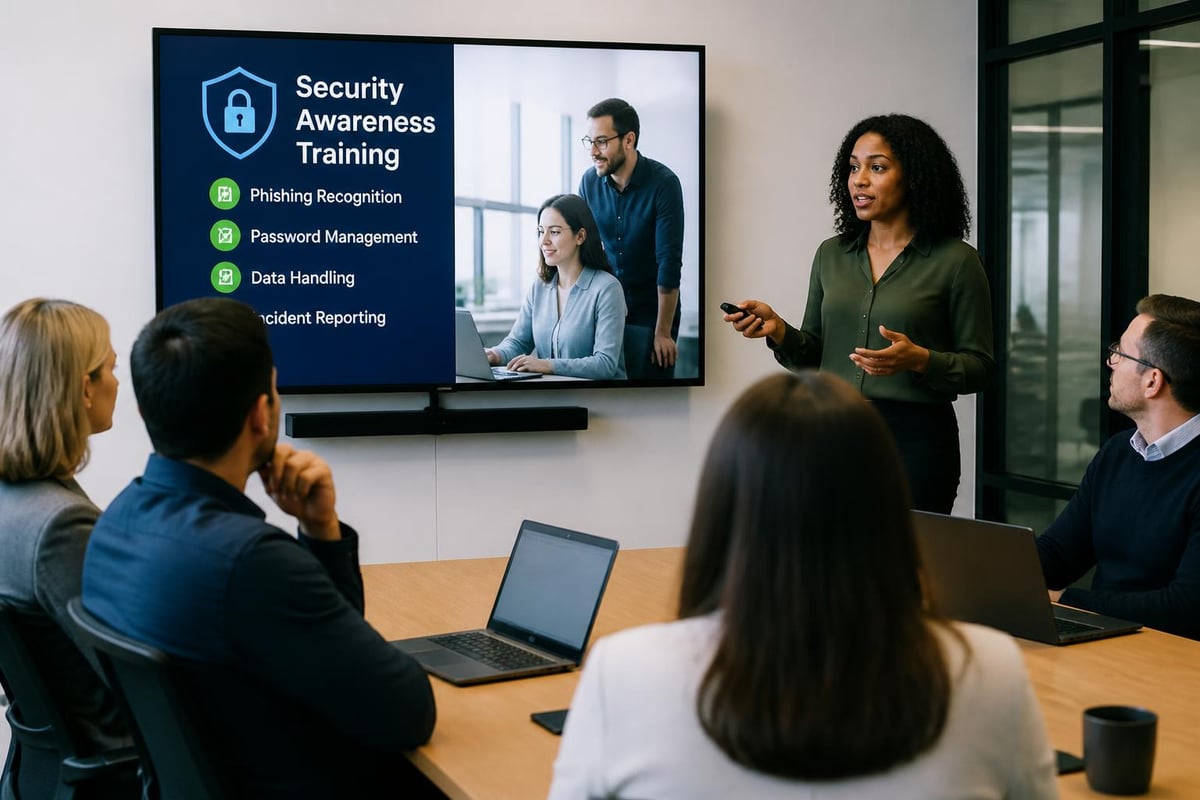
Comprehensive it cyber security services incorporate training programs that transform staff from vulnerabilities into active defenders. Regular security awareness sessions teach employees to recognize social engineering attempts, handle data appropriately, and report suspicious activity.
Effective training programs feature:
- Simulated phishing campaigns measuring susceptibility
- Interactive modules replacing boring presentations
- Regular reinforcement rather than annual sessions
- Role-specific training addressing unique responsibilities
- Metrics tracking improvement over time
Organizations leveraging insights from IANS Research on security leadership develop stronger programs that engage employees rather than merely checking compliance boxes.
Password Management and Authentication
Weak or reused passwords create easy entry points for attackers. IT cyber security services implement password policies requiring complexity and regular changes, though modern guidance emphasizes length over complexity and discourages frequent mandatory changes that encourage predictable patterns.
Multi-factor authentication (MFA) adds critical additional verification beyond passwords alone. Even when credentials are stolen or guessed, MFA prevents unauthorized access by requiring additional proof of identity through mobile apps, hardware tokens, or biometric verification.
Incident Response and Recovery Planning
Preparing for the Inevitable
Despite best efforts, determined attackers sometimes succeed. Incident response planning ensures organizations respond effectively when breaches occur, minimizing damage and recovery time.
Professional it cyber security services include incident response retainers providing immediate expert assistance during crises. Response teams investigate the scope of compromise, contain ongoing attacks, and guide recovery efforts based on proven playbooks.
Incident response follows structured phases:
- Preparation: Establishing response teams and procedures before incidents occur
- Detection: Identifying security events through monitoring and alerts
- Containment: Isolating affected systems to prevent spread
- Eradication: Removing malware and closing exploited vulnerabilities
- Recovery: Restoring normal operations from clean backups
- Lessons Learned: Analyzing incidents to improve future defenses
Business Continuity Integration
Security incidents threaten business operations, making continuity planning essential. IT cyber security services align with broader business continuity strategies, ensuring critical systems remain available during and after security events.
This integration identifies critical business functions, establishes recovery time objectives, and prioritizes restoration efforts. Organizations with documented continuity plans recover faster and experience less operational disruption than those responding reactively.
Selecting the Right Security Service Provider
Evaluation Criteria for Security Partners
Choosing it cyber security services requires careful evaluation of provider capabilities, experience, and cultural fit. Not all security companies deliver equal value, and the wrong partner creates false confidence while leaving vulnerabilities unaddressed.
| Evaluation Factor | Why It Matters | Questions to Ask |
|---|---|---|
| Industry Experience | Providers understanding your sector know relevant threats | How many clients in our industry do you serve? |
| Certification and Compliance | Validates technical competence and security practices | What certifications do your analysts hold? |
| Response Times | Speed matters during active incidents | What are your guaranteed response times? |
| Technology Stack | Tools must integrate with existing infrastructure | Which security platforms do you support? |
| Transparency | Clear reporting builds trust and enables oversight | How do you communicate security events? |
Local vs. Remote Service Delivery
While many security functions operate effectively remotely, local presence offers advantages for small businesses. Providers familiar with regional business environments understand local threat landscapes and provide face-to-face consultation when needed.
Organizations in Lethbridge and surrounding areas benefit from Delphi Systems Inc. local expertise combined with enterprise-grade security tools and 24/7 monitoring capabilities. This combination delivers personalized service with comprehensive protection.
Future Trends in Security Services
Artificial Intelligence and Automation
Machine learning algorithms increasingly power threat detection, analyzing massive data volumes to identify patterns humans would miss. AI-driven security tools reduce false positives while detecting novel attacks that signature-based systems overlook.
Automation extends to response actions, with security orchestration platforms executing predetermined responses to common threats. This speeds containment while freeing security analysts to focus on complex investigations requiring human judgment.
Zero Trust Architecture
Traditional security models assumed internal network traffic was trustworthy, focusing defenses on perimeter protection. Zero trust architecture eliminates this assumption, requiring verification for every access request regardless of origin.
IT cyber security services increasingly incorporate zero trust principles, implementing micro-segmentation, continuous authentication, and least-privilege access controls. This architecture limits damage from compromised credentials and insider threats.
Cloud Security Transformation
As businesses migrate applications and data to cloud platforms, it cyber security services evolve to protect hybrid and multi-cloud environments. Cloud-native security tools monitor activity across distributed infrastructure while maintaining visibility and control.
This transformation requires new skills and tools different from traditional on-premises security. Managed providers investing in cloud security expertise help businesses navigate this transition safely.
Protecting your business from cyber threats requires comprehensive IT cyber security services that combine technology, expertise, and continuous vigilance. Small businesses need enterprise-grade protection without enterprise-level costs or complexity. Delphi Systems Inc. delivers managed security services designed specifically for Lethbridge area small businesses, providing 24/7 monitoring, proactive threat prevention, and rapid incident response through a predictable fixed-rate model. Let our team assess your current security posture and design a protection strategy that keeps your business running safely and efficiently.

