
Small businesses face mounting pressure to maintain secure, efficient IT infrastructure while focusing on core business activities. A managed it solutions provider delivers comprehensive technology management services that keep networks running smoothly, data protected, and systems optimized. Rather than reacting to IT problems as they arise, partnering with a professional provider means proactive monitoring, strategic planning, and expert support that prevents disruptions before they impact operations. This approach transforms IT from a cost center into a strategic asset that drives growth and productivity.
Understanding the Managed IT Services Model
A managed it solutions provider operates fundamentally differently from traditional break-fix IT support. Instead of charging hourly rates when problems occur, this model delivers continuous monitoring and maintenance for a predictable monthly fee. Managed IT services encompass everything from network infrastructure to cybersecurity, creating a comprehensive shield around your technology assets.
The value proposition centers on prevention rather than reaction. Traditional IT support waits for systems to fail, then charges premium rates to restore functionality during critical downtime. Managed services providers monitor systems around the clock, identifying potential issues before they cascade into business-disrupting failures.
Key Service Components
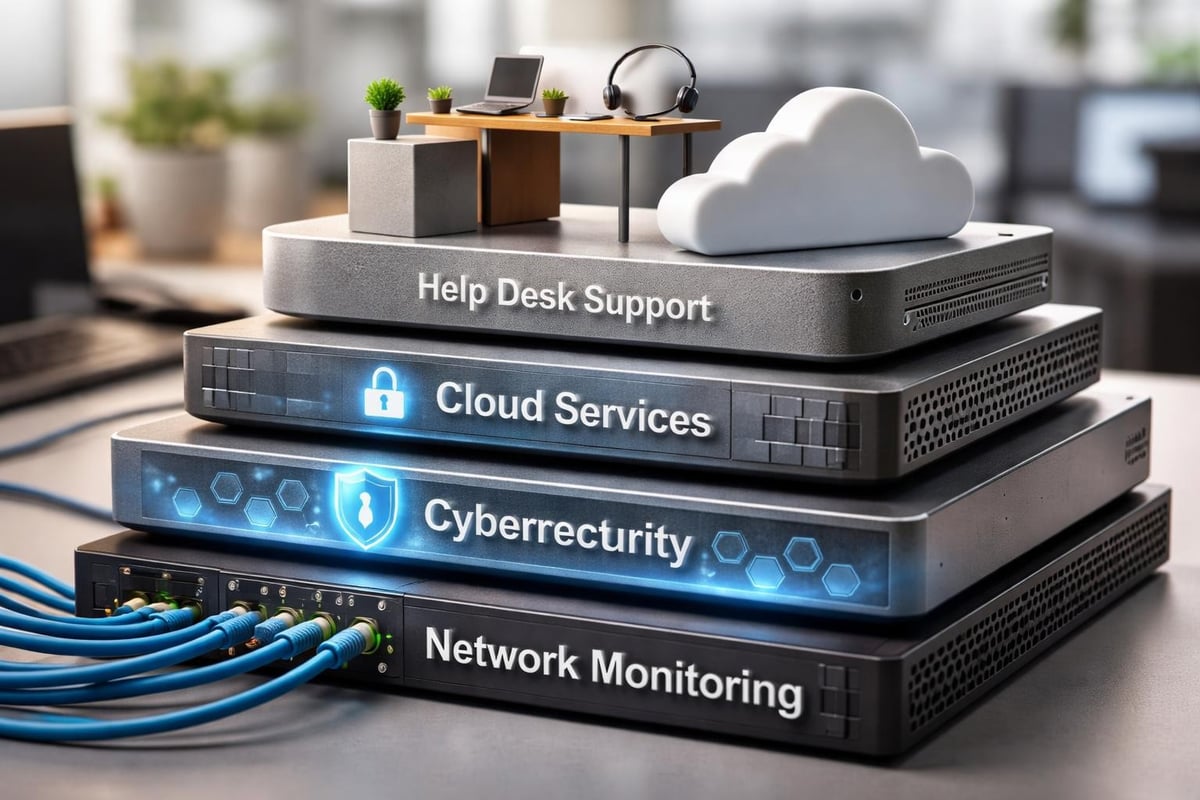
Modern managed IT encompasses several critical areas that work together to maintain business continuity:
- Network monitoring and management tracks performance metrics and identifies bottlenecks
- Cybersecurity protection defends against evolving threats with layered security measures
- Data backup and disaster recovery ensures business resilience through automated protection
- Cloud computing services provide scalable infrastructure without capital expenditure
- Help desk support resolves user issues quickly to maintain productivity
- Software updates and patch management keep systems current and secure
These services integrate into a cohesive strategy that addresses the full spectrum of IT needs. Each component reinforces the others, creating a robust technology environment that supports business objectives.
The Business Case for Managed IT Solutions
Financial considerations drive many decisions to partner with a managed it solutions provider. The traditional capital expenditure model requires significant upfront investments in hardware, software licenses, and infrastructure. This approach ties up capital and creates unpredictable maintenance costs as systems age.
Shifting from capital expenditures to operational expenditures through managed services transforms IT budgeting. Instead of large, irregular investments, businesses pay consistent monthly fees that cover all technology needs. This predictability enables better financial planning and frees capital for core business investments.
Cost Comparison Analysis
| Expense Category | Traditional IT | Managed Services |
|---|---|---|
| Initial Investment | $25,000-$75,000+ | Minimal setup fees |
| Monthly Costs | Variable | Fixed, predictable |
| Emergency Repairs | $150-$300/hour | Included in agreement |
| Security Updates | Additional charges | Included in service |
| Staff Requirements | Full-time or part-time IT | Outsourced expertise |
Beyond direct cost savings, managed services deliver operational benefits that impact the bottom line. When employees spend less time waiting for IT support and more time on productive activities, labor efficiency increases. When systems stay online instead of failing during critical periods, revenue continues flowing. When data remains protected instead of being compromised, businesses avoid costly breach remediation and reputation damage.
Cybersecurity as a Core Priority
The threat landscape in 2026 demands sophisticated defense strategies that most small businesses cannot develop independently. A managed it solutions provider brings enterprise-grade security expertise to organizations of all sizes. Cybersecurity has become central to business strategy, with threats evolving faster than most internal teams can track.
Ransomware attacks target small businesses specifically because attackers know these organizations often lack robust defenses. Email phishing schemes grow increasingly sophisticated, fooling even tech-savvy employees. Network vulnerabilities emerge from unpatched systems, outdated software, and misconfigured security settings.
Multi-Layered Security Approach
Professional managed services implement defense in depth:
- Perimeter security with advanced firewalls and intrusion detection
- Endpoint protection on all devices accessing the network
- Email filtering to block phishing and malware before reaching inboxes
- Access controls ensuring users only reach appropriate resources
- Security monitoring with 24/7 threat detection and response
- Regular security assessments identifying vulnerabilities before exploitation
This comprehensive approach recognizes that no single security measure provides complete protection. Each layer compensates for potential weaknesses in others, creating a resilient security posture that adapts to emerging threats.
Best practices for managed IT services emphasize continuous risk assessment and proactive security planning. Rather than implementing security measures once and assuming protection, effective providers regularly evaluate the threat environment and adjust defenses accordingly.
Cloud Computing and Modern Infrastructure
Cloud services have revolutionized how businesses approach IT infrastructure. A managed it solutions provider helps organizations navigate the transition from on-premises systems to cloud-based solutions, or implement hybrid approaches that balance both environments. This flexibility enables businesses to scale resources up or down based on actual needs rather than projected maximums.
The cloud delivers several compelling advantages for small businesses. Capital expenditures decrease dramatically when servers, storage, and software move to subscription models. Physical space requirements shrink when server rooms become unnecessary. Disaster recovery becomes more straightforward when data exists in geographically distributed data centers rather than single physical locations.
Cloud Service Categories
| Service Type | What It Provides | Business Benefits |
|---|---|---|
| Infrastructure as a Service (IaaS) | Virtual servers and storage | Scalable computing without hardware |
| Platform as a Service (PaaS) | Development and deployment environments | Faster application development |
| Software as a Service (SaaS) | Ready-to-use applications | No installation or maintenance needed |
| Backup as a Service (BaaS) | Automated data protection | Reliable disaster recovery |
Managed providers handle the technical complexities of cloud migration and ongoing management. They ensure proper configuration, maintain security standards, optimize costs by right-sizing resources, and integrate cloud services with existing systems. This expertise prevents common pitfalls like security misconfigurations, cost overruns from unused resources, or performance issues from improper architecture.

Network Performance and Monitoring
Network infrastructure forms the foundation of modern business operations. When networks slow down or experience outages, every connected system and user feels the impact. A managed it solutions provider implements continuous monitoring that tracks performance metrics, identifies bottlenecks, and resolves issues before users notice problems.
Proactive monitoring examines multiple performance indicators simultaneously. Bandwidth utilization reveals whether network capacity meets demand. Latency measurements show how quickly data travels between points. Packet loss detection identifies connection reliability issues. Device health monitoring tracks the status of routers, switches, and other infrastructure components.
Network Optimization Strategies
Advanced network management goes beyond simply keeping systems running:
- Traffic prioritization ensures critical applications receive necessary bandwidth
- Load balancing distributes network demands across multiple pathways
- Redundancy planning creates backup routes when primary connections fail
- Capacity planning anticipates growth and prevents bottlenecks
- Performance baselines establish normal operations to detect anomalies
These strategies require specialized expertise and continuous attention. Network conditions change throughout the day as usage patterns shift. New devices joining the network alter traffic patterns. Software updates can suddenly increase bandwidth demands. Professional monitoring catches these changes and adjusts configurations to maintain optimal performance.
Data Backup and Disaster Recovery
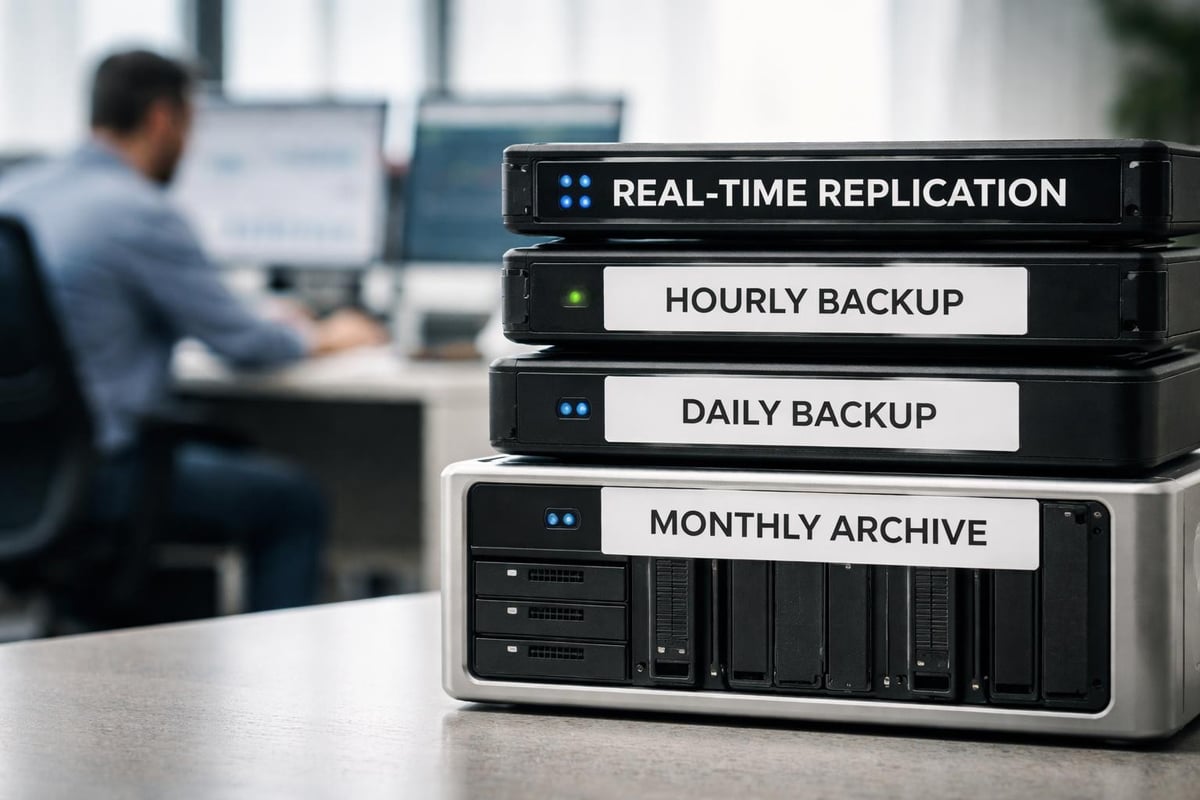
Business continuity depends on protecting data and maintaining the ability to recover quickly from disruptions. A managed it solutions provider implements comprehensive backup strategies that go far beyond simple file copies. Modern backup solutions use automated scheduling, incremental backups that only save changed data, encryption for data security, and regular testing to verify recovery capabilities.
The 3-2-1 backup rule provides a foundation for data protection: maintain three copies of data, store copies on two different media types, and keep one copy offsite. Cloud-based backup services simplify this approach by automatically maintaining offsite copies while local backups enable faster recovery for minor incidents.
Recovery time objectives (RTO) and recovery point objectives (RPO) define acceptable downtime and data loss parameters. RTO specifies how quickly systems must return to operation after disruption. RPO determines how much data loss the business can tolerate. These metrics guide backup frequency and recovery infrastructure investments.
Disaster Scenarios and Responses
| Disaster Type | Typical Impact | Recovery Strategy |
|---|---|---|
| Hardware failure | Hours to days downtime | Rapid hardware replacement or cloud failover |
| Ransomware attack | Encrypted data and systems | Restore from clean backups, rebuild infrastructure |
| Natural disaster | Complete facility loss | Activate cloud-based disaster recovery site |
| Human error | Deleted or corrupted files | Restore specific files from recent backup |
| Software corruption | Application or database failure | Roll back to pre-corruption backup state |
Testing recovery procedures regularly ensures they function when actually needed. Many organizations discover backup failures only when attempting recovery during actual emergencies. Professional providers schedule routine recovery tests, verify backup integrity, and update disaster recovery plans as business systems evolve.
The Role of Artificial Intelligence in Managed Services
Artificial intelligence transforms how managed it solutions provider organizations deliver services in 2026. AI demand continues soaring as providers integrate machine learning into monitoring, security, and support functions. These technologies augment human expertise rather than replacing it, enabling faster issue resolution and more proactive problem prevention.
AI-powered network monitoring analyzes vast quantities of performance data to identify patterns humans might miss. Machine learning algorithms establish baseline performance metrics, then flag anomalies that could indicate emerging problems. Predictive analytics forecast when hardware might fail based on performance trends, enabling replacement before disruption occurs.
Security benefits particularly from AI integration. Threat detection systems analyze network traffic patterns to identify potential intrusions. Behavioral analysis spots unusual user activities that might indicate compromised credentials. Automated response systems can isolate infected devices before malware spreads across networks.
Selecting the Right Managed IT Partner
Choosing a managed it solutions provider requires careful evaluation of capabilities, experience, and cultural fit. Not all providers offer the same service levels or expertise. Small businesses need partners who understand their unique challenges and budget constraints while delivering enterprise-quality solutions.
Geographic proximity matters for businesses requiring occasional on-site support. While remote monitoring handles most issues, hardware problems or network infrastructure work sometimes demands physical presence. Providers serving Lethbridge and surrounding areas understand local business conditions and can respond quickly when situations require in-person attention.
Evaluation Criteria
Consider these factors when assessing potential providers:
- Service scope matching your specific technology needs
- Response time commitments for different severity levels
- Security expertise and certifications demonstrating competency
- Client references from similar businesses in comparable industries
- Pricing transparency with clear explanations of included services
- Scalability to support business growth without service disruption
- Contract flexibility allowing adjustments as needs evolve
Industry trends for 2026 emphasize specialization and security focus. Providers developing deep expertise in specific industries or technology areas often deliver better results than generalists trying to serve everyone. Security-based services continue growing as threats intensify and compliance requirements expand.
Industry Growth and Market Trends
The managed services sector continues robust expansion driven by increasing technology complexity and cybersecurity threats. Market analysis projects continued growth as more businesses recognize the value of outsourcing IT management to specialized providers. This growth creates opportunities for businesses to access increasingly sophisticated services at competitive prices.
Technology spending overall surges upward in 2026, with AI advancements driving significant IT investment increases. This spending benefits businesses working with managed providers who can implement advanced technologies without requiring internal expertise development. Small businesses gain access to enterprise-grade capabilities that would be impossible to build independently.
Service delivery models continue evolving toward greater automation and integration. Providers increasingly offer unified platforms that combine monitoring, security, backup, and support into seamless experiences. This integration improves efficiency while reducing the complexity businesses face when managing technology.
Service Level Agreements and Performance Metrics
Service level agreements (SLAs) define the relationship between businesses and their managed it solutions provider. These contracts specify response times, uptime guarantees, support availability, and performance standards. Clear SLAs set expectations and provide accountability when service falls short of commitments.
Typical SLA components include:
- Uptime guarantees specifying acceptable network and system availability
- Response time commitments based on issue severity levels
- Resolution timeframes for different problem categories
- Support availability hours defining when help is accessible
- Performance metrics measuring service quality objectively
Critical issues demand immediate response, often within 15-30 minutes. High-priority problems might require response within two hours. Medium and low-priority issues receive attention within business hours based on defined schedules. These tiered approaches ensure urgent situations get immediate attention while routine requests follow orderly queues.
Measuring Provider Performance
| Metric | What It Measures | Target Range |
|---|---|---|
| Network uptime | Percentage of time systems remain operational | 99.5% – 99.9% |
| Ticket response time | How quickly support acknowledges requests | Critical: 15-30 min, Standard: 2-4 hours |
| First-call resolution | Issues solved without escalation | 70% – 85% |
| Mean time to repair | Average duration to fix problems | 2-6 hours depending on severity |
| Customer satisfaction | Client feedback on service quality | 4.5+ out of 5.0 |
Regular performance reviews ensure providers meet commitments and identify improvement opportunities. Monthly or quarterly business reviews examine metrics, discuss challenges, and plan technology roadmaps. This ongoing communication strengthens the partnership and aligns IT strategy with business objectives.
Fixed-Rate Pricing and Budget Predictability
A managed it solutions provider typically offers fixed-rate fee structures that eliminate billing surprises and enable accurate budgeting. This pricing model contrasts sharply with traditional break-fix arrangements where costs spike unpredictably during crises. Knowing exactly what IT will cost each month allows businesses to plan confidently and allocate resources to growth initiatives rather than holding reserves for potential IT emergencies.
Fixed-rate pricing includes all routine services within the monthly fee. Network monitoring, security management, software updates, help desk support, and regular maintenance all fall under the standard agreement. This comprehensive approach means businesses receive proactive care rather than reactive fixes.
Some services may fall outside standard agreements, such as major infrastructure upgrades, new location setups, or significant system migrations. However, providers should clearly communicate these exceptions upfront and provide detailed quotes before undertaking additional work. Transparency in pricing builds trust and prevents misunderstandings.
Compliance and Regulatory Requirements
Many industries face specific compliance requirements affecting IT infrastructure and data management. Healthcare organizations must meet HIPAA standards for patient information protection. Financial services firms follow strict data security regulations. Even businesses without industry-specific mandates must comply with general privacy laws and data protection standards.
A managed it solutions provider helps navigate this compliance landscape by implementing appropriate controls, maintaining required documentation, and conducting regular audits. They understand how various regulations translate into technical requirements and can implement solutions that satisfy both operational needs and compliance obligations.
Compliance failures carry serious consequences including substantial fines, legal liability, reputation damage, and potential business closure. Professional IT management reduces these risks by building compliance into standard operations rather than treating it as an afterthought.
Remote Work and Distributed Teams
The shift toward remote and hybrid work models creates new IT challenges that managed providers address effectively. Employees working from home, coffee shops, or client sites need secure access to business systems. Mobile devices accessing corporate data require protection. Home networks lacking enterprise security controls create potential vulnerabilities.
Managed services enable secure remote work through:
- Virtual private networks (VPNs) encrypting data between remote devices and business systems
- Multi-factor authentication verifying user identities beyond simple passwords
- Mobile device management securing smartphones and tablets accessing company data
- Cloud-based applications accessible from anywhere with internet connectivity
- Remote desktop solutions allowing access to office systems from any location
These technologies require proper configuration and ongoing management to maintain security while enabling productivity. Professional providers handle this complexity, ensuring remote workers can access necessary resources without compromising data protection.
Strategic Technology Planning
Effective IT management extends beyond maintaining current systems to planning for future needs. A managed it solutions provider serves as a strategic advisor, helping businesses understand how technology can support growth objectives and competitive advantages. This forward-looking perspective prevents reactive decision-making that leads to disjointed systems and wasted investments.
Technology roadmaps align IT investments with business goals over 12-36 month horizons. These plans identify when to upgrade infrastructure, adopt new applications, or expand capacity. They consider budget constraints, business growth projections, and industry technology trends to create realistic implementation timelines.
Strategic planning sessions examine questions like:
- How can technology improve customer experiences and satisfaction?
- What automation opportunities could reduce operational costs?
- Which systems create bottlenecks limiting business growth?
- How should we prepare IT infrastructure for expansion plans?
- What emerging technologies might provide competitive advantages?
This consultative approach transforms the provider relationship from tactical support to strategic partnership. Technology becomes an enabler of business objectives rather than simply a cost of operation.
Partnering with a managed it solutions provider transforms IT from a source of frustration and unexpected costs into a strategic advantage that enables business growth. Professional management delivers the security, reliability, and performance small businesses need to compete effectively while maintaining predictable budgets and allowing focus on core competencies. Delphi Systems Inc. provides comprehensive managed IT services throughout Lethbridge and surrounding areas, delivering enterprise-grade solutions tailored for small business needs with transparent, fixed-rate pricing that eliminates billing surprises and ensures your technology infrastructure supports your success.

