
Modern small businesses face a critical challenge: maintaining robust cybersecurity while delivering exceptional service to customers. The relationship between security and service has evolved from separate IT concerns into an integrated approach that defines business success. Organizations that understand this connection gain competitive advantages through protected operations, customer trust, and operational efficiency. For small businesses in Lethbridge and across Alberta, this integration determines whether technology becomes an enabler or a liability.
The Fundamental Connection Between Security and Service
Security and service represent two sides of the same operational coin. When cybersecurity measures are properly implemented, they enhance service delivery rather than hinder it. Businesses often perceive security protocols as obstacles to productivity, but this misconception costs companies thousands in downtime, data breaches, and customer trust.
Protected infrastructure enables consistent service delivery through several mechanisms. Secure networks prevent interruptions from cyber attacks, encrypted communications protect client confidentiality, and monitored systems identify performance issues before they impact users. Organizations that prioritize both elements simultaneously build resilient operations capable of withstanding modern threats.
The cybersecurity best practices outlined by industry experts emphasize continuous monitoring and proactive defense strategies. These same principles apply to service excellence, where anticipating customer needs and maintaining system availability determine satisfaction levels.
Measuring Security and Service Performance
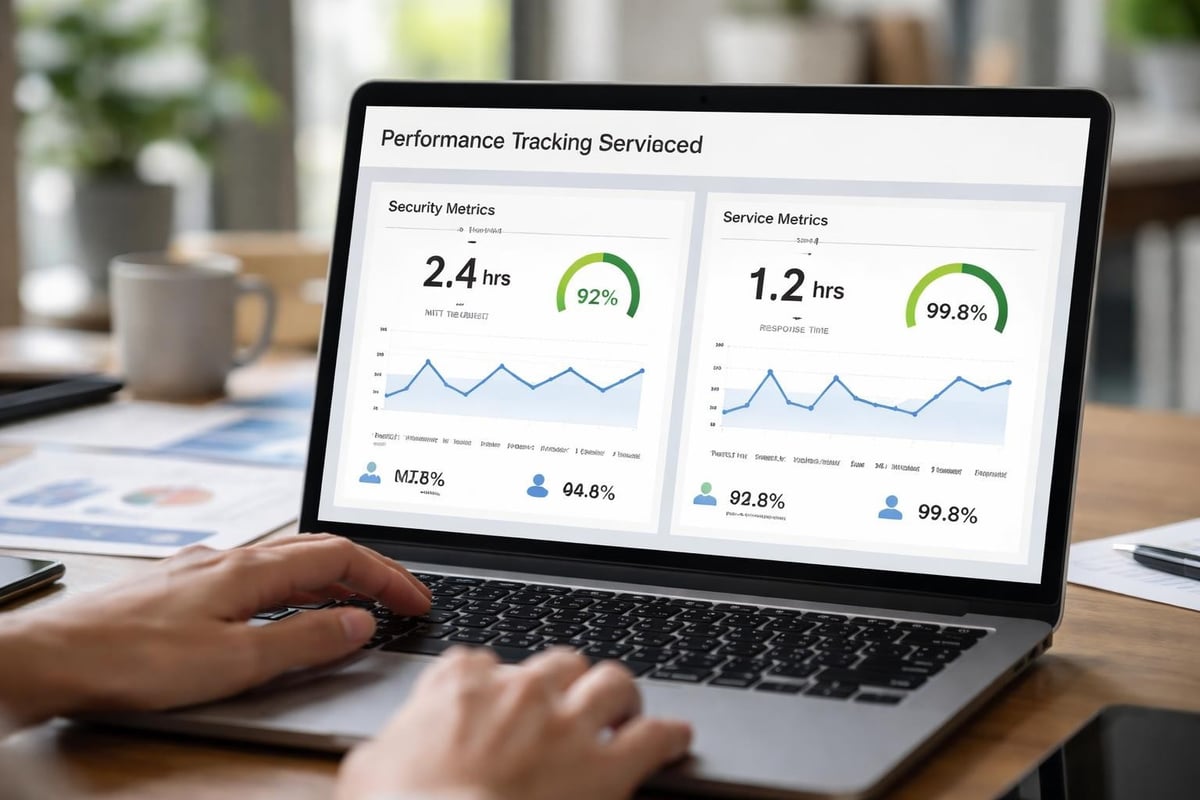
Tracking performance requires specific metrics that reveal both security posture and service quality. Organizations must establish baselines and monitor trends across multiple dimensions.
| Security Metric | Service Metric | Combined Impact |
|---|---|---|
| Mean Time to Detect (MTTD) | First Response Time | Faster threat response improves uptime |
| Patch Compliance Rate | System Availability | Updated systems reduce vulnerabilities and crashes |
| Failed Login Attempts | User Access Speed | Balanced authentication maintains security and convenience |
| Vulnerability Count | Support Ticket Volume | Fewer vulnerabilities mean fewer service disruptions |
These measurements reveal how security and service intersect in daily operations. A business with rapid threat detection naturally experiences better service continuity. Similarly, organizations that maintain high system availability often demonstrate stronger security compliance.
Building a Security-First Service Culture
Creating organizational culture that values both security and service requires leadership commitment and employee engagement. Too many businesses treat cybersecurity as an IT department responsibility rather than a company-wide priority. This fragmented approach creates vulnerabilities and service gaps.
Training Programs That Unite Teams
Effective training programs demonstrate how security practices enhance service delivery:
- Customer Data Protection Modules – Show employees how encryption and access controls protect client information while maintaining service speed
- Incident Response Simulations – Practice coordinated responses that minimize service disruption during security events
- Password Management Workshops – Teach efficient authentication methods that balance security with user convenience
- Phishing Recognition Training – Reduce successful attacks that compromise both security and service availability
- Compliance Awareness Sessions – Connect regulatory requirements to service quality expectations
Regular reinforcement ensures teams understand their role in maintaining security and service standards. Employees who recognize this connection become active participants rather than passive recipients of IT policies.
The information security controls recommended by ISO/IEC 27002 provide frameworks for implementing comprehensive protection measures. These standards emphasize the importance of organizational buy-in and clear accountability structures.
Technology Integration for Enhanced Protection and Performance
Modern managed IT services leverage integrated platforms that address security and service simultaneously. Cloud computing, network monitoring tools, and automated backup systems exemplify technologies that serve dual purposes.
Cloud infrastructure demonstrates this integration effectively. Properly configured cloud environments provide:
- Automatic security updates without service interruptions
- Scalable resources that maintain performance during demand spikes
- Geographic redundancy protecting against localized failures
- Built-in compliance features satisfying regulatory requirements
- Real-time monitoring identifying both security threats and performance issues
Organizations migrating to cloud platforms must balance security configurations with accessibility requirements. Overly restrictive settings frustrate users and encourage workarounds that create vulnerabilities. Conversely, permissive configurations expose sensitive data and systems to unauthorized access.
Network Monitoring as a Unified Strategy
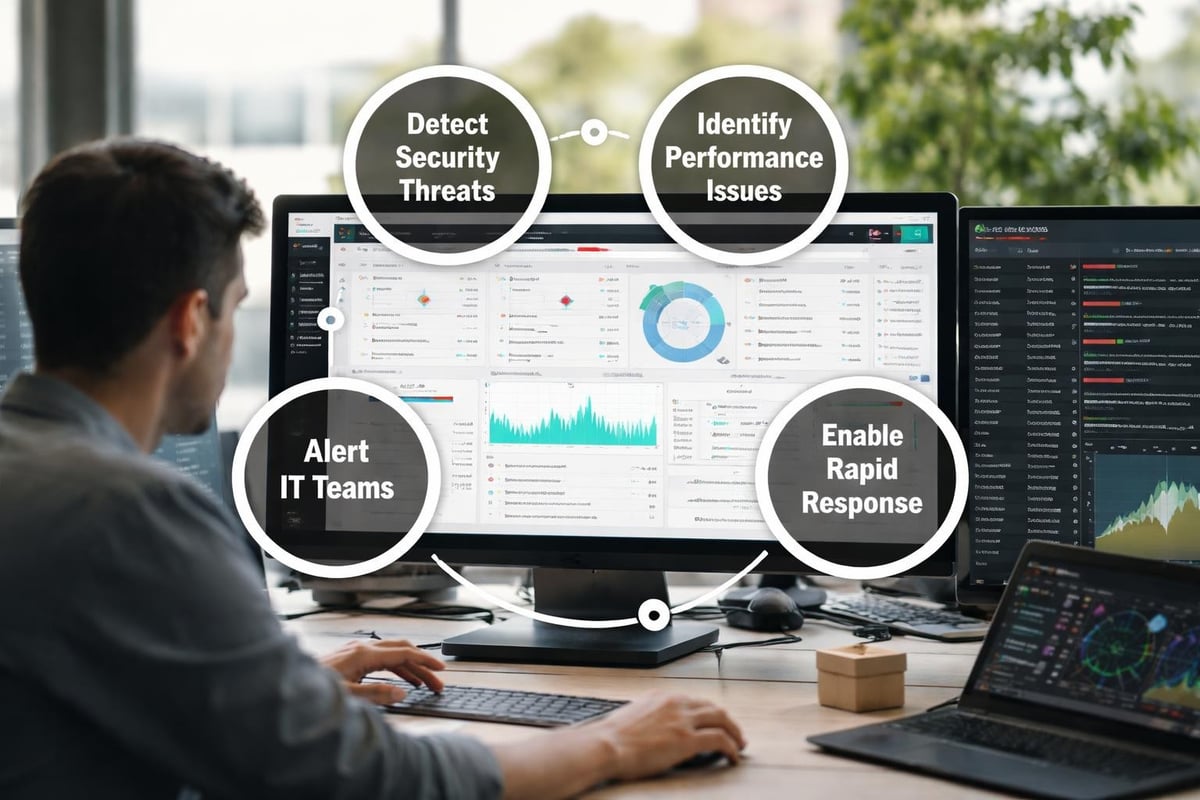
Network monitoring tools represent essential components of security and service delivery. These platforms provide visibility into traffic patterns, system performance, and potential threats through continuous analysis.
| Monitoring Function | Security Benefit | Service Benefit |
|---|---|---|
| Bandwidth Analysis | Detects data exfiltration | Identifies performance bottlenecks |
| Device Inventory | Tracks unauthorized hardware | Manages asset lifecycle |
| Application Performance | Spots malicious software | Optimizes user experience |
| Log Aggregation | Creates audit trails | Troubleshoots service issues |
| Alert Configuration | Warns of suspicious activity | Notifies of degraded performance |
Businesses implementing comprehensive monitoring gain actionable intelligence for both security and service improvements. The data collected informs strategic decisions about infrastructure investments, policy updates, and training priorities.
Data Protection Strategies That Support Business Operations
Data backup and recovery systems exemplify how security and service requirements align. These solutions protect against cyber attacks, hardware failures, and human errors while ensuring business continuity. Organizations must implement strategies that address multiple threat scenarios without compromising operational efficiency.
Implementing the 3-2-1 Backup Rule
The industry-standard approach maintains three copies of data on two different media types with one copy offsite. This framework provides security through redundancy while supporting rapid recovery when service restoration becomes necessary.
Modern implementations enhance this rule through:
- Automated scheduling that captures changes without manual intervention
- Encryption protocols protecting data at rest and in transit
- Version control enabling recovery from specific points in time
- Testing procedures verifying backup integrity before disasters occur
- Cloud integration providing offsite storage with rapid accessibility
Small businesses often underestimate recovery time objectives until facing actual data loss. The data security best practices from Salesforce highlight encryption and authentication as foundational elements that protect information while maintaining usability.
Regulatory Compliance as a Service Differentiator
Security and service excellence increasingly depend on regulatory compliance. Industries face evolving requirements regarding data protection, privacy, and operational transparency. Organizations that proactively address these mandates gain competitive advantages through demonstrated trustworthiness.
Compliance frameworks provide structured approaches to implementing security controls and service standards. Rather than viewing regulations as burdens, forward-thinking businesses recognize them as blueprints for operational excellence.
Common requirements affecting small businesses include:
- Personal Information Protection and Electronic Documents Act (PIPEDA) for Canadian organizations
- Payment Card Industry Data Security Standard (PCI DSS) for businesses processing credit cards
- General Data Protection Regulation (GDPR) for companies serving European customers
- Industry-specific standards governing healthcare, finance, and professional services
Meeting these requirements necessitates integrated security and service approaches. Compliant organizations implement controls that protect data while maintaining accessibility for authorized users. Documentation procedures satisfy auditors while creating knowledge bases that improve service delivery.
Risk Assessment Methodologies
Understanding organizational vulnerabilities requires systematic risk assessment connecting security threats to service impacts. The ISO 28000 security management system standards provide frameworks for identifying, analyzing, and mitigating risks across operations.
Effective assessments follow structured processes:
- Asset Identification – Catalog systems, data, and processes critical to operations
- Threat Analysis – Determine internal and external risks facing each asset
- Vulnerability Evaluation – Assess weaknesses that threats could exploit
- Impact Calculation – Quantify potential consequences to security and service
- Control Selection – Implement protective measures proportional to risks
- Monitoring and Review – Continuously evaluate effectiveness and adapt strategies
This methodology reveals dependencies between security measures and service capabilities. A vulnerability affecting customer databases threatens both data confidentiality and service availability. Addressing such risks requires coordinated responses that protect information while maintaining operational continuity.

Managed IT Services as Security and Service Enablers
Small businesses frequently lack resources to maintain specialized security teams and 24/7 service monitoring internally. Managed IT service providers address this gap through expertise, tools, and economies of scale that individual organizations cannot replicate cost-effectively.
Fixed-rate fee structures transform unpredictable IT expenses into manageable operational costs. This financial predictability enables better planning while ensuring consistent security and service levels. Businesses avoid the feast-or-famine cycle of reactive IT spending, where security investments occur only after breaches and service improvements happen only after failures.
Professional IT management delivers several competitive advantages:
- Proactive maintenance preventing security vulnerabilities and service degradation
- Expert knowledge applying industry best practices to specific business contexts
- Advanced tools providing enterprise-grade capabilities at small business prices
- Rapid response minimizing downtime when incidents occur
- Strategic planning aligning technology investments with business objectives
Organizations partnering with managed service providers gain access to resources typically available only to larger enterprises. This democratization of IT capabilities levels competitive playing fields in markets where technology competence increasingly determines success.
Incident Response Planning for Continuity
Despite preventive measures, security incidents and service disruptions eventually occur. Organizations must prepare coordinated response plans that minimize impacts and restore normal operations rapidly. The quality of incident response directly affects customer trust and business reputation.
Creating Effective Response Protocols
Comprehensive incident response plans address security breaches, service outages, and hybrid scenarios where attacks cause operational disruptions. These documents should specify:
| Response Phase | Security Actions | Service Actions |
|---|---|---|
| Preparation | Update security policies, train staff | Document service dependencies, establish communication channels |
| Detection | Monitor alerts, analyze anomalies | Track performance metrics, identify degradation patterns |
| Containment | Isolate compromised systems | Redirect traffic, activate redundant systems |
| Eradication | Remove threats, patch vulnerabilities | Repair damaged components, restore configurations |
| Recovery | Restore from clean backups | Verify functionality, resume normal operations |
| Lessons Learned | Update security controls | Improve service resilience, refine procedures |
Regular testing through tabletop exercises and simulations validates these plans before real incidents occur. Organizations discover gaps in documentation, communication breakdowns, and resource constraints during controlled scenarios rather than during actual crises.
The security best practices from UCLA’s information security office emphasize the importance of documented procedures and regular training to maintain organizational readiness.
Vendor Management and Third-Party Risks
Modern businesses rely on numerous vendors providing software, services, and infrastructure components. Each relationship introduces potential security vulnerabilities and service dependencies that require careful management. Security and service excellence depend on extending standards beyond organizational boundaries.
Due diligence processes evaluate vendor capabilities across multiple dimensions. Organizations should assess potential partners based on:
- Security certifications and compliance attestations
- Service level agreements with specific uptime guarantees
- Incident response capabilities and communication protocols
- Data handling practices and privacy protections
- Financial stability and business continuity plans
Ongoing vendor management maintains these standards through regular reviews, performance monitoring, and contract compliance verification. Businesses cannot outsource responsibility even when delegating functionality to external providers.
Supply chain security has emerged as a critical concern following high-profile breaches exploiting vendor relationships. The standards developed by the Security Industry Association promote interoperability and information sharing that enhance collective security across interconnected organizations.
Future Trends Shaping Security and Service Integration
Technology evolution continues transforming how organizations approach security and service delivery. Artificial intelligence, automation, and zero-trust architectures represent emerging trends with significant implications for small businesses.
AI-powered security tools analyze massive data volumes identifying threats human analysts might miss. These same technologies optimize service delivery through predictive maintenance, intelligent routing, and personalized user experiences. Organizations implementing AI gain capabilities previously unavailable at any cost.
Automation reduces manual tasks that consume IT resources while introducing consistency impossible through human processes alone. Automated patching, configuration management, and compliance reporting free technical staff to focus on strategic initiatives rather than repetitive maintenance.
Zero-trust security models eliminate assumptions about trustworthiness based on network location or prior authentication. Every access request undergoes verification regardless of source. This approach enhances security without sacrificing service quality when properly implemented with modern identity management tools.
Small businesses exploring these technologies should partner with experienced providers who understand implementation complexities. Cutting-edge capabilities deliver value only when integrated thoughtfully with existing systems and workflows. The insights available through resources like the Delphi Systems blog help organizations navigate technological changes affecting security and service delivery.
Investment Strategies for Balanced Protection and Performance
Budget allocation represents one of the most challenging aspects of maintaining security and service excellence. Organizations must prioritize competing demands with limited resources while addressing immediate needs and long-term strategic objectives.
Prioritization Framework
Effective IT investment strategies balance security requirements with service improvements through structured evaluation:
- Critical Asset Protection – Secure systems and data essential to business operations
- Compliance Obligations – Meet regulatory requirements avoiding penalties and reputational damage
- High-Impact Vulnerabilities – Address weaknesses with greatest potential consequences
- Service Enhancement Opportunities – Improve efficiency and customer satisfaction
- Emerging Threats – Prepare for evolving security landscape
- Capacity Planning – Scale infrastructure supporting growth
This framework ensures resources address genuine priorities rather than responding to latest trends or loudest complaints. Organizations avoid both over-investing in low-value initiatives and under-funding critical protections.
Total cost of ownership calculations should incorporate direct expenses like software licenses and hardware purchases alongside indirect costs including training, maintenance, and opportunity costs of poor security or service. Comprehensive analysis reveals true investment requirements and expected returns.
The relationship between security and service defines modern business success, requiring integrated approaches that protect operations while enabling growth. Organizations that view these elements as complementary rather than competing gain resilience, efficiency, and customer trust that translate directly to competitive advantages. Whether you're strengthening cybersecurity defenses, improving IT infrastructure performance, or seeking comprehensive technology management, Delphi Systems Inc. provides the expertise and support small businesses need to thrive in an increasingly digital marketplace.

