The digital transformation of business operations has made data the most valuable asset for organizations across all sectors. As small businesses in Lethbridge and beyond increasingly rely on digital infrastructure, understanding the role of information security in cyber security becomes essential for survival and growth. Information security focuses on protecting data in all its forms, whether stored digitally, on paper, or transmitted through networks. This comprehensive protection framework operates as a critical component within the broader cybersecurity ecosystem, ensuring that sensitive business information remains confidential, accurate, and available to authorized users when needed.
Understanding Information Security Within the Cybersecurity Framework
Information security in cyber security represents a specialized discipline focused on protecting data assets from unauthorized access, disclosure, modification, and destruction. While cybersecurity encompasses technological defenses against digital threats, information security takes a broader approach that includes physical, administrative, and technical safeguards.
The fundamental difference lies in scope and application. Cybersecurity primarily addresses digital threats targeting computer systems, networks, and electronic data. Information security extends this protection to all information formats, including physical documents, intellectual property, and proprietary business processes.
The Three Pillars of Information Security
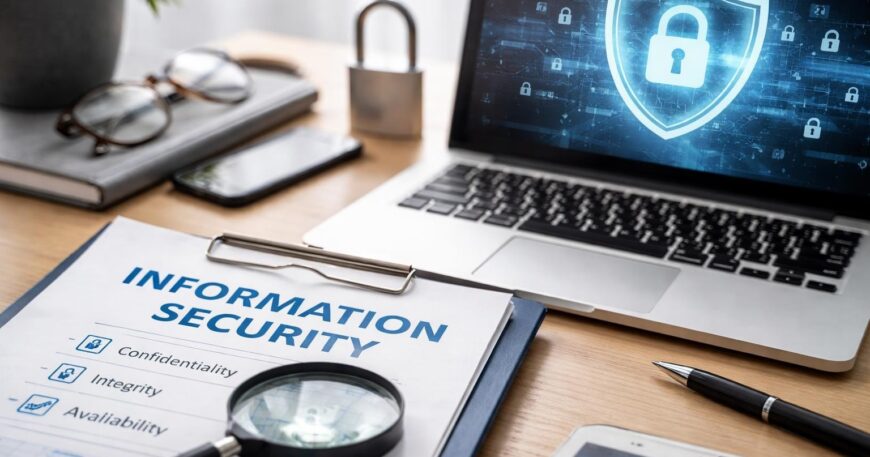
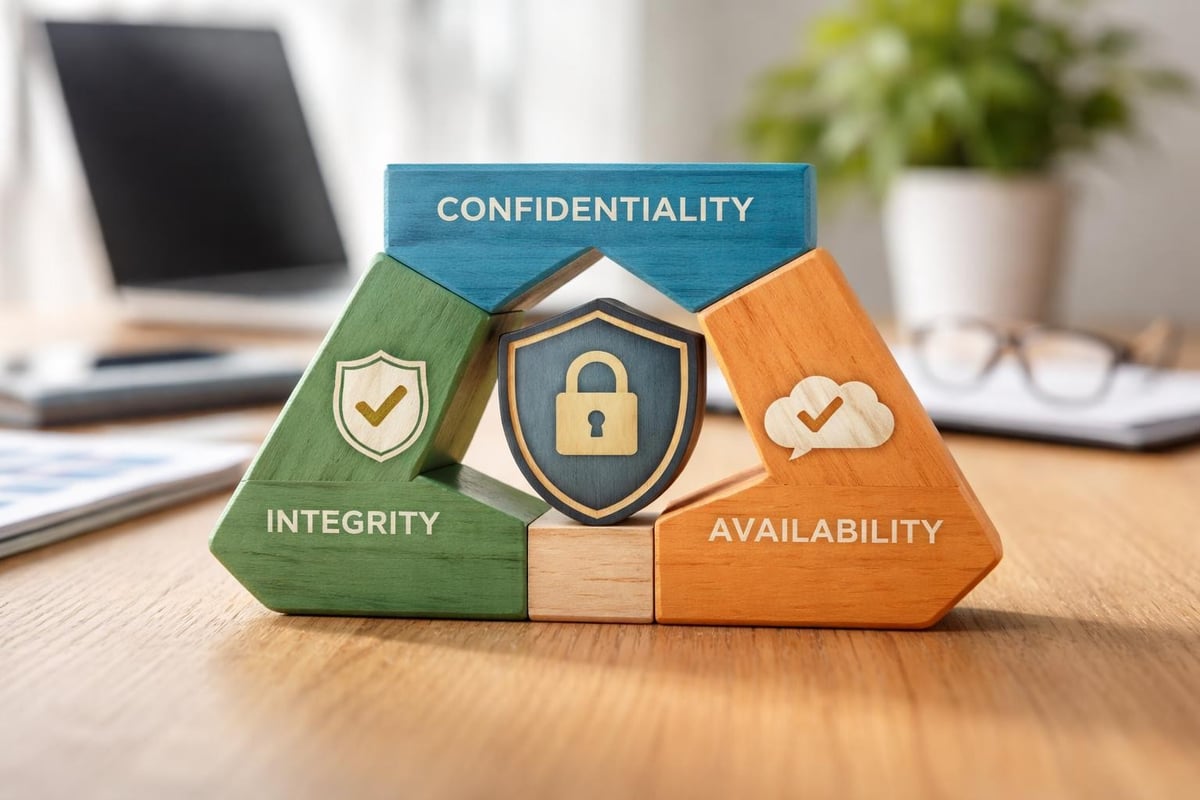
The CIA triad forms the foundation of information security in cyber security implementations:
- Confidentiality ensures that sensitive information remains accessible only to authorized individuals and systems
- Integrity guarantees that data remains accurate, complete, and unaltered except through authorized processes
- Availability maintains reliable and timely access to information for legitimate users when needed
For small businesses managing client data, financial records, and operational information, these principles translate into practical measures that prevent data breaches, maintain customer trust, and ensure business continuity.
Critical Components of Information Security Programs
Building an effective information security program requires multiple layers of protection that work together seamlessly. Each component addresses specific vulnerabilities while contributing to the overall security posture.
Access Control and Identity Management
Access control systems determine who can view, modify, or delete specific information within your organization. Modern identity and access management (IAM) solutions verify user identities through authentication mechanisms such as passwords, multi-factor authentication, and biometric verification.
Key access control strategies include:
- Role-based access control (RBAC) that assigns permissions based on job functions
- Principle of least privilege limiting users to minimum necessary access
- Regular access reviews to remove unnecessary permissions
- Strong password policies requiring complex, unique credentials
- Automated de-provisioning when employees leave the organization
Understanding information security threats helps businesses implement appropriate access controls that balance security with operational efficiency.
Data Classification and Protection
Not all information requires the same level of protection. Data classification systems categorize information based on sensitivity, regulatory requirements, and business impact if compromised.
| Classification Level | Examples | Protection Requirements |
|---|---|---|
| Public | Marketing materials, published content | Basic integrity controls |
| Internal | Employee directories, internal policies | Access restrictions, encryption in transit |
| Confidential | Client records, financial data | Strong encryption, audit logging, limited access |
| Restricted | Trade secrets, executive communications | Maximum security, need-to-know access only |
Implementing data classification enables organizations to allocate security resources efficiently while ensuring critical assets receive appropriate protection.
Encryption and Data Protection Technologies
Encryption transforms readable data into encoded format that requires specific keys for decryption. This technology protects information both at rest (stored on devices or servers) and in transit (moving across networks).
Modern encryption standards include AES-256 for data at rest and TLS 1.3 for network communications. Small businesses should ensure that sensitive client information, financial transactions, and proprietary data remain encrypted throughout their lifecycle.
Information Security Governance and Compliance
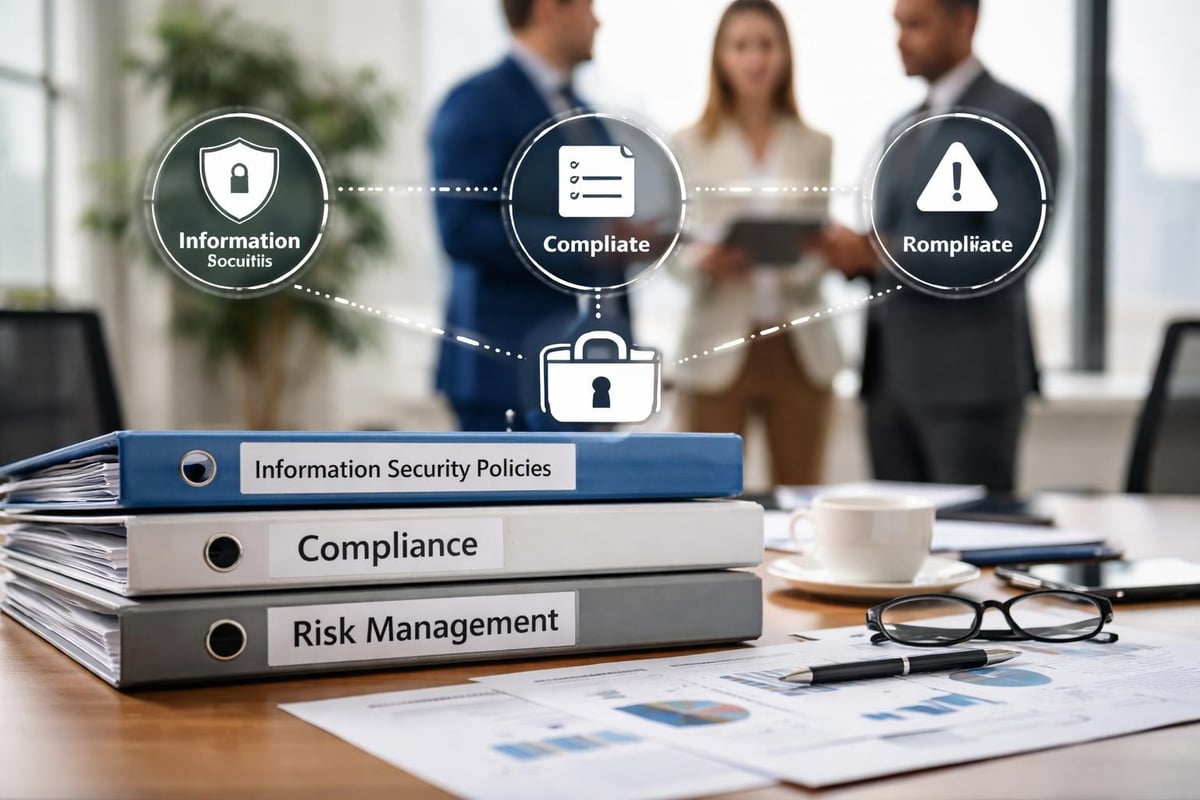
Effective information security in cyber security requires structured governance frameworks that establish policies, procedures, and accountability mechanisms. These frameworks help organizations maintain consistent security practices while meeting regulatory obligations.
Policy Development and Implementation
Security policies define acceptable use, data handling procedures, incident response protocols, and employee responsibilities. Well-crafted policies provide clear guidance for daily operations while establishing consequences for violations.
Essential policy categories include:
- Acceptable use policies governing employee technology usage
- Data retention and disposal policies ensuring proper information lifecycle management
- Incident response policies outlining procedures for security events
- Remote access policies securing connections from external locations
- Third-party vendor policies managing supply chain risks
Regular policy reviews ensure that guidelines remain relevant as business needs and threat landscapes evolve.
Regulatory Compliance Requirements
Various regulations mandate specific information security controls for businesses handling certain data types. Understanding applicable requirements helps organizations avoid penalties while building customer confidence.
Common compliance frameworks affecting small businesses:
- PIPEDA (Personal Information Protection and Electronic Documents Act) governs personal data handling in Canada
- PCI DSS (Payment Card Industry Data Security Standard) applies to businesses processing credit card transactions
- HIPAA (Health Insurance Portability and Accountability Act) protects healthcare information
- SOC 2 demonstrates security controls for service providers
Compliance extends beyond checkbox exercises to implementing genuine security improvements that protect business interests.
Risk Management and Threat Assessment
Information security in cyber security demands proactive risk identification and mitigation strategies. Regular assessments reveal vulnerabilities before attackers exploit them, enabling targeted improvements that maximize security investments.
Conducting Security Risk Assessments
Risk assessments evaluate potential threats, existing vulnerabilities, and likely impacts to prioritize security initiatives. This systematic process helps small businesses focus resources on the most critical exposures.
The risk assessment process follows these steps:
- Asset identification cataloging all information assets and their business value
- Threat analysis identifying potential sources of harm including hackers, malware, natural disasters, and human error
- Vulnerability assessment examining weaknesses in current security controls
- Impact evaluation determining potential damage from successful attacks
- Risk prioritization ranking risks based on likelihood and severity
- Control selection choosing appropriate safeguards for high-priority risks
Implementing an Information Security Management System provides structured approaches for continuous risk management that adapt to changing conditions.
Common Information Security Threats
Understanding current threat vectors enables organizations to implement relevant defenses rather than generic solutions. The threat landscape continually evolves as attackers develop new techniques and exploit emerging vulnerabilities.
| Threat Type | Description | Primary Defenses |
|---|---|---|
| Phishing | Deceptive emails tricking users into revealing credentials | Security awareness training, email filtering |
| Ransomware | Malware encrypting data and demanding payment | Regular backups, endpoint protection, network segmentation |
| Insider threats | Employees misusing access privileges | Access controls, activity monitoring, separation of duties |
| Data leakage | Unauthorized information disclosure | Data loss prevention, encryption, policy enforcement |
| Social engineering | Psychological manipulation for unauthorized access | Security culture, verification procedures |
Addressing these threats requires combined technical controls, employee education, and operational procedures that reinforce security throughout daily activities.
Security Awareness and Human Factors
Technology alone cannot ensure information security in cyber security implementations. Human behavior significantly influences security effectiveness, making employee education and organizational culture critical success factors.
Building Security-Conscious Culture
Security awareness programs transform employees from potential vulnerabilities into active defenders. Regular training helps staff recognize threats, follow security procedures, and report suspicious activities promptly.
Effective awareness initiatives include:
- Monthly security tips addressing current threats and best practices
- Simulated phishing exercises testing employee vigilance
- New hire orientation covering security responsibilities
- Annual refresher training reinforcing key concepts
- Recognition programs rewarding security-conscious behavior
Engaged employees who understand why security matters demonstrate better compliance with policies and procedures than those simply following mandatory rules.
Addressing the Human Element
Most security breaches involve human factors such as weak passwords, falling for phishing scams, or circumventing controls for convenience. Designing security measures that align with natural workflows reduces resistance while maintaining protection.
User-friendly security implementations increase adoption rates and reduce workarounds that create vulnerabilities. For example, password managers simplify strong credential management, while single sign-on reduces authentication friction without compromising security.
Technology Solutions for Information Security
Modern information security in cyber security leverages various technologies that automate protection, detect threats, and respond to incidents efficiently. Small businesses benefit from managed security solutions that provide enterprise-grade protection without requiring dedicated security staff.
Security Information and Event Management (SIEM)
SIEM systems collect and analyze security events from across IT infrastructure, identifying patterns that indicate potential threats. These platforms correlate data from firewalls, servers, workstations, and applications to provide comprehensive visibility.
Benefits of SIEM implementation include:
- Real-time threat detection through automated analysis
- Compliance reporting demonstrating security control effectiveness
- Incident investigation with detailed forensic data
- Trend analysis identifying emerging risks
- Automated alerting for critical security events
Managed security service providers often include SIEM capabilities within their offerings, making advanced threat detection accessible to smaller organizations.
Endpoint Protection and Network Security
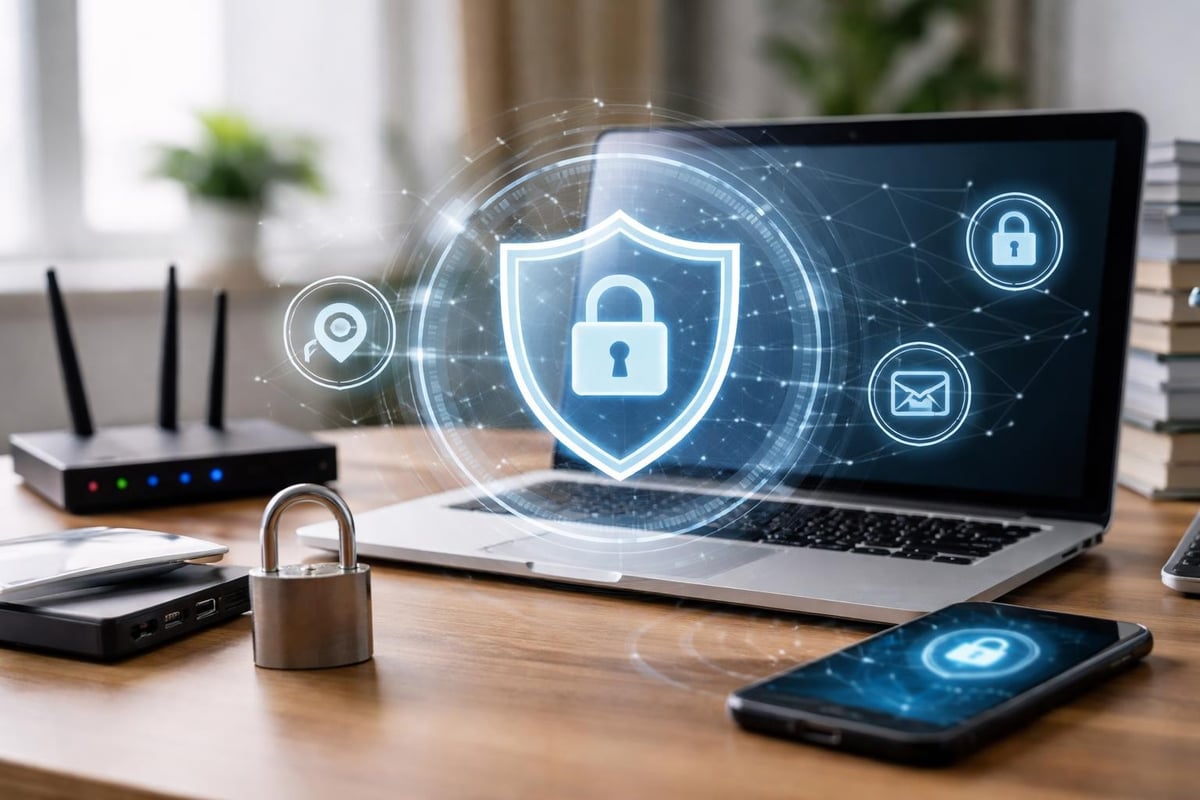
Protecting individual devices (endpoints) and network infrastructure creates multiple defensive layers that increase attacker difficulty. Modern endpoint protection platforms combine antivirus, anti-malware, behavioral analysis, and device control into unified solutions.
Network security technologies segment traffic, filter threats, and monitor communications for suspicious activity. Firewalls, intrusion detection systems, and secure web gateways prevent unauthorized access while allowing legitimate business operations.
Standards and Frameworks for Information Security
Established frameworks provide proven approaches for implementing information security in cyber security programs. These standards offer structured methodologies that help organizations build comprehensive protection without starting from scratch.
ISO/IEC 27002 Security Controls
The ISO/IEC 27002 standard provides detailed guidance on information security controls covering organizational, physical, and technical measures. This internationally recognized framework helps businesses implement appropriate safeguards across all security domains.
Key control categories include:
- Information security policies establishing governance foundation
- Organization of information security defining roles and responsibilities
- Human resource security managing employee-related risks
- Asset management protecting organizational resources
- Access control limiting information access to authorized users
- Cryptography protecting information confidentiality and integrity
- Physical and environmental security safeguarding facilities
- Operations security ensuring correct and secure system operations
- Communications security protecting network information transfers
- System acquisition, development, and maintenance integrating security throughout lifecycles
- Supplier relationships managing third-party risks
- Information security incident management handling security events
- Business continuity management maintaining operations during disruptions
- Compliance ensuring adherence to legal and regulatory requirements
Organizations can select relevant controls based on their specific risk profiles and business requirements rather than implementing every possible measure.
NIST Cybersecurity Framework
The NIST Cybersecurity Framework offers flexible guidance for managing cybersecurity risks through five core functions: Identify, Protect, Detect, Respond, and Recover. This framework complements information security programs by providing structured approaches for addressing cyber threats.
Small businesses particularly benefit from NIST's scalable approach that adapts to organizational size, industry sector, and risk tolerance. The framework emphasizes continuous improvement through regular assessments and adjustments based on changing conditions.
Building Resilience and Business Continuity
Information security in cyber security extends beyond preventing attacks to ensuring organizations can maintain operations and recover quickly from incidents. Cyber resilience combines preventive measures with response capabilities that minimize disruption when breaches occur.
Backup and Disaster Recovery
Comprehensive backup strategies protect against data loss from ransomware, hardware failures, natural disasters, and human errors. The 3-2-1 backup rule provides proven guidance: maintain three copies of data, store them on two different media types, and keep one copy offsite.
Modern backup solutions offer:
- Automated scheduling ensuring regular protection without manual intervention
- Incremental backups reducing storage requirements and backup windows
- Versioning enabling recovery to specific points in time
- Encryption protecting backup data from unauthorized access
- Testing procedures verifying restoration capabilities
Regular disaster recovery testing validates that backups actually work when needed, preventing unpleasant surprises during actual incidents.
Incident Response Planning
Despite best prevention efforts, security incidents will occur. Prepared organizations minimize damage through structured incident response processes that contain threats, preserve evidence, restore operations, and improve defenses.
Incident response phases include:
- Preparation establishing response teams, procedures, and tools
- Detection and analysis identifying security events and determining severity
- Containment limiting incident spread while preserving forensic evidence
- Eradication removing threats from affected systems
- Recovery restoring normal operations with enhanced security
- Lessons learned analyzing incidents to prevent recurrence
Documented playbooks guide responders through specific incident types such as ransomware attacks, data breaches, or denial of service events, ensuring consistent and effective responses.
Monitoring and Continuous Improvement
Information security in cyber security requires ongoing attention rather than one-time implementations. Continuous monitoring detects emerging threats, measures control effectiveness, and identifies improvement opportunities that maintain strong security postures.
Security Metrics and Reporting
Measuring security performance enables data-driven decisions about resource allocation and control effectiveness. Key performance indicators track trends over time while highlighting areas requiring attention.
| Metric Category | Example Metrics | Purpose |
|---|---|---|
| Prevention | Blocked threats, patching compliance, security training completion | Measure proactive defenses |
| Detection | Mean time to detect, incident volume, false positive rates | Evaluate monitoring effectiveness |
| Response | Mean time to respond, incident resolution time, recurring incidents | Assess incident handling |
| Impact | Downtime duration, data loss volume, recovery costs | Quantify security event consequences |
Regular reporting to leadership demonstrates security program value while securing necessary resources for ongoing protection.
Adapting to Emerging Threats
The information security landscape constantly evolves as attackers develop new techniques and technologies introduce fresh vulnerabilities. Organizations must stay informed about emerging threats while adapting defenses to address current risks.
Threat intelligence feeds provide timely information about new malware variants, exploitation techniques, and targeted attacks affecting specific industries. Incorporating this intelligence into security operations enables proactive defense adjustments before threats impact your organization.
Partnerships with managed IT service providers like those found at Delphi Systems Inc. deliver access to security expertise and threat intelligence that would be difficult for small businesses to develop independently.
Integrating Information Security Across Business Operations
Successful information security in cyber security programs integrate protection seamlessly into daily business processes rather than creating separate security activities. This operational integration improves compliance while reducing friction that leads to workarounds.
Secure Development and Change Management
Organizations developing custom applications or modifying existing systems must incorporate security throughout development lifecycles. Secure coding practices, vulnerability testing, and security reviews before deployment prevent introducing new weaknesses.
Change management processes evaluate security implications before implementing system modifications. This structured approach prevents configuration changes that inadvertently create exposures or disable existing controls.
Third-Party Risk Management
Modern businesses rely on vendors, contractors, and cloud service providers who access sensitive information or provide critical services. These relationships extend your security perimeter, requiring careful vendor assessment and ongoing monitoring.
Vendor risk management includes:
- Security assessments evaluating vendor controls before engagement
- Contract terms requiring specific security measures and incident notification
- Regular audits verifying ongoing compliance with security requirements
- Monitoring for vendor-related security incidents
- Contingency planning for vendor failures or breaches
Understanding the distinctions between information security and cybersecurity helps organizations communicate requirements clearly to third-party providers while ensuring comprehensive protection.
Practical Implementation for Small Businesses
Small businesses face unique challenges implementing information security in cyber security programs with limited budgets and staff. Prioritizing essential controls while leveraging managed services provides effective protection without overwhelming resources.
Starting with Foundational Controls
Begin with high-impact, low-cost measures that address the most common threats:
- Enable multi-factor authentication on all accounts
- Implement automatic software updates and patch management
- Deploy endpoint protection on all devices
- Establish regular backup procedures with offsite storage
- Conduct employee security awareness training
- Document essential security policies and procedures
These foundational controls prevent the majority of common attacks while establishing security baselines for future enhancements.
Leveraging Managed Security Services
Managed IT service providers deliver enterprise-grade security capabilities at predictable monthly costs that fit small business budgets. These partnerships provide access to security expertise, 24/7 monitoring, and advanced technologies without requiring internal specialists.
Managed security services typically include:
- Network monitoring and threat detection
- Patch management and vulnerability scanning
- Email security and spam filtering
- Backup management and disaster recovery
- Incident response support
- Compliance assistance and documentation
Fixed-rate fee structures enable accurate budgeting while ensuring comprehensive protection scales with business growth.
Protecting information assets requires comprehensive strategies that combine technology, processes, and people within structured frameworks that address current threats while adapting to emerging risks. Small businesses in Lethbridge and surrounding areas can achieve robust information security in cyber security through foundational controls, employee engagement, and strategic partnerships that deliver enterprise-grade protection at manageable costs. Delphi Systems Inc. provides managed IT services that integrate information security best practices into comprehensive support programs, enabling small businesses to focus on growth while maintaining secure, reliable IT infrastructure through expert monitoring, proactive protection, and responsive support.

