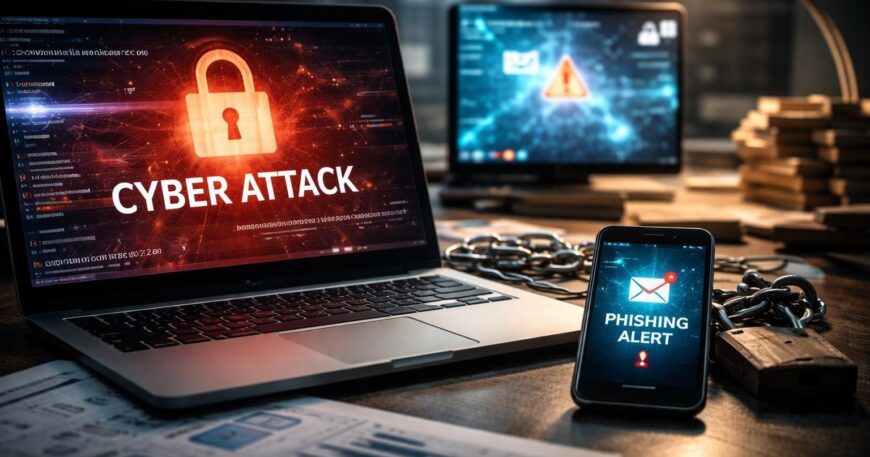
The digital landscape in 2026 presents unprecedented challenges for small businesses across Lethbridge and beyond. As organizations increasingly rely on cloud computing, remote work infrastructure, and interconnected systems, understanding cyber threats in cyber security has become essential for survival. Every business, regardless of size, faces a constantly evolving array of malicious actors seeking to exploit vulnerabilities, steal sensitive data, and disrupt operations. The stakes have never been higher, with attacks growing more sophisticated and costly with each passing year.
Understanding the Current Threat Landscape
Modern cyber threats in cyber security extend far beyond simple viruses and spam emails. Today's attackers employ advanced tactics, leveraging artificial intelligence and machine learning to automate attacks and identify weaknesses in network security. Small businesses often believe they're too insignificant to target, but cybercriminals view them as low-hanging fruit with valuable data and fewer security resources than enterprise organizations.
The Cybersecurity and Infrastructure Security Agency (CISA) provides continuous updates on emerging threats, helping organizations stay ahead of attackers. Monitoring these advisories should be part of every business's security strategy.
The Financial Impact of Cyber Attacks
Business owners frequently underestimate the true cost of a security breach. Direct expenses include ransom payments, forensic investigations, and system restoration, but indirect costs often prove more devastating.
Key financial consequences include:
- Loss of customer trust and brand reputation
- Regulatory fines for data protection violations
- Business downtime and lost productivity
- Legal fees and potential lawsuits
- Increased insurance premiums
Many small businesses never recover from a significant breach. Studies consistently show that over 60% of small companies close within six months of a major cyber attack, making prevention far more cost-effective than remediation.

Primary Categories of Cyber Threats
Cyber threats in cyber security manifest in numerous forms, each requiring specific defensive strategies. Understanding these categories helps businesses prioritize their security investments and develop comprehensive protection plans.
Malware and Ransomware Attacks
Malware remains one of the most prevalent threats facing organizations today. Ransomware, a particularly destructive variant, encrypts business data and demands payment for its release. The Health Service Executive ransomware attack demonstrated how these incidents can cripple critical infrastructure and public services.
Common malware types targeting businesses:
- Ransomware – Encrypts files and demands payment
- Trojans – Disguises as legitimate software to gain access
- Spyware – Monitors activities and steals information
- Rootkits – Provides persistent unauthorized access
- Cryptominers – Uses computing resources for cryptocurrency mining
Recent trends show that malicious URLs have overtaken email attachments as the primary delivery method for malware. This shift requires businesses to update their security awareness training and implement advanced URL filtering solutions.
Phishing and Social Engineering
Human psychology remains the weakest link in most security frameworks. Phishing attacks manipulate employees into revealing credentials, transferring funds, or downloading malicious software through deceptive communications that appear legitimate.
These attacks have evolved beyond obvious spam emails. Modern phishing campaigns use sophisticated personalization, often researching targets through social media to craft convincing messages. Spear phishing targets specific individuals, while whaling focuses on executives with access to sensitive financial information.
| Attack Type | Target Audience | Success Rate | Average Cost |
|---|---|---|---|
| Mass Phishing | General employees | 3-5% | $14,000 per incident |
| Spear Phishing | Specific individuals | 50-70% | $58,000 per incident |
| Whaling | Executives/Leadership | 30-45% | $125,000 per incident |
| Business Email Compromise | Finance departments | 35-60% | $180,000 per incident |
Training employees to recognize these tactics significantly reduces risk, but technical controls provide essential backup when human judgment fails.
Advanced Persistent Threats
Advanced persistent threats (APTs) represent long-term, coordinated attacks often sponsored by nation-states or organized crime groups. Unlike opportunistic attacks seeking quick profits, APTs involve patient infiltration, establishing persistent access, and quietly gathering intelligence over months or years.
While small businesses might assume APTs target only government agencies or large corporations, they increasingly face these threats through supply chain attacks. A small business providing services to larger organizations becomes an entry point for attackers seeking access to more valuable targets.
Emerging Threats for 2026
The threat landscape continues evolving rapidly, with new attack vectors emerging as technology advances. Cyber threats in cyber security now incorporate artificial intelligence, quantum computing considerations, and attacks on cyber-physical systems.
AI-Powered Attacks
Artificial intelligence has transformed both defensive and offensive capabilities in cybersecurity. State-sponsored actors increasingly leverage AI to escalate cyberattacks, automating reconnaissance, vulnerability scanning, and even crafting personalized phishing messages at scale.
Machine learning algorithms can analyze defender responses and adapt attack strategies in real-time. Deepfake technology enables voice and video impersonation, making social engineering attacks nearly impossible to detect through traditional means.

Supply Chain Vulnerabilities
Supply chain attacks exploit the interconnected nature of modern business relationships. Attackers compromise software vendors, service providers, or hardware manufacturers to distribute malware to their entire customer base.
These attacks prove particularly challenging because businesses often trust their vendors implicitly. A compromised software update from a legitimate provider can bypass traditional security controls, delivering malware directly into protected networks.
Critical supply chain security measures:
- Vendor security assessments and audits
- Software composition analysis
- Continuous monitoring of third-party access
- Incident response coordination with partners
- Contractual security requirements
Cyber-Kinetic Attacks
The convergence of digital and physical systems creates new vulnerabilities through cyber-kinetic attacks. These threats target operational technology, industrial control systems, and Internet of Things devices to cause physical damage or disruption.
While manufacturing and critical infrastructure face the greatest risk, any business using smart building systems, connected security cameras, or IoT devices potentially exposes itself to these attacks. The number of connected devices continues growing, expanding the attack surface exponentially.
Recent statistics reveal alarming trends. Taiwan's infrastructure alone suffered over 2.5 million Chinese cyberattacks per day in 2025, demonstrating the scale and coordination of state-sponsored threats.
Building Robust Defenses
Addressing cyber threats in cyber security requires layered defenses combining technology, processes, and people. No single solution provides complete protection, making comprehensive strategies essential for small businesses.
Essential Security Technologies
Modern security frameworks incorporate multiple defensive layers, ensuring that if one control fails, others maintain protection. This defense-in-depth approach significantly reduces successful attack probability.
| Security Layer | Technology Examples | Primary Function |
|---|---|---|
| Perimeter Defense | Firewalls, IDS/IPS | Block unauthorized access |
| Endpoint Protection | Antivirus, EDR | Detect and remove malware |
| Network Security | VPN, Segmentation | Protect internal communications |
| Data Protection | Encryption, DLP | Secure sensitive information |
| Access Control | MFA, IAM | Verify user identities |
| Monitoring | SIEM, Log Analysis | Detect suspicious activities |
Regular security assessments identify gaps in these defensive layers. Vulnerability scanning, penetration testing, and security audits should occur quarterly at minimum, with critical systems receiving more frequent evaluation.
Network Monitoring and Response
Continuous network monitoring detects anomalies indicating potential breaches. Many attacks remain undetected for months, allowing attackers to exfiltrate massive amounts of data before discovery. Real-time monitoring reduces this detection window dramatically.
Effective monitoring requires establishing baseline normal behavior, then alerting on deviations. Machine learning enhances this process, identifying subtle patterns human analysts might miss.
Incident response planning prepares organizations for inevitable security events:
- Preparation – Establish response team and procedures
- Detection – Identify and validate security incidents
- Containment – Isolate affected systems to prevent spread
- Eradication – Remove threats and close vulnerabilities
- Recovery – Restore systems and verify integrity
- Lessons Learned – Document and improve processes
Testing these plans through tabletop exercises ensures teams respond effectively under pressure.

The Role of Managed IT Services
Small businesses often lack the resources to maintain comprehensive in-house security teams. Cyber threats in cyber security require constant vigilance and expertise that proves economically unfeasible for organizations with limited IT budgets.
Managed IT service providers deliver enterprise-grade security capabilities at predictable costs. Understanding what Managed Security Service Providers offer helps businesses evaluate whether this approach suits their needs.
Benefits of Professional Security Management
Professional management transforms security from a cost center into a strategic advantage. Expert teams monitor systems around the clock, responding to threats before they cause damage.
Key advantages include:
- 24/7 monitoring and response capabilities without staffing costs
- Access to specialized expertise across multiple security domains
- Proactive threat hunting identifying risks before exploitation
- Compliance assistance navigating regulatory requirements
- Predictable budgeting through fixed-rate fee structures
This approach allows business owners to focus on core activities while maintaining confidence in their security posture. The insights available through professional IT blogs help businesses stay informed about evolving threats.
Data Backup and Recovery
No security measure provides absolute protection. Comprehensive backup strategies ensure business continuity even if prevention fails. The 3-2-1 rule remains the gold standard: three copies of data, on two different media types, with one copy stored offsite.
Modern backup solutions go beyond simple file copying. Continuous data protection captures changes in real-time, minimizing potential data loss. Immutable backups prevent ransomware encryption, ensuring recovery options exist even during active attacks.
Testing restoration procedures proves equally important. Many organizations discover backup failures only when attempting recovery during an actual emergency. Quarterly restoration tests verify backup integrity and refine recovery processes.
Building a Security-Aware Culture
Technology alone cannot eliminate cyber threats in cyber security. Human behavior determines whether sophisticated security controls succeed or fail. Building a culture where employees understand their role in organizational security dramatically reduces risk.
Security Awareness Training
Regular training transforms employees from security liabilities into active defenders. Effective programs go beyond annual checkbox exercises, incorporating ongoing education through multiple formats.
Successful training programs include:
- Simulated phishing exercises testing real-world recognition
- Monthly security newsletters highlighting current threats
- Interactive workshops addressing specific job roles
- Quick reference guides for common scenarios
- Recognition programs rewarding security-conscious behavior
Measuring program effectiveness through metrics like phishing click rates, incident reports, and security quiz scores helps refine training approaches.
Policy Development and Enforcement
Clear, documented policies establish expectations and procedures for security-related activities. These policies should cover acceptable use, password management, data handling, incident reporting, and remote work requirements.
Policies prove worthless without consistent enforcement. Regular audits verify compliance, while violation consequences must be clear and proportional. However, fostering understanding proves more effective than punishment alone.
Cloud Security Considerations
Cloud computing delivers tremendous benefits but introduces unique security considerations. Cyber threats in cyber security now target cloud infrastructure, applications, and the connections between on-premises and cloud resources.
Shared Responsibility Model
Cloud security operates on a shared responsibility model. The provider secures the infrastructure, while customers protect their data, applications, and access controls. Misunderstanding this division creates dangerous security gaps.
| Responsibility Area | Provider | Customer |
|---|---|---|
| Physical infrastructure | ✓ | |
| Network infrastructure | ✓ | |
| Hypervisor security | ✓ | |
| Operating system | Varies | ✓ |
| Application security | ✓ | |
| Data encryption | ✓ | |
| Access management | ✓ | |
| User training | ✓ |
Understanding these responsibilities prevents assuming the provider handles security aspects actually requiring customer configuration.
Cloud-Specific Threats
Misconfiguration remains the leading cause of cloud breaches. Default settings often prioritize accessibility over security, requiring deliberate hardening. Publicly exposed storage buckets, overly permissive access controls, and disabled logging create easily exploitable vulnerabilities.
Multi-factor authentication becomes absolutely essential in cloud environments. Compromised credentials grant attackers access from anywhere globally, making credential protection critical. Password management solutions help employees maintain strong, unique passwords across multiple services.
Regulatory Compliance and Cyber Security
Various regulations mandate minimum security standards for businesses handling specific data types. Understanding applicable requirements helps organizations avoid penalties while improving overall security posture.
Common Regulatory Frameworks
Different industries face varying compliance requirements. Healthcare organizations must comply with HIPAA, while businesses processing credit cards follow PCI DSS. Canadian businesses handling personal information must understand PIPEDA requirements.
These regulations generally require similar security controls: access restrictions, encryption, audit logging, and incident response procedures. Implementing comprehensive security programs often satisfies multiple regulatory frameworks simultaneously.
Documentation and Audit Trails
Compliance requires demonstrating security measures through documentation and evidence. Maintaining detailed records of security configurations, policy updates, training completion, and incident responses proves essential during audits.
Automated compliance tools simplify this documentation burden, continuously monitoring configurations and generating compliance reports. These tools identify deviations from required standards, enabling quick remediation before audits occur.
Understanding and addressing cyber threats in cyber security has become fundamental to business success in 2026. Small businesses must implement comprehensive security strategies combining technology, processes, and trained personnel to protect against increasingly sophisticated attacks. Delphi Systems Inc. delivers enterprise-grade security and managed IT services specifically designed for small businesses in Lethbridge and surrounding areas, providing 24/7 monitoring, expert support, and predictable fixed-rate pricing that allows you to focus on growing your business while maintaining robust protection against evolving threats.

