

In 2025, over 60% of cloud breaches were traced back to misconfigurations, highlighting an urgent need for stronger security. As organizations in every industry deepen their reliance on cloud platforms, the stakes for protecting sensitive data have never been higher.
The complexity of cloud environments continues to grow, exposing new vulnerabilities. Inadequate security can lead to devastating data loss, regulatory penalties, and damaged reputations. However, robust cloud security in cloud computing delivers peace of mind and resilience.
This expert guide will walk you through the evolving threat landscape, proven security models, compliance challenges, best practices, and the future of cloud security. Ready to secure your cloud environment for 2026 and beyond? Let’s begin.
The Evolving Cloud Threat Landscape in 2026
Cloud security in cloud computing faces a rapidly changing threat landscape in 2026. Organizations are witnessing more sophisticated attacks, driven by both human adversaries and AI-powered tools. As cloud adoption continues to accelerate, understanding these evolving risks is essential for every business leader and security professional.

Major Cloud Security Threats and Attack Vectors
The landscape of cloud security in cloud computing is shaped by a diverse set of threats. Ransomware-as-a-Service operations now target cloud infrastructure, causing widespread disruption. Account hijacking and credential theft, often achieved through phishing and social engineering, remain prevalent.
API vulnerabilities and misconfigured cloud services are exploited by attackers seeking unauthorized access. Insider threats, including privileged user abuse, have a growing impact. Supply chain attacks leverage third-party integrations to bypass perimeter defenses. Data exfiltration is increasingly common, especially via unsecured cloud storage.
According to the Cloud and Threat Report: 2026, 60% of cloud breaches are linked to misconfigurations. This highlights the urgent need for robust cloud security in cloud computing, especially as organizations expand their cloud footprints.
Emerging Trends in Cloud Attacks
The tactics used against cloud security in cloud computing are evolving rapidly. AI-driven cyberattacks automate the discovery and exploitation of vulnerabilities, making response times critical. Multi-cloud environments, while offering flexibility, increase the attack surface and complexity of defenses.
Zero-day exploits in major cloud platforms are on the rise, challenging even the most prepared organizations. Deepfake phishing campaigns are now targeting cloud administrators, using realistic synthetic identities to deceive and compromise high-value accounts.
A high-profile breach in 2025 demonstrated how attackers combined AI-driven reconnaissance with supply chain vulnerabilities to bypass traditional controls. Staying ahead requires proactive adaptation and continuous learning in cloud security in cloud computing.
The Impact of Remote and Hybrid Work
Remote and hybrid work models have introduced new dimensions to cloud security in cloud computing. A proliferation of unmanaged devices now access sensitive cloud resources, often from unsecured home networks. This increases the risk of data leakage and unauthorized access.
Organizations rely heavily on VPNs and secure access solutions, but shadow IT remains a persistent challenge. Employees frequently use unsanctioned cloud applications, creating blind spots for security teams. A major 2024 incident highlighted how hybrid workforce practices can lead to gaps in monitoring and response.
To address these issues, companies must enforce usage policies and educate staff on the importance of cloud security in cloud computing across all work environments.
Regulatory and Compliance Challenges
As cloud security in cloud computing matures, regulatory and compliance requirements become more stringent. Updates to GDPR, CCPA, and CPRA in 2026 demand stricter data residency and privacy controls. Industry-specific standards such as HIPAA, PCI DSS, and ISO/IEC 27017 set the bar high for cloud protection.
The shared responsibility model means customers and providers must clearly understand their roles to avoid compliance gaps. Penalties for non-compliance, including financial fines and reputational harm, are significant. For example, a major enforcement case in 2025 underscored the consequences of failing to protect customer data.
Ongoing compliance monitoring and regular policy reviews are essential steps for maintaining effective cloud security in cloud computing.
Core Principles and Models of Cloud Security
Understanding core principles and models is essential for mastering cloud security in cloud computing. As organizations move more workloads to the cloud, a clear strategy built on proven frameworks and best practices becomes critical. Let us break down the foundational models and guiding principles shaping secure cloud environments in 2026.

The Shared Responsibility Model Explained
The shared responsibility model is central to cloud security in cloud computing. This model defines which security tasks are handled by the cloud provider and which remain with the customer. In Infrastructure as a Service (IaaS) environments, customers manage operating systems, applications, and data, while the provider secures the physical infrastructure. Platform as a Service (PaaS) shifts more responsibility to the provider, but customers still oversee application security and user access. With Software as a Service (SaaS), providers manage most security controls, yet customers must secure user credentials and data usage.
Misunderstanding this division can lead to critical vulnerabilities. For example, a company using AWS or Azure might assume encryption is automatic, only to discover their data was left unprotected due to poor configuration. Clear documentation and regular reviews are vital for ensuring all parties fulfill their security roles.
Key Security Principles for Cloud Environments
Adhering to fundamental security principles is a must for robust cloud security in cloud computing. Least privilege access limits user permissions to what is strictly necessary, reducing risk. Role-based access control (RBAC) ensures users only see and interact with resources relevant to their role. Encrypting data both at rest and in transit safeguards sensitive information from interception or theft.
Network segmentation and micro-segmentation divide cloud environments into isolated segments, containing breaches if they occur. Continuous monitoring and logging provide visibility into system activities, helping detect threats early. Multi-factor authentication (MFA) is now considered a baseline, adding an extra layer of protection to user accounts.
Cloud Security Architectures and Frameworks
Modern architectures like Zero Trust are rapidly becoming the norm for cloud security in cloud computing. Zero Trust operates on the principle of never trust, always verify, meaning every request is authenticated regardless of origin. Secure Access Service Edge (SASE) integrates networking and security, streamlining protection for distributed workforces. Cloud-native security tools offer automated compliance checks and threat detection.
Industry guidelines, such as NIST SP 800-210, provide actionable frameworks. For deeper insights on how trends like identity-first security and AI-driven threat detection are shaping architectures, see the Top 5 Cloud Security Trends of 2026. Adopting these models ensures organizations can anticipate and counter evolving threats.
Data Protection and Privacy in the Cloud
Effective data protection is a cornerstone of cloud security in cloud computing. Encryption key management is crucial; losing control of keys means losing control of data. Tokenization and anonymization techniques further protect sensitive information by substituting or masking real data. Data loss prevention (DLP) solutions monitor and block unauthorized data transfers.
A lack of strong encryption can have severe consequences. In one breach, sensitive customer data was exposed because encryption was not properly implemented. Regularly reviewing privacy controls and staying updated on compliance requirements ensures organizations avoid similar pitfalls and maintain trust.
Expert Guide: Steps to Building a Robust Cloud Security Strategy in 2026
Building a comprehensive approach to cloud security in cloud computing is essential for every organization in 2026. This step-by-step guide walks you through the critical actions needed to protect your cloud environments, safeguard sensitive data, and ensure business continuity. Each phase addresses the evolving risks and requirements unique to the modern cloud landscape.

Step 1: Assessing Your Cloud Security Posture
Begin by evaluating the current state of cloud security in cloud computing within your organization. Conduct a comprehensive risk assessment to identify all assets, vulnerabilities, and potential threat vectors across your cloud infrastructure.
Utilize automated Cloud Security Posture Management (CSPM) tools for continuous scanning and real-time visibility. This enables quick detection of misconfigurations and compliance gaps.
Create a checklist for multi-cloud environments:
- Inventory all cloud assets and resources
- Map data flows and access points
- Identify and prioritize risks
- Document remediation steps
Regular assessments help organizations adapt to new threats and maintain robust cloud security in cloud computing.
Step 2: Defining Security Policies and Governance
Establishing clear policies is fundamental to cloud security in cloud computing. Develop comprehensive cloud usage guidelines that align with both regulatory and industry standards.
Include details on data classification, access management, and acceptable use. Define roles and responsibilities for security governance. Ensure incident response and disaster recovery plans are in place and tested.
Key actions:
- Draft and communicate security policies
- Align with frameworks such as ISO/IEC 27017
- Schedule regular policy reviews and updates
- Integrate policy enforcement with automated tools
Strong governance ensures consistency and accountability throughout your cloud environment, supporting sustainable cloud security in cloud computing.
Step 3: Implementing Technical Controls and Safeguards
Technical safeguards form the backbone of cloud security in cloud computing. Enforce least privilege access with robust role-based controls, and implement advanced firewalls and intrusion detection systems.
Encrypt sensitive data at rest and in transit across all cloud layers. Automate patch management and vulnerability scanning to minimize exposure windows. Integrate multi-factor authentication (MFA) and adaptive authentication to counter evolving threats. For a deeper dive into next-generation authentication, see Authentication in 2026: Beyond MFA.
Checklist for controls:
- Implement RBAC and just-in-time access
- Use encryption by default
- Automate security updates
- Deploy advanced authentication mechanisms
These safeguards significantly reduce the attack surface and reinforce cloud security in cloud computing.
Step 4: Monitoring, Detection, and Incident Response
Continuous monitoring is vital to effective cloud security in cloud computing. Use Security Information and Event Management (SIEM) and Security Orchestration, Automation, and Response (SOAR) platforms to automate threat detection and streamline response.
Establish clear alert thresholds and escalation procedures. Conduct regular incident response drills to ensure readiness for real-world attacks.
Essentials for monitoring:
- Enable real-time logging and analytics
- Automate alerting and response workflows
- Test response plans with simulated breaches
- Maintain an incident response playbook
Proactive detection and rapid response are key to minimizing the impact of security incidents in cloud security in cloud computing.
Step 5: Training, Awareness, and Continuous Improvement
Human error remains a leading cause of breaches in cloud security in cloud computing. Ongoing employee training and awareness programs are crucial.
Conduct regular simulated phishing and social engineering exercises. Solicit feedback to identify gaps and adjust strategies. Encourage a culture of security vigilance and continuous learning.
Best practices:
- Schedule quarterly security awareness sessions
- Use real-world attack simulations
- Review and refine training content regularly
- Track metrics to measure improvement
Continuous improvement ensures your organization adapts to new threats and maintains strong cloud security in cloud computing.
Step 6: Engaging with Managed Cloud Security Providers
Partnering with managed security service providers (MSSPs) enhances cloud security in cloud computing by giving access to expert resources and advanced technologies.
When selecting an MSSP, evaluate their expertise, service level agreements, and incident response capabilities. MSSPs can accelerate threat mitigation and provide 24/7 monitoring.
Selection criteria:
- Proven track record in cloud security
- Transparent communication and reporting
- Scalability to support your growth
- Integration with your existing security stack
Engaging with the right MSSP can be a force multiplier for your organization’s cloud security in cloud computing.
Cloud Security Best Practices for 2026
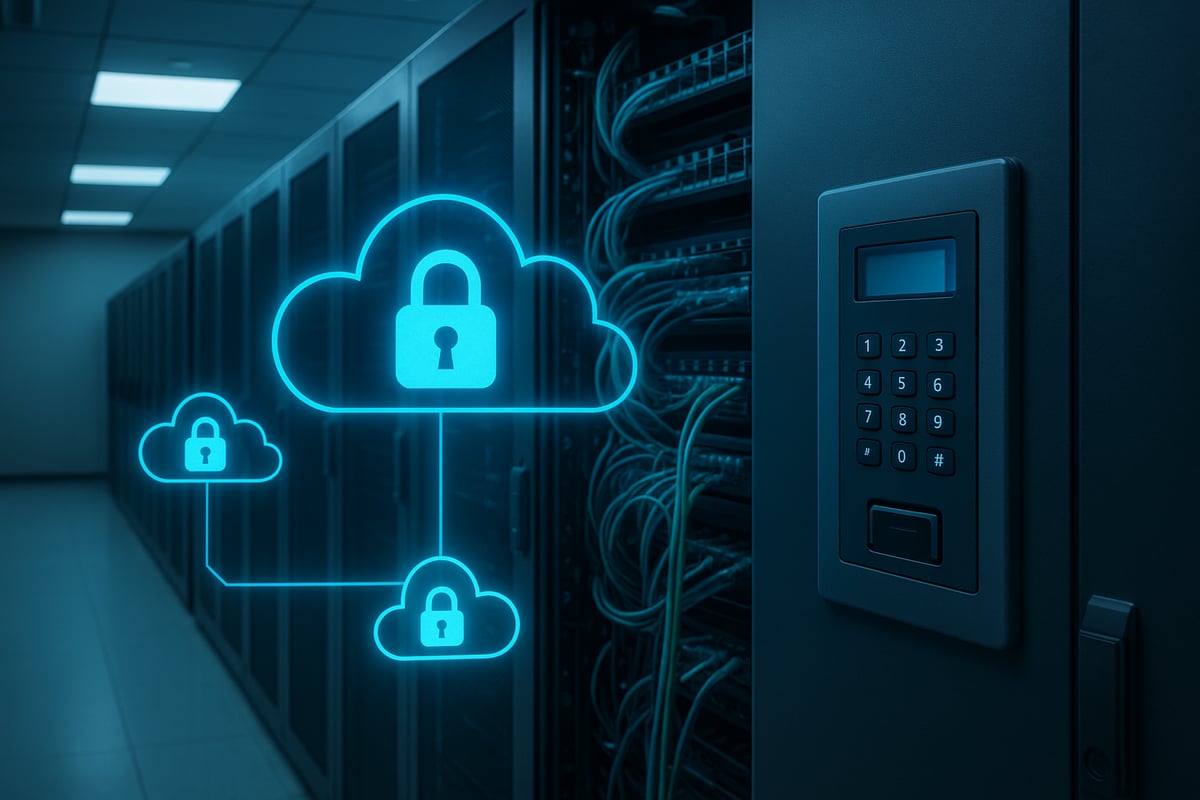
Adopting strong cloud security in cloud computing is essential for organizations seeking to protect assets and maintain trust in 2026. As threats evolve and environments grow more complex, leveraging proven best practices is critical for resilience and regulatory compliance.
Identity and Access Management (IAM)
Effective identity and access management is the foundation of cloud security in cloud computing. Organizations should implement centralized IAM solutions that support multi-cloud environments and streamline user provisioning.
- Use just-in-time (JIT) access provisioning to limit exposure.
- Automate de-provisioning processes for rapid offboarding.
- Enforce strong authentication and regular privilege reviews.
A single IAM misconfiguration can lead to major breaches. For example, excessive user permissions or orphaned accounts may grant attackers unauthorized access, highlighting the need for vigilant IAM governance.
Secure Configuration and Hardening
Maintaining secure configurations is paramount for cloud security in cloud computing. Start by applying baseline security templates tailored to each cloud platform, ensuring all assets are deployed with hardened settings.
- Leverage automated configuration assessment tools to identify drift.
- Continuously monitor compliance with established security baselines.
- Reference CIS Benchmarks to align configurations with industry standards.
Regularly reviewing and updating configurations reduces the risk of misconfigurations, which remain a leading cause of cloud breaches. Proactive hardening helps prevent unintended data exposure and service vulnerabilities.
Advanced Threat Protection and Response
Modern threats require advanced strategies for cloud security in cloud computing. Organizations should implement AI and machine learning-based anomaly detection to spot suspicious activities quickly.
- Integrate automated threat intelligence feeds for timely alerts.
- Conduct proactive threat hunting to uncover hidden risks.
- Use automated response playbooks to contain threats rapidly.
AI-driven detection has proven effective in stopping ransomware before it spreads. For further insight on emerging defenses and future trends, explore Four Predictions Redefining Cloud Security in 2026.
Data Backup, Recovery, and Business Continuity
Resilient data backup and recovery processes are vital for cloud security in cloud computing. Regular, automated backups should be scheduled and tested to ensure data integrity and quick restoration.
- Employ geo-redundant and immutable backup strategies.
- Frequently test disaster recovery plans to validate readiness.
- Document recovery time objectives (RTO) and recovery point objectives (RPO).
A strong continuity plan enables organizations to recover from ransomware attacks or outages efficiently, minimizing operational disruption and data loss.
Vendor and Third-Party Risk Management
Managing third-party risks is integral to comprehensive cloud security in cloud computing. Organizations must assess the security posture of all cloud vendors and partners before integration.
- Define clear security requirements in contracts and service level agreements (SLAs).
- Monitor third-party integrations for vulnerabilities continuously.
- Conduct regular reviews to address evolving supply chain threats.
A recent example involves a supply chain attack exploiting a third-party SaaS provider, underlining the importance of ongoing vendor due diligence and real-time risk monitoring.
Cloud Security Tools and Technologies to Watch in 2026
The landscape of cloud security in cloud computing is rapidly evolving, and staying ahead means adopting the latest tools and technologies. In 2026, organizations need to leverage advanced solutions to address growing threats and complex cloud environments. This section explores key innovations shaping secure cloud operations.
Cloud Security Posture Management (CSPM)
CSPM tools have become essential for organizations prioritizing cloud security in cloud computing. These platforms automate the detection of misconfigurations across multi-cloud environments, which is critical since misconfigurations account for the majority of cloud breaches.
Key features of CSPM solutions include:
- Automated compliance monitoring and reporting
- Real-time alerts for risky configurations
- Integration with cloud provider APIs for continuous assessment
By identifying vulnerabilities early, CSPM tools help prevent costly data leaks. For a detailed comparison of leading CSPM solutions, you can explore Gartner's Magic Quadrant for Cloud Security Posture Management. Adopting CSPM strengthens your security baseline and streamlines compliance efforts.
Cloud Workload Protection Platforms (CWPP)
Cloud workload protection platforms are crucial for defending cloud security in cloud computing environments. CWPPs provide real-time threat detection for virtual machines, containers, and serverless workloads, ensuring that any suspicious activity is identified and addressed promptly.
Key capabilities include:
- Runtime protection using behavioral analytics
- Automated response to known and unknown threats
- Seamless integration with DevOps pipelines
For example, a CWPP can halt a container attack before it spreads across cloud resources. With increasing workload mobility, CWPPs play a pivotal role in maintaining consistent security controls wherever your applications run.
Secure Access Service Edge (SASE)
The adoption of SASE is transforming cloud security in cloud computing by merging networking and security functions into a single cloud-based service. SASE ensures that security policies are enforced consistently, regardless of user location or device.
Core benefits of SASE include:
- Unified connectivity and security for remote and hybrid workforces
- Granular access controls and continuous monitoring
- Scalability to support dynamic cloud usage
A practical example is using SASE to secure hybrid workforce access, reducing the risk of data breaches from unmanaged devices. This approach simplifies network management while enhancing security posture.
Emerging Technologies: AI, Quantum, and Beyond
Emerging technologies are redefining cloud security in cloud computing for the future. Artificial intelligence is driving automation in threat detection, enabling organizations to identify and respond to risks faster than ever before.
Key advancements to watch:
- Quantum-resistant encryption protecting sensitive data
- Blockchain solutions ensuring cloud data integrity
- AI-powered automation for security operations
As quantum computing matures, proactive adoption of quantum-safe encryption will be essential. Investing in these innovations helps organizations future-proof their cloud security strategies against evolving threats.
The Future of Cloud Security: Trends and Predictions for 2026 and Beyond
As organizations look ahead to 2026 and beyond, cloud security in cloud computing is entering a transformative era. New technologies, regulatory changes, and evolving threats are shaping how businesses protect their digital assets. Understanding these trends is essential for building resilient security strategies that will stand the test of time.
Increasing Adoption of Zero Trust and Identity-First Security
Zero Trust is rapidly becoming the standard approach for cloud security in cloud computing. Organizations no longer rely on perimeter-based defenses. Instead, every user and device must verify identity before accessing resources.
Identity-first security models put user authentication and authorization at the center of protection. This shift reduces lateral movement for attackers and limits the impact of breaches.
For example, enterprises deploying Zero Trust have reported significant decreases in unauthorized access incidents. By implementing granular access controls and continuous verification, businesses can better safeguard sensitive data.
Regulatory Evolution and Global Data Privacy
The regulatory environment for cloud security in cloud computing is growing more complex. Governments worldwide are expanding data sovereignty laws, requiring organizations to keep data within specific geographic regions.
International standards are also evolving. Updates to frameworks like GDPR, CCPA, and CPRA demand stricter compliance. These changes impact how companies manage cloud deployments across borders.
A recent case saw a multinational firm fined millions for failing to comply with updated privacy regulations. To stay ahead, organizations should monitor regulatory updates and leverage resources like the NIST Privacy Framework.
AI and Automation in Threat Detection and Response
Artificial intelligence is revolutionizing cloud security in cloud computing. Security operations centers (SOCs) now rely on AI-driven tools to detect threats faster and respond autonomously.
Machine learning algorithms analyze massive datasets, identifying unusual patterns that may indicate attacks. Automated incident response can stop threats in real-time, minimizing potential damage.
For instance, a large-scale DDoS attack in 2025 was contained within minutes using AI-powered remediation. Automated systems are becoming essential for modern cloud defense.
The Rise of Confidential Computing and Privacy-Enhancing Technologies
Confidential computing is gaining traction as a key element of cloud security in cloud computing. This technology uses secure hardware enclaves to protect data while it is processed, not just when stored or transmitted.
Privacy-enhancing technologies like confidential virtual machines (VMs) and secure enclaves are being adopted across industries. Adoption rates have doubled in the past year, reflecting growing trust in these solutions.
Organizations using confidential computing can process sensitive information in the cloud with confidence, reducing exposure to insider threats and cyberattacks.
Preparing for the Next Generation of Cloud Threats
The landscape of cloud security in cloud computing will continue to evolve as new challenges emerge. Quantum computing poses potential risks to current encryption methods, prompting research into quantum-resistant algorithms.
Attackers are developing more sophisticated tactics, requiring defenders to stay agile and informed. Regular training, skills development, and investment in next-generation security tools are critical.
By anticipating future threats and adapting quickly, organizations can ensure their cloud environments remain secure and resilient for years to come.
As we’ve explored in this guide, cloud security in 2026 is more complex than ever—evolving threats, stricter compliance demands, and the pressures of hybrid work can stretch any small business’s resources. If you’re ready to secure your cloud environment but aren’t sure where to start, you don’t have to face these challenges alone. At Delphi Systems Inc., we specialize in helping businesses just like yours stay protected and productive, so you can focus on what matters most. Reach out today and let’s talk about how we can support your IT security needs—Call us now.

