

In early 2026, a single cyber-attack cost a global retailer over $100 million, affecting millions of customers and sending shockwaves through the industry. The need of information security has never been more urgent or relevant, touching every business and individual in our connected world.
Security lapses can lead to devastating data loss, financial ruin, and eroded trust. Understanding the need of information security empowers you to protect sensitive data, ensure business continuity, and safeguard your privacy.
This guide will unravel core security principles, explore real-world threats, examine regulatory pressures, and highlight emerging trends. Ready to defend your digital assets in 2026? Dive in and take charge of your security future.
The Core Principles of Information Security
Understanding the core principles is fundamental to grasping the need of information security in today’s digital world. These principles serve as the backbone of every effective security strategy, guiding organizations and individuals through the complexities of data protection.

Understanding the CIA Triad: Confidentiality, Integrity, Availability
The CIA Triad forms the foundation for the need of information security. Each component plays a unique role:
- Confidentiality: Ensures only authorized users can access sensitive data. Encryption and access controls are typical safeguards.
- Integrity: Protects data from unauthorized modification. Techniques like checksums and digital signatures help maintain accuracy.
- Availability: Guarantees data is accessible when needed. Redundancy, backups, and robust network infrastructure support this.
| Principle | Purpose | Example |
|---|---|---|
| Confidentiality | Restricting access | Data encryption |
| Integrity | Preventing unauthorized changes | File checksums |
| Availability | Ensuring timely access | Server redundancy |
Failing in any area can have serious consequences. A breach in confidentiality can lead to data leaks, while loss of integrity may result in corrupted data. Availability issues cause costly downtime. The need of information security is evident, as these principles underpin all major security frameworks, ensuring a balanced approach to risk.
Authentication and Non-Repudiation in Modern Security
Authentication is a key element in the need of information security, verifying that users are who they claim to be. In 2026, multi-factor authentication (MFA) is a standard, requiring a mix of passwords, biometrics, and device verification.
Non-repudiation ensures that actions cannot be denied after the fact. Digital signatures and audit logs create a verifiable trail, holding users legally accountable. For example, in financial institutions, robust authentication and non-repudiation mechanisms prevent unauthorized transactions and reduce fraud risk.
Organizations recognize the need of information security in access control, especially as cyber threats evolve. MFA, combined with comprehensive logging, ensures only legitimate users access critical systems and that every action is traceable. This layered approach is vital for minimizing risks and meeting regulatory demands.
Evolving Security Principles in 2026
The need of information security has expanded beyond the traditional CIA Triad. New principles like privacy, resilience, and transparency are now central. Compliance with global regulations such as GDPR and HIPAA is integrated into security frameworks, reflecting a holistic approach.
Zero-trust security models are now mainstream, requiring continuous verification of users and devices, regardless of location. This shift addresses modern threats and complex digital environments. For a deeper look at how zero trust is shaping the future, explore the Zero Trust Architecture Evolution.
In 2026, the need of information security is defined by adaptability. Organizations that prioritize privacy, resilience, and proactive compliance are better equipped to handle emerging risks and maintain stakeholder trust.
The Escalating Need for Information Security in 2026
Cyber threats are evolving at a pace never seen before, making the need of information security a top priority for every organization and individual. In 2026, the digital landscape is more complex, interconnected, and vulnerable, increasing the stakes for everyone.

Increasing Frequency and Sophistication of Cyber Threats
The past two years have seen a dramatic rise in cyber-attacks, with threats like malware, ransomware, and phishing reaching new levels of complexity. Attackers now use AI to automate and personalize their methods, making breaches harder to detect. According to the 2025 Global Cyber Attack Report, ransomware incidents alone surged by 126 percent since 2024. This surge highlights the urgent need of information security, as even well-prepared companies face increased risk from these advanced tactics.
Protecting Confidential and Sensitive Information
In today's hyperconnected environment, data is one of the most valuable assets. Personal records, financial data, medical histories, and intellectual property are prime targets for cybercriminals. Recent breaches have exposed millions of sensitive records, damaging both reputations and finances. The need of information security is clear, as unauthorized access often leads to identity theft, fraud, and lasting harm to individuals and organizations alike.
Regulatory and Legal Pressures
Governments worldwide are tightening regulations to address the growing need of information security. Laws like GDPR, CCPA, and sector-specific mandates require organizations to safeguard data or face severe penalties. Non-compliance can result in hefty fines, lawsuits, and even restrictions on business operations. A single incident of inadequate security can lead to regulatory investigations, making compliance a fundamental part of risk management in 2026.
Business Continuity and Operational Resilience
Cyber incidents can bring business operations to a halt, resulting in lost revenue and damaged reputation. Organizations are recognizing the need of information security as a core element of their continuity planning. Robust security protocols help ensure that data is backed up, systems are resilient, and recovery can be swift after an attack. Companies with strong security measures often recover faster and maintain customer trust, even after a breach.
Customer and Stakeholder Trust
Trust is the foundation of any digital relationship. When companies fail to protect data, they risk losing not only customers but also investors and partners. Surveys in 2026 reveal that consumers are more selective, favoring businesses that demonstrate a strong commitment to security. The need of information security is essential for maintaining loyalty, as a single breach can erode years of goodwill and market reputation.
The Expanding Attack Surface
The proliferation of IoT devices, remote work, and cloud adoption has multiplied the entry points available to attackers. Each new device or connection introduces potential vulnerabilities. Recent incidents show that even seemingly minor devices can be exploited for major breaches. This expanding landscape underlines the need of information security, pushing organizations to adopt comprehensive strategies that protect every aspect of their digital ecosystem.
Major Threats to Information Security
In 2026, the digital landscape is more hazardous than ever, with organizations and individuals facing an array of evolving dangers. Understanding the major threats is critical to grasping the need of information security. With cybercriminals leveraging advanced technology and exploiting human vulnerabilities, even a minor lapse can have far-reaching consequences.

Types of Cyber Attacks in 2026
The threat landscape has rapidly evolved, highlighting the urgent need of information security. Polymorphic malware and AI-driven viruses now adapt their code to bypass traditional defenses, making detection increasingly difficult. Phishing and spear-phishing campaigns have become more convincing, targeting both individuals and executives with personalized lures.
Ransomware-as-a-Service platforms have lowered the barrier for entry, allowing less skilled attackers to launch devastating attacks. Denial of Service (DoS) and Distributed Denial of Service (DDoS) campaigns now target critical infrastructure, leading to operational chaos and financial loss. Supply chain attacks, where trusted vendors are compromised, have also surged, demonstrating that no organization is immune.
| Attack Type | Description | Example Impact |
|---|---|---|
| AI-Driven Malware | Adapts to evade detection | Data theft, system outages |
| Phishing | Deceptive emails or messages | Credential compromise |
| Ransomware-as-a-Service | Outsourced ransomware attacks | Data encryption, extortion |
| DDoS | Overwhelming network traffic | Service disruption |
| Supply Chain Attack | Compromised vendor or software | Widespread infiltration |
The need of information security is underscored by the sheer diversity and sophistication of these attacks.
Human Factor: Social Engineering and Insider Threats
Despite technological advances, humans remain the most exploited element, emphasizing the ongoing need of information security. Social engineering tactics such as phishing, pretexting, and baiting manipulate individuals into revealing sensitive information or granting access to systems.
Insider threats, whether intentional or accidental, pose significant challenges. Malicious insiders might exfiltrate data for personal gain, while negligent employees can inadvertently expose confidential information. Organizations must invest in regular training and awareness programs to build a security-first mindset.
Practical steps include:
- Conducting simulated phishing exercises
- Enforcing strict access controls
- Monitoring for unusual activity
Addressing the human factor is essential to meet the need of information security in 2026.
Risks and Consequences of Security Breaches
Failing to address the need of information security can lead to severe repercussions. Data loss, whether from theft or accidental deletion, can halt business operations and result in significant financial setbacks. The reputational damage following a breach is often long-lasting, eroding customer trust and market value.
Legal consequences are also growing. Organizations may face lawsuits, regulatory penalties, or mandatory disclosure requirements after a breach. These outcomes can cripple even established enterprises, making proactive security investment a necessity.
Common breach consequences include:
- Financial losses from downtime or ransom payments
- Loss of intellectual property or trade secrets
- Increased scrutiny from regulators and stakeholders
This highlights why the need of information security is not optional, but fundamental for survival.
Emerging Threat Vectors
Looking ahead, new attack vectors continue to emerge, further increasing the need of information security. AI-powered attacks can automate vulnerability discovery and craft adaptive malware, outpacing traditional defenses. Quantum computing threatens to render current encryption methods obsolete, making data protection a moving target.
Deepfake technology and synthetic identity fraud present new challenges, blurring the line between real and artificial threats. To stay ahead, organizations must monitor trends and adapt their defenses accordingly. For a deeper dive into the impact of AI on cybersecurity, the AI-Driven Cybersecurity Threats Survey provides valuable insights into how adversaries are leveraging machine learning.
The need of information security grows with every technological advance, requiring continuous vigilance, investment, and adaptation to protect digital assets in 2026.
Information Security for Organizations: Strategies and Best Practices
In 2026, organizations face a rapidly shifting threat landscape that demands constant vigilance. The need of information security has never been more urgent, as cyber risks threaten not just data but business viability itself. To stay ahead, companies must embrace a multi-layered approach that includes people, processes, and technology.
Building a Security-First Culture
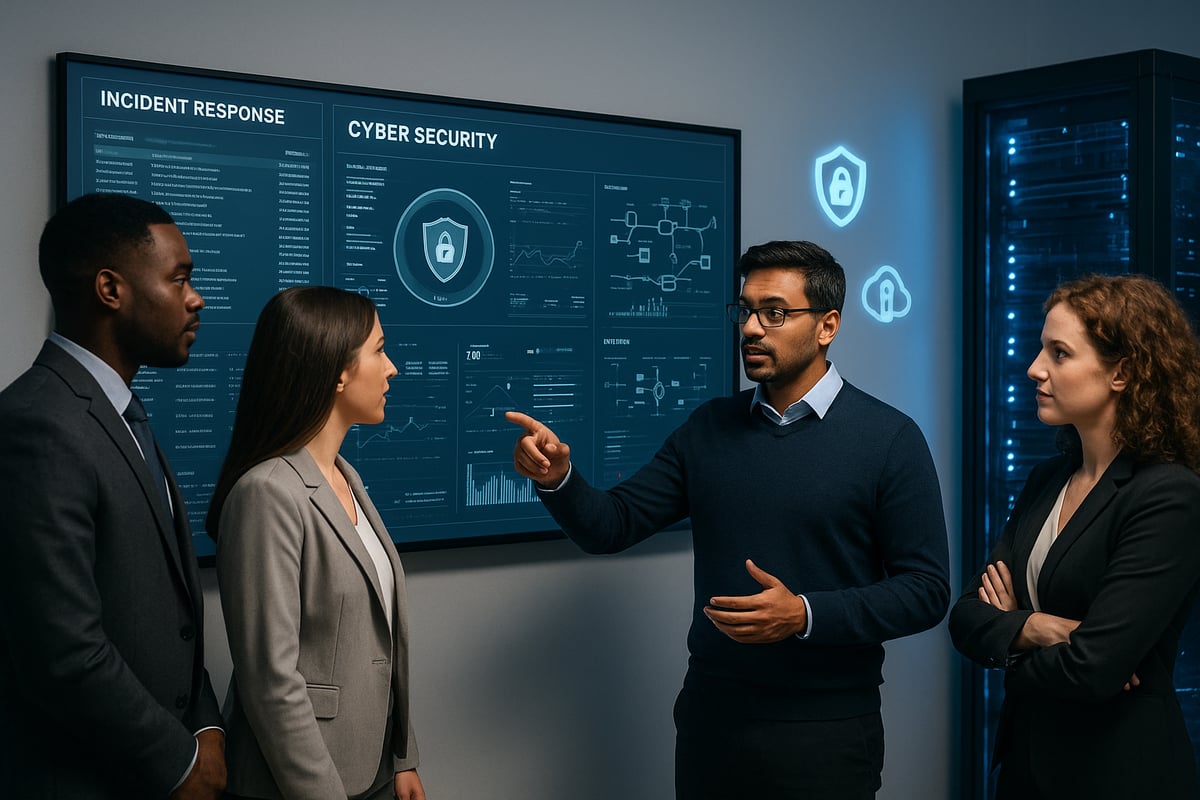
A security-first culture is foundational for any organization addressing the need of information security. Employees must be empowered to recognize and respond to threats. Regular training sessions, phishing simulations, and awareness campaigns help staff stay alert.
Leadership must demonstrate commitment by allocating resources and establishing clear accountability for security. Policy development is essential, covering acceptable use, incident response, and data classification. Creating a culture where everyone feels responsible for security encourages proactive behavior and reduces risk.
- Ongoing security training
- Clear, accessible policies
- Leadership involvement and visible support
By embedding the need of information security into daily routines, organizations reduce their vulnerability to both external and internal threats.
Technical Safeguards and Controls
Technical controls are the backbone of organizational security. Encryption protects data confidentiality, while firewalls and intrusion prevention systems block unauthorized access. Regular patch management addresses vulnerabilities before they are exploited.
Access controls, such as least privilege and role-based permissions, ensure that users only access what they need. In 2026, organizations must also evaluate advanced solutions like behavior analytics and endpoint detection. For deeper insight into the latest advancements, review the Cybersecurity Trends for 2026.
| Safeguard | Purpose | Example Tool |
|---|---|---|
| Encryption | Data confidentiality | AES, TLS |
| Firewalls/IDS/IPS | Network defense | Next-gen firewalls |
| Patch Management | Vulnerability fixing | Automated patch tools |
| Access Controls | Limit permissions | RBAC, MFA |
Implementing these layers addresses the need of information security across all systems.
Security Operations and Monitoring
Continuous monitoring is critical for timely threat detection. Security Information and Event Management (SIEM) platforms aggregate and analyze alerts in real time, allowing teams to spot suspicious activity.
Penetration testing and red teaming help organizations find and fix weaknesses before attackers do. Incident response plans, regularly tested through tabletop exercises, ensure a coordinated reaction to breaches.
The need of information security drives investment in these operational practices, as rapid detection and response are vital to minimize damage.
Compliance and Regulatory Alignment
Meeting regulatory requirements is a major driver for the need of information security in organizations. Mapping security controls to frameworks like GDPR, HIPAA, or industry-specific mandates is essential.
Audits and documentation help demonstrate compliance, reducing legal and reputational risk. For example, healthcare and finance sectors often face stricter obligations and frequent inspections.
- Regular compliance audits
- Documented security controls
- Sector-specific regulatory mapping
Aligning security with compliance not only fulfills legal duties but also reinforces best practices supporting the need of information security.
Third-Party and Supply Chain Risk Management
Vendors and partners can introduce significant risks. Assessing the security posture of all third parties is vital to address the need of information security. This includes requiring contractual commitments to data protection and regular security reviews.
Recent high-profile supply chain breaches have shown how attackers exploit weak links. Organizations should implement controls to monitor vendor activities and enforce standards.
- Vendor risk assessments
- Contractual security clauses
- Ongoing monitoring of third-party access
By proactively managing these relationships, organizations close gaps that could undermine the need of information security.
Business Continuity and Disaster Recovery Integration
Robust business continuity and disaster recovery (BC/DR) plans are a core element of the need of information security. Backups should be maintained both on-site and in the cloud to guard against ransomware or system failures.
Defining recovery time objectives (RTO) and recovery point objectives (RPO) helps organizations set clear expectations for restoring operations. Regular testing and updates ensure plans remain effective.
- Multiple backup locations
- Defined RTO and RPO
- Routine plan testing and updates
Integrating BC/DR with security strategy ensures organizations can quickly recover from incidents, protecting both assets and reputation while fulfilling the need of information security.
Information Security for Individuals: Protecting Personal Data in a Connected World
The digital era connects us more than ever, but it also introduces significant risks to our personal information. Recognizing the need of information security is essential for safeguarding your identity, finances, and privacy. Simple actions can make a profound difference in protecting your digital life.
Safeguarding Personal Devices and Accounts
Protecting your devices and accounts is the first step in addressing the need of information security. Start with strong, unique passwords for every account, and use a reputable password manager to organize them.
Enable multi-factor authentication (MFA) wherever possible. This adds an extra layer of defense, making unauthorized access much harder. Encrypt your devices so that, even if they are lost or stolen, your data remains secure.
- Use unique passwords for each account
- Enable MFA for sensitive platforms
- Encrypt devices and activate remote wipe features
Here's a quick comparison of key actions:
| Action | Benefit |
|---|---|
| Password Manager | Prevents reuse and weak passwords |
| MFA | Blocks unauthorized access |
| Device Encryption | Protects data if stolen |
These steps are the foundation for meeting the need of information security in your daily life.
Maintaining Online Privacy and Digital Footprint
Oversharing online can expose you to social engineering and identity theft. The need of information security extends to how you manage your digital footprint. Review privacy settings on social media and limit what you share publicly.
Be cautious about granting app permissions and consider what data each service collects. Use privacy-focused browsers or search engines to minimize tracking.
- Regularly update privacy settings
- Think twice before posting personal details
- Audit app permissions frequently
By staying aware, you reduce the risks tied to your online presence and reinforce the need of information security.
Secure Online Transactions and E-Commerce
Every online purchase or banking session requires vigilance. The need of information security is most evident when handling sensitive financial information. Always verify the website’s security by checking for HTTPS and a valid certificate.
Avoid using public Wi-Fi for transactions, as these networks can be insecure. Monitor your bank and credit card accounts for any unauthorized activity.
- Shop only on trusted, secure sites
- Use secure connections, especially for payments
- Set up account alerts for suspicious activity
Taking these precautions ensures that the need of information security is met whenever you transact online.
Responding to Personal Data Breaches
If your information is compromised, acting quickly is crucial. The need of information security includes knowing how to respond to breaches. Immediately change affected passwords, enable account monitoring, and consider freezing your credit if sensitive data is at risk.
Seek resources like IdentityTheft.gov for step-by-step recovery guidance. Recent data shows that early action can significantly reduce the impact of identity theft.
- Reset compromised account credentials
- Monitor financial statements for unusual activity
- Use identity theft protection services if needed
Staying prepared and informed is an essential part of the need of information security for individuals.
The Future of Information Security: Trends and Innovations for 2026 and Beyond
The future of information security is evolving at a rapid pace. With emerging technologies, new threats, and shifting regulations, organizations and individuals must stay vigilant. Understanding the need of information security is crucial as we look ahead to 2026 and beyond.
Artificial Intelligence and Machine Learning in Security
Artificial intelligence (AI) and machine learning (ML) are transforming how threats are detected and managed. In 2026, these technologies provide real-time analysis, identifying anomalies and stopping attacks before they escalate. AI-driven systems automate incident response, reducing human error and speeding up recovery.
A key reason for the growing need of information security is the rise of AI-powered attacks. As cybercriminals adopt advanced tools, defenders must leverage AI to stay ahead. For example, AI can detect zero-day exploits by recognizing patterns unseen by traditional software.
| Security Approach | Response Speed | Accuracy | Adaptability |
|---|---|---|---|
| Traditional | Moderate | Varies | Limited |
| AI-Driven | Real-time | High | Adaptive |
Organizations investing in AI solutions are better equipped to safeguard their digital assets.
The Rise of Zero Trust Architecture
Zero trust architecture is becoming the gold standard in 2026. This model assumes no user or device is inherently trustworthy, requiring verification for every access request. The need of information security is magnified by the complexity of modern IT environments, where attackers exploit even minor vulnerabilities.
Implementing zero trust means continuous authentication, least-privilege access, and micro-segmentation of networks. For example, a global retailer adopted zero trust, reducing unauthorized access incidents by 70% in one year.
While challenges exist, such as integrating legacy systems, the benefits for risk reduction and compliance are significant. Zero trust strengthens every layer of defense and supports long-term resilience.
Quantum Computing and Cryptography
Quantum computing promises unprecedented processing power, which poses risks to current encryption standards. In response, security professionals are prioritizing post-quantum cryptography. The need of information security drives innovation in this area, as quantum algorithms could break widely used encryption methods.
Organizations are beginning to test quantum-resistant algorithms and update their key management strategies. Governments and enterprises must assess their cryptographic agility and prepare for a post-quantum world. As quantum adoption grows, the security landscape will face new challenges and opportunities.
Proactive planning today ensures that sensitive data remains secure tomorrow.
Expansion of the Internet of Things (IoT)
The proliferation of IoT devices brings convenience and efficiency, but it also expands the attack surface. Billions of connected sensors, cameras, and appliances require robust protection. The need of information security is evident as attackers exploit vulnerabilities in poorly secured devices.
Recent incidents have shown how compromised IoT devices can disrupt critical infrastructure. Security frameworks now emphasize device authentication, regular firmware updates, and network segmentation. Manufacturers and users alike must remain vigilant, ensuring that every device is part of a secure ecosystem.
Staying ahead of IoT threats is essential for both organizations and individuals.
Cloud Security Evolution
Cloud adoption continues to accelerate, with more businesses migrating to hybrid and multi-cloud environments. This evolution creates both opportunities and risks, highlighting the ongoing need of information security in cloud operations.
The shared responsibility model defines which aspects of security are managed by the cloud provider and which by the customer. Tools like cloud-native firewalls, identity management, and continuous monitoring are now standard. For deeper insights, explore the NIST Cloud Computing Security Reference Architecture.
Best practices include encryption of data at rest and in transit, as well as regular audits to ensure compliance with regulations. Organizations that prioritize cloud security are more resilient against breaches and downtime.
Regulatory Landscape: What’s Next?
Regulatory requirements are evolving to address global data flows, privacy, and emerging technologies. The need of information security is reinforced by stricter laws and increased penalties for non-compliance.
In 2026, organizations must navigate a patchwork of regulations, including GDPR updates, new data sovereignty rules, and industry-specific mandates. Preparing for audits, maintaining documentation, and implementing robust controls are essential steps.
Anticipating future changes, such as harmonized global standards, helps organizations avoid costly penalties and maintain trust with stakeholders. Proactive compliance is not just a legal necessity but a competitive advantage.
The Human Element: Continuous Education and Vigilance
Technology alone cannot address every threat. Human error remains a leading cause of breaches, underscoring the need of information security awareness and training.
Gamified learning and simulated phishing exercises are effective in keeping employees engaged. Security professionals must commit to lifelong education, staying current with evolving threats and best practices. Leadership should foster a culture of accountability and transparency.
Regular training empowers staff to recognize risks, report incidents, and respond swiftly. A proactive mindset is the foundation of a resilient security posture.
The Role of Managed IT Services in Modern Security
Managed IT services are increasingly vital for small and medium-sized businesses. These providers offer expert guidance, proactive monitoring, and rapid incident response. By outsourcing security, organizations can focus on core operations without compromising protection.
A recent case involved a retailer leveraging managed services to prevent a ransomware outbreak, saving significant costs and reputational damage. Managed services help bridge the skills gap and provide access to advanced tools.
As threats evolve, partnering with trusted experts ensures that even resource-constrained organizations can meet the challenges ahead.
As we’ve explored, the landscape of information security in 2026 is more complex and demanding than ever—from advanced cyber threats to evolving compliance regulations and the growing importance of protecting business continuity. Whether you’re a small business owner striving to safeguard your operations or simply want peace of mind in a connected world, taking proactive steps now makes all the difference. If you’re ready to strengthen your IT defenses and focus on what matters most, let’s have a conversation about how managed IT services can help. Feel free to Call us now to get started.

