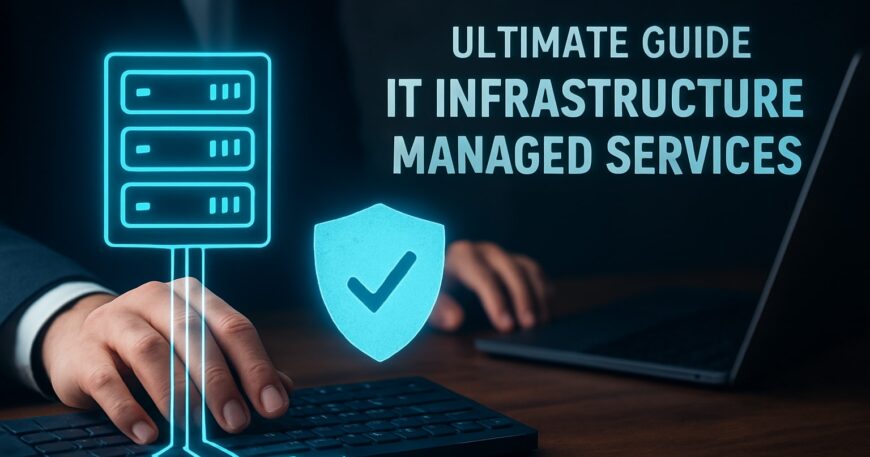
In 2026, the stakes have never been higher for organizations relying on robust IT systems to stay competitive and secure. A single misstep can lead to costly downtime, security incidents, or lost productivity.
That is why understanding it infrastructure managed services is vital for any business aiming to thrive during digital transformation. With proactive management and expert oversight, these services help organizations avoid the pitfalls of complex, modern IT environments.
This comprehensive guide will reveal the latest trends, service models, and decision factors that empower you to future-proof your operations. You will gain insights to confidently select and optimize solutions for your unique business needs.
Use this guide as your roadmap to making informed, strategic choices that ensure resilience, efficiency, and long-term success.
Understanding IT Infrastructure Managed Services
In 2026, businesses face mounting complexity in their digital environments. Understanding the essentials of it infrastructure managed services is the first step to building a more resilient, efficient, and secure IT foundation. These services are designed to help organizations keep pace with technology shifts, address operational risks, and unlock new opportunities.

Defining IT Infrastructure Managed Services
It infrastructure managed services refer to the proactive outsourcing of critical IT operations to a specialized provider. These services cover core components such as servers, networks, storage, cloud resources, cybersecurity, and end-user devices.
Unlike traditional in-house IT management, where internal teams react to issues as they arise, IMS providers use proactive monitoring and management to prevent problems before they occur. This shift from reactive to proactive support reduces downtime and improves reliability.
For example, a managed service provider (MSP) might oversee both hybrid cloud and on-premises networks, ensuring seamless integration and optimal performance across all environments.
Key Service Models and Tiers
Service models for it infrastructure managed services typically fall into three main tiers: Assist, Partner, and Managed.
| Tier | Core Inclusions | Ideal For |
|---|---|---|
| Assist | Basic support, troubleshooting, minor fixes | Small businesses, low complexity |
| Partner | Preventive maintenance, upgrades, advice | Growing firms, moderate needs |
| Managed | Full outsourcing, 24/7 monitoring, security | Enterprises, high complexity |
Each tier offers different levels of technical support, repair, updates, and system maintenance. Businesses can choose all-inclusive packages or select specific services à la carte, depending on their unique requirements.
Customization and scalability are crucial, allowing organizations to adapt services as their IT landscape evolves. For instance, L3Harris’ tiered approach lets businesses scale from minimal support to comprehensive management.
Service models must align with business size and IT complexity. SLAs (Service Level Agreements) and XLAs (Experience Level Agreements) define expected performance and user satisfaction, ensuring accountability.
For a deeper look at industry trends and the evolving market for these services, see the Managed IT Infrastructure Services Market Analysis by Mordor Intelligence.
Core Functions and Deliverables
The core deliverables of it infrastructure managed services include:
- 24/7 monitoring of systems and networks
- Rapid incident response and premium technical support
- Ongoing security updates, vulnerability patching, and compliance management
- Preventive and enhanced maintenance routines
- Regular software management and upgrades
- Automated data backup and disaster recovery planning
- Coordination with on-site resources and technology vendors
These functions work together to reduce risk, ensure uptime, and keep systems aligned with business needs.
The Role of Managed Services Providers (MSPs)
MSPs act as strategic partners in digital transformation, bringing deep expertise in managing hybrid, multi-cloud, and edge computing environments.
A leading example is IT By Design, which operates with a proactive, always-on model. MSPs assume responsibility for uptime, security, and business continuity, allowing internal teams to focus on high-value, strategic work instead of daily troubleshooting.
With it infrastructure managed services, organizations gain a dedicated partner committed to optimizing IT operations, driving innovation, and supporting long-term growth.
The Evolving Landscape of IT Infrastructure in 2026
The landscape of it infrastructure managed services is rapidly evolving as businesses confront new technological, economic, and security realities. Modern enterprises must adapt to a fast-changing environment, where digital transformation and resilience are critical for long-term success.

Market Trends and Drivers
The demand for it infrastructure managed services is being shaped by several key trends. Hybrid and multi-cloud adoption continues to rise, as organizations seek flexibility and scalability. Yet, according to Accenture, only 42% of companies realize full cloud benefits due to the complexity of hybrid environments.
The proliferation of IoT, edge devices, and remote workforces is also driving change. Businesses must support diverse endpoints and distributed teams, requiring robust, unified management. At the same time, there is increasing pressure to handle generative AI workloads, but only 13% of CIOs feel their digital infrastructure is ready for AI.
Sustainability and energy efficiency are top priorities. McKinsey predicts US data centers could consume up to 12% of national electricity by 2030, highlighting the need for greener solutions. Regulatory requirements are also tightening, making compliance a central concern.
Notably, global IT spending is on the rise, with projections reaching $4.25 trillion by 2025. This surge reflects significant investment in AI infrastructure, cloud services, and digital transformation, all of which impact it infrastructure managed services. For a deeper look at these trends, see Global IT spending projected to reach $4.25 trillion by 2025.
Challenges Facing Modern IT Infrastructure
Despite these opportunities, managing it infrastructure managed services presents significant challenges. Hybrid environments introduce complexity, making it difficult to maintain visibility and control across on-premises, cloud, and edge assets.
Security threats are escalating. Ransomware, supply chain attacks, and endpoint vulnerabilities require constant vigilance. Tool sprawl is another issue, as organizations juggle multiple platforms, leading to alert fatigue and inefficiency.
Balancing rapid deployment with reliability is a persistent struggle. Teams must support innovation without sacrificing stability. Cost control, especially in cloud environments, demands careful financial operations and transparency. These challenges underscore the importance of expert management and a strategic approach to it infrastructure managed services.
The Shift to Proactive, Intelligent Management
To address these complexities, the industry is shifting toward proactive, intelligent it infrastructure managed services. Organizations are leveraging automated remediation and predictive analytics to resolve issues before they impact operations.
Security is now foundational, integrated at every layer rather than treated as an add-on. Modern MSPs combine NOC, SOC, and RMM capabilities, delivering seamless management and rapid response. The focus has moved beyond uptime, emphasizing business outcomes and user experience as primary success metrics.
Real-World Examples and Case Studies
Across industries, it infrastructure managed services are enabling organizations to thrive. For example, MSPs support distributed workforces and edge computing in manufacturing and healthcare, ensuring reliable connectivity for remote facilities.
Public safety agencies rely on managed service tiers for mission-critical communications, as seen in the case of L3Harris. Small businesses benefit from rapid cloud transformation, gaining agility and security without the overhead of in-house teams.
These real-world cases highlight how it infrastructure managed services are driving resilience, innovation, and long-term value for modern enterprises.
Core Components and Features of IT Infrastructure Managed Services
Modern enterprises rely on a robust set of core functions to keep their operations resilient and competitive. The foundation of effective it infrastructure managed services lies in a blend of continuous monitoring, proactive maintenance, secure data management, advanced cloud solutions, layered cybersecurity, and streamlined vendor oversight. Each of these elements works together to ensure uptime, security, and business continuity, making the difference between reactive troubleshooting and strategic IT excellence.
Monitoring, Support, and Incident Response
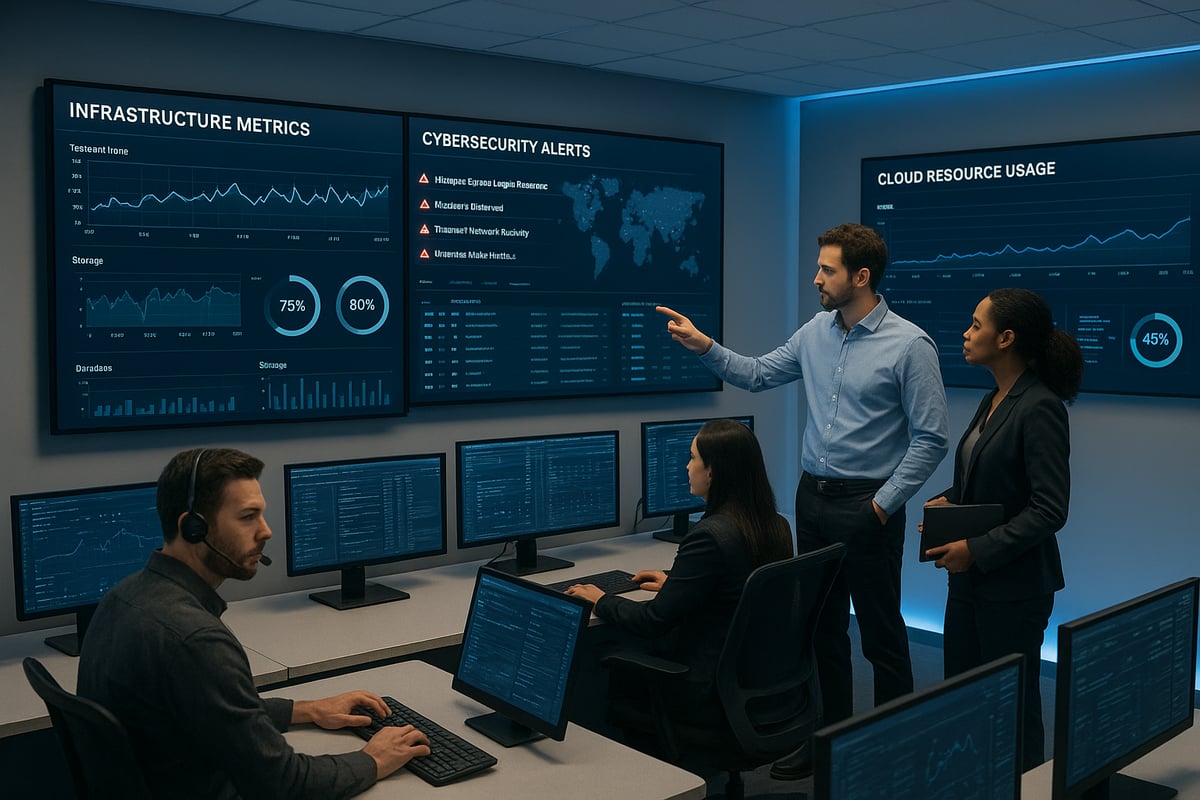
Round-the-clock monitoring is a cornerstone of it infrastructure managed services. MSPs deploy automated tools to track servers, networks, and endpoints 24/7, ensuring that potential issues are detected early.
Real-time alerts and escalation protocols empower teams to respond swiftly. Defined response times, such as one hour for emergencies and two hours for non-critical incidents, form part of strict service agreements.
- Continuous system health checks
- Automated incident escalation
- Coordination with on-site and remote teams
Premium support channels ensure that critical systems receive top priority. This proactive approach minimizes downtime and keeps business operations steady.
Maintenance, Updates, and Patch Management
Regular maintenance routines are essential to the effectiveness of it infrastructure managed services. Scheduled updates and enhanced maintenance prevent unexpected failures and security vulnerabilities.
Security patch management extends to third-party applications and operating systems, reducing compliance risks. MSPs often leverage vulnerability databases, such as IAVM tables, to keep systems protected.
- Preventive maintenance schedules
- Automated OS patching tools (e.g., SUMS+)
- Compliance-driven update cycles
Routine patching and timely upgrades help organizations avoid disruptions and maintain regulatory standards.
Data Backup, Disaster Recovery, and Business Continuity
A vital component of it infrastructure managed services is reliable data protection. Automated backups cover all environments, from on-premises servers to cloud platforms.
Disaster recovery (DR) planning ensures organizations can restore operations rapidly after incidents. MSPs regularly test backup and recovery processes to guarantee effectiveness.
- Scheduled, automated backups
- Rapid DR and restoration capabilities
- Regular testing of backup integrity
In sectors like healthcare and finance, robust DR solutions are crucial for compliance and uninterrupted service delivery. Effective business continuity strategies safeguard critical data and processes.
Cloud, Edge, and Hybrid Infrastructure Management
Managing diverse environments is a defining feature of it infrastructure managed services. MSPs provide unified oversight across on-premises, cloud, and edge resources.
Integration with major cloud providers and virtualization platforms enables seamless workload migration and optimization. Edge computing support is tailored for latency-sensitive applications and distributed offices.
- Unified management dashboards
- IoT endpoint and edge device integration
- Cloud migration and hybrid workload support
By centralizing control, businesses gain flexibility and visibility, making it easier to scale and adapt to changing demands.
Cybersecurity and Compliance
Security is embedded at every layer of it infrastructure managed services. MSPs deploy multi-layered defenses including firewalls, intrusion detection, and endpoint protection.
Continuous threat monitoring and incident response are standard. Compliance management covers regulations such as GDPR, HIPAA, and PCI DSS. As cybersecurity becomes a top business priority, global spending is projected to reach 213 billion dollars in 2025, reflecting the critical importance of robust protection.
- Real-time SOC integration
- Automated vulnerability patching
- Security awareness and policy enforcement
MSPs safeguard business data, ensuring regulatory alignment and reducing risk exposure.
Software, Licensing, and Vendor Management
Efficient software and vendor management are integral to it infrastructure managed services. MSPs handle software asset tracking, license renewals, and periodic upgrades.
Coordination with technology vendors streamlines procurement and support. This approach reduces compatibility issues and prevents vendor lock-in.
- Centralized software asset management
- License compliance monitoring
- Multi-vendor coordination
Examples include managing Microsoft 365, Bitdefender, and other critical platforms. This oversight ensures systems remain secure, current, and fully supported.
Selecting the Right IT Infrastructure Managed Services Partner
Selecting the right partner for it infrastructure managed services is a critical decision that can shape your business’s digital future. The right provider will not only deliver technical expertise but also align with your organization’s goals, compliance needs, and strategic vision. To build a resilient, future-ready IT environment, it’s essential to evaluate potential partners across several dimensions.
Key Evaluation Criteria
When evaluating it infrastructure managed services partners, start with technical expertise and industry certifications. Look for credentials from major vendors such as Dell, Microsoft, and Meraki, which demonstrate up-to-date knowledge and capability. Industry experience matters as well; providers familiar with your sector can anticipate compliance and operational challenges.
Scalability and flexibility of services are crucial, especially as your business evolves. Examine Service Level Agreements (SLAs) and Experience Level Agreements (XLAs) to ensure measurable outcomes and clear accountability. References, case studies, and testimonials offer insights into reliability and client satisfaction. For example, Delphi Systems Inc. is known locally as a trusted MSP for small businesses, showcasing the value of proven partnerships.
Create a checklist to compare providers:
- Technical certifications and specializations
- Industry experience
- Service scalability and flexibility
- SLAs and XLAs
- Client references and testimonials
A thorough approach to these criteria will help you shortlist the most capable it infrastructure managed services providers.
Understanding Your Business Needs and IT Environment
Before engaging with it infrastructure managed services, conduct a comprehensive review of your current IT landscape. Assess the complexity of your infrastructure, including legacy systems, cloud environments, and endpoints. Identify pain points such as recurring downtime, security vulnerabilities, or inefficiencies.
Map regulatory, security, and uptime requirements to your business objectives. Consider how digital transformation, compliance mandates, and future growth will impact your IT needs. Decide which functions should remain in-house and which are ideal for outsourcing. This clarity streamlines conversations with potential providers and ensures the chosen it infrastructure managed services partner is a strategic fit.
Comparing Service Models and Pricing Structures
It infrastructure managed services partners offer a range of service models, from fixed-rate all-inclusive packages to usage-based, modular options. Fixed-rate models provide predictable budgeting, while modular approaches allow customization based on your evolving needs.
Transparency in contracts and billing is essential. Always compare what’s included in each tier, such as technical support levels, response times, and proactive maintenance. Some providers address complexity through platform consolidation, streamlining management tools and reducing operational overhead. For further insights into this trend, explore platform consolidation as a solution for MSPs’ growing pains.
A sample comparison table:
| Service Model | Pricing | Inclusions | Best For |
|---|---|---|---|
| All-Inclusive | Fixed | Full support, updates | Predictable IT needs |
| Modular | Usage-based | Customizable options | Growing, changing firms |
Carefully analyze these models to select the best it infrastructure managed services fit for your business.
The Importance of Local Expertise and Support
Partnering with a local it infrastructure managed services provider brings unique advantages. Local MSPs can offer rapid on-site support and possess a deep understanding of regional compliance issues and industry nuances. This proximity enables faster response times and tailored solutions that align with your business culture.
Building long-term relationships with local providers fosters trust and accountability. Testimonials from businesses within your community often highlight the value of personalized, proactive service and accessibility. By choosing a local it infrastructure managed services partner, you gain peace of mind knowing help is always close at hand.
Delphi Systems Inc.: Managed IT Services for Small Businesses in Lethbridge
Delphi Systems Inc. delivers it infrastructure managed services tailored for small businesses in Lethbridge and neighboring regions. Their offerings include network monitoring, cybersecurity, cloud computing, data backup, and responsive support for a fixed monthly fee.
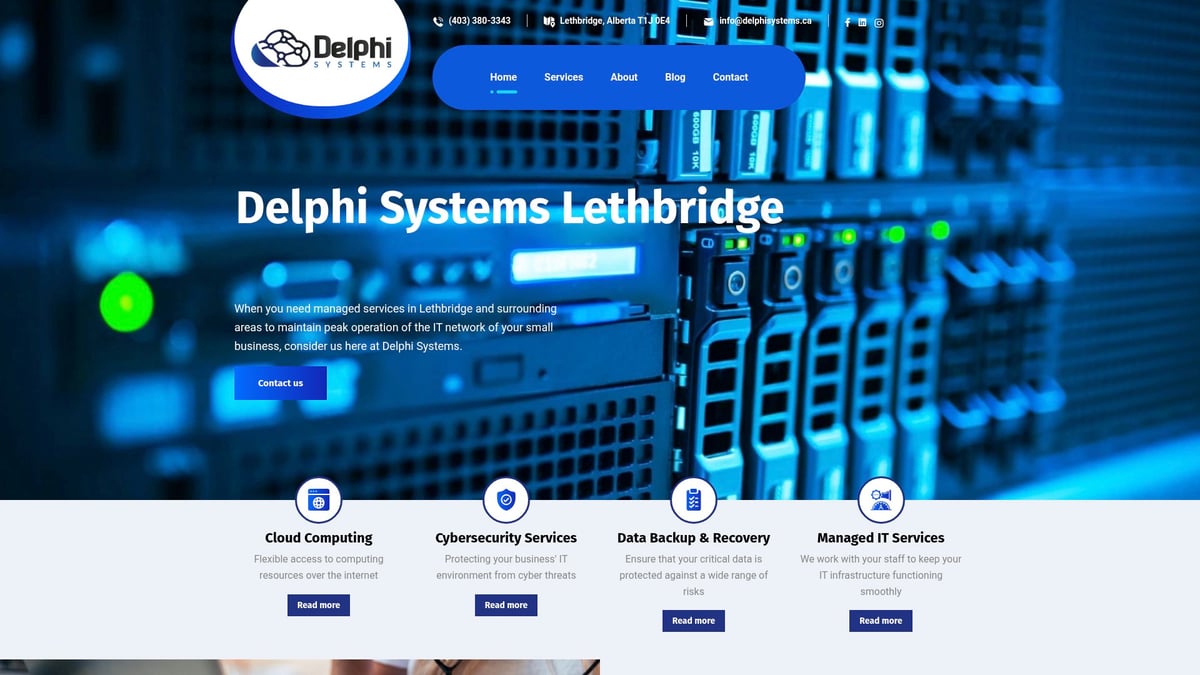
With strong partnerships with Dell, Meraki, Bitdefender, and Microsoft, Delphi Systems Inc. ensures best-in-class technology. Local expertise means compliance, security, and business continuity are always prioritized. Clients praise their prompt, thorough, and proactive approach to it infrastructure managed services.
Benefits and Challenges of IT Infrastructure Managed Services
Understanding the full impact of it infrastructure managed services is crucial for every modern business leader. As organizations face mounting technology demands, managed services help balance opportunity with risk. Let's explore the advantages, common hurdles, and how to measure and future-proof your investment.
Business Benefits and Value Creation
The adoption of it infrastructure managed services brings measurable business value. Companies experience improved uptime, ensuring critical systems remain available for staff and customers. Enhanced network performance boosts productivity and supports seamless collaboration.
Security is a top priority. Managed services deliver multi-layered protection, helping reduce risk exposure. Flat-rate pricing models offer predictable IT costs, which is a significant advantage for budgeting.
A table below summarizes key benefits:
| Benefit | Impact |
|---|---|
| Improved Uptime | Less downtime, greater reliability |
| Enhanced Security | Reduced breach risk |
| Predictable Costs | Easier financial planning |
| Freed Internal Resources | Focus on innovation |
| Accelerated Transformation | Faster digital adoption |
By relying on it infrastructure managed services, internal teams can redirect their efforts toward strategic initiatives and innovation.
Common Challenges and Pitfalls
While it infrastructure managed services offer many advantages, some pitfalls remain. Vendor lock-in is a concern, as switching providers can be complex. Companies may fear loss of internal IT control, especially over mission-critical systems.
Other common challenges include:
- Communication gaps between provider and client
- Misaligned expectations about deliverables
- Transition risks and onboarding complexities
- Overdependence on external expertise
Addressing these issues early ensures a smoother experience with it infrastructure managed services.
Overcoming Myths and Misconceptions
Several misconceptions can cloud decision-making around it infrastructure managed services. One myth is that more tools always mean better control. In reality, tool sprawl leads to complexity and inefficiency.
Another misconception is that cloud solutions are always simpler. Hybrid environments often introduce new challenges. Concerns about rapid software updates causing instability are common, but proactive management practices mitigate these risks.
Key points to remember:
- Fewer, integrated tools often increase visibility
- Cloud and hybrid models require careful planning
- Observability and business outcomes matter most
Understanding these truths helps leaders set realistic expectations with it infrastructure managed services.
Measuring Success: KPIs and Reporting
Evaluating the effectiveness of it infrastructure managed services relies on clear metrics. Key performance indicators (KPIs) include uptime percentage, mean time to resolution, and security incident rates.
Experience-level agreements (XLAs) and user satisfaction scores provide insight into service quality. Regular, transparent reporting builds trust and enables continuous improvement.
Common KPIs to track:
- System uptime
- Incident resolution time
- Number of security breaches
- User satisfaction ratings
Tracking these metrics helps organizations optimize their it infrastructure managed services over time.
Future-Proofing Your IT Infrastructure
To remain competitive, businesses must adapt their it infrastructure managed services to emerging technologies. Embracing AI, automation, and edge computing increases resilience and scalability.
Continual improvement and proactive management enable organizations to meet evolving compliance and security demands. By staying informed and agile, your IT environment remains ready for future growth.
Step-by-Step Guide to Implementing IT Infrastructure Managed Services
Adopting it infrastructure managed services is a transformative journey that requires a structured approach. This guide breaks down the process into actionable steps, ensuring a seamless transition and maximum value for your business.
Step 1: Assess Current Infrastructure and Business Goals
Begin by conducting a thorough IT audit to catalog all assets, configurations, and existing vulnerabilities. This includes servers, network devices, cloud resources, and end-user systems. Use automated tools where possible to ensure accuracy.
Identify inefficiencies, recurring pain points, and any gaps in security or compliance. Engage stakeholders from different departments to gather insights on operational bottlenecks and future needs. Align your findings with the organization’s growth plans and strategic objectives.
A clear understanding of your current state sets the foundation for successful it infrastructure managed services adoption.
Step 2: Define Service Requirements and Success Metrics
List all services required from your it infrastructure managed services provider, such as 24/7 monitoring, data backups, cybersecurity, and incident response. Specify compliance needs, like GDPR or HIPAA, and ensure these are prioritized.
Establish Service Level Agreements (SLAs) and Experience Level Agreements (XLAs) to define expected performance and user satisfaction. Set measurable KPIs, including uptime targets, mean time to resolution, and user feedback scores.
Clarity at this stage ensures alignment between your business goals and the managed services delivered.
Step 3: Evaluate and Select Managed Services Providers
Create a shortlist of potential it infrastructure managed services partners based on technical expertise, industry reputation, and service offerings. Request detailed proposals, demos, and references to assess their capability and cultural fit.
Compare service tiers, pricing models, and contract terms. Pay attention to scalability, transparency, and the provider’s approach to communication and problem-solving. Evaluate their experience with similar business environments and technology stacks.
Selecting the right partner is crucial for maximizing the value of your investment.
Step 4: Plan and Execute Transition
Work with your chosen provider to develop a detailed transition roadmap that includes clear timelines, milestones, and responsibilities. Plan for data migration, system integrations, and minimal disruption to daily operations.
Assign roles to both internal staff and the it infrastructure managed services team to ensure accountability. Communicate upcoming changes and timelines to all stakeholders to foster transparency and buy-in.
A well-orchestrated transition minimizes risks and maintains business continuity.
Step 5: Onboarding and Initial Optimization
Set up monitoring tools, support channels, and escalation protocols as outlined in your contract. Conduct comprehensive system health checks to identify and remediate issues early.
Tailor configurations to align with your security standards and business workflows. Provide targeted training for internal users to ensure they understand new processes and support options.
Early optimization helps unlock the full potential of your it infrastructure managed services investment.
Step 6: Continuous Monitoring, Reporting, and Improvement
Review performance reports and KPIs with your it infrastructure managed services provider on a regular basis. Schedule quarterly business reviews to discuss achievements, challenges, and areas for improvement.
Address feedback from users and stakeholders to refine service delivery. Adjust requirements and configurations as your business evolves or new technologies emerge.
This ongoing collaboration ensures your IT environment remains secure, efficient, and aligned with business objectives.
Step 7: Scaling and Adapting for the Future
Plan for future growth by evaluating new technologies such as AI, edge computing, and advanced automation. Adjust your it infrastructure managed services tiers or add new capabilities as your needs change.
Stay informed about industry trends, compliance updates, and best practices. Foster a strategic partnership with your provider to drive innovation and anticipate emerging threats.
Proactive scaling ensures your IT infrastructure remains resilient and future-ready.
Practical Tips and Resources
- Use a checklist to compare it infrastructure managed services providers.
- Prepare questions covering expertise, SLAs, and local support.
- Reference industry standards like ISO 27001 and NIST for compliance.
- Review resources on MSP selection and best practices for onboarding.
- Regularly revisit your service requirements and KPIs as your business grows.
Investing time in careful planning and ongoing optimization will help you get the most from your it infrastructure managed services partnership.
Now that you’ve explored what it takes to build resilient, secure, and future ready IT infrastructure, you might be wondering how to take the next step for your own business. If you want to focus on what you do best, while experts keep your IT systems running smoothly and securely, we’re here to help. With Delphi Systems Inc., you get tailored managed IT services, proactive support, and peace of mind—all at a predictable monthly fee. Let’s talk about how we can elevate your business technology together.
Call us now

