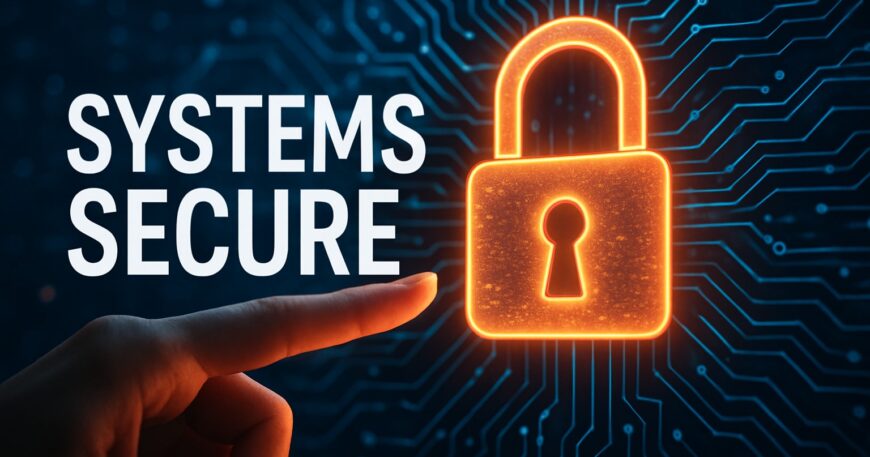
The digital world is evolving at a remarkable pace, and cyber threats in 2026 are more advanced than ever. As businesses and individuals depend increasingly on interconnected technologies, keeping systems secure is no longer optional but essential for survival.
With attacks growing in complexity and frequency, protecting sensitive data and ensuring business continuity demand smart, proactive strategies. This guide presents seven actionable ways to keep your systems secure in 2026, helping you build strong defenses against the latest threats and safeguard your digital environment.
The Evolving Threat Landscape in 2026
The digital world in 2026 is more interconnected than ever. As our reliance on technology grows, so do the risks. Keeping systems secure requires understanding the complex, rapidly changing threat landscape businesses and individuals now face.

Understanding New and Emerging Threats
Cybercriminals have embraced AI-driven attacks and automated hacking tools, making threats more sophisticated and harder to detect. The explosion of IoT devices and widespread remote work have expanded attack surfaces, exposing more entry points. Ransomware tactics now use double extortion and fileless methods, increasing their impact. Supply chain and third-party vendor attacks are on the rise, with high-profile breaches in 2025 and 2026 underscoring their severity. The advancement of quantum computing poses new risks to encryption. Recent statistics show a record number of cyber incidents, emphasizing the need to keep systems secure. For more on these trends, see Supply chain and AI security in the spotlight for cyber leaders in 2026.
Why Traditional Security Measures Are No Longer Enough
Legacy firewalls, antivirus solutions, and static defenses are no longer sufficient to keep systems secure. Traditional perimeter-based security models fail in today's cloud and hybrid environments. Data reveals breaches continue to rise even with basic controls in place. Attackers bypass outdated defenses using advanced tactics and persistent threats. Organizations now require adaptive, layered, and behavior-based security, along with real-time monitoring and rapid response. Case studies have shown that relying on outdated measures can lead to devastating failures, reinforcing the urgency to upgrade security strategies.
The Cost of Insecurity: Impact on Businesses and Individuals
Failing to keep systems secure can have severe financial and reputational costs. In 2025 and 2026, the average cost of a data breach has soared, with some incidents reaching millions. Regulatory fines, loss of customer trust, and damaged brand reputation can cripple organizations. Operational downtime disrupts business continuity, while small businesses face catastrophic losses. Industries like healthcare, finance, and manufacturing are especially vulnerable. Proactive investment in security is essential to avoid these negative outcomes and ensure resilience in a turbulent digital era.
Security as a Continuous Process
Keeping systems secure is not a one-time task but an ongoing process that adapts to changing threats. Continuous monitoring, assessment, and improvement are critical. Employee training and awareness programs play a vital role in reducing risks. Organizations must stay updated with the latest threats and solutions, leveraging frameworks such as NIST, CIS Controls, and ISO 27001. Real-world scenarios show that constant vigilance and commitment to improvement are necessary for lasting protection in today's dynamic environment.
7 Smart Ways To Keep Your Systems Secure In 2026
Keeping your systems secure in 2026 requires more than basic defenses. Cyber threats are evolving, and so must your strategies. Below, we outline seven smart, actionable ways to keep your systems secure, protect sensitive data, and ensure business continuity in a changing digital world.

1. Implement Zero Trust Architecture
Zero Trust Architecture is transforming how organizations keep their systems secure. Its core principle is simple: never trust, always verify. Unlike traditional perimeter security, Zero Trust treats every user, device, and connection as potentially untrusted.
Transitioning to Zero Trust shifts the focus from network boundaries to identity and context. This means that access is granted based on who you are, what you need, and where you are connecting from, making it harder for attackers to move laterally. Micro-segmentation, least privilege access, and continuous authentication are essential components.
To keep your systems secure, start with these steps:
- Inventory all assets and users.
- Map data flows to understand access needs.
- Enforce robust identity management and authentication.
- Apply the principle of least privilege consistently.
According to recent industry research, organizations adopting Zero Trust see up to a 50% reduction in breach risks. For example, a global financial firm enhanced its systems secure posture by segmenting networks and using adaptive authentication, blocking unauthorized access even after credential theft.
Common challenges include legacy system integration and user resistance. Solutions involve phased implementation, strong leadership, and leveraging expert guidance. For a comprehensive roadmap, consult the Implementing a Zero Trust Architecture: High-Level Document from NIST.
By embedding Zero Trust principles, you ensure your systems secure strategy is prepared for future threats.
2. Automate Threat Detection and Response with AI
Artificial intelligence is rapidly becoming the backbone of efforts to keep systems secure. AI and machine learning analyze massive data streams to detect threats and automate responses faster than any human team.
AI-driven tools excel at spotting anomalies, flagging suspicious behavior, and instantly isolating affected systems. This automation is vital for modern environments where threats move quickly. Use cases include detecting phishing attacks, identifying malware, spotting insider threats, and responding to advanced persistent threats.
Recent studies show that organizations using AI for threat detection improve their detection rates by up to 60% and reduce false positives significantly. Automated incident response can cut response times from hours to minutes, crucial for keeping systems secure in real time.
When selecting AI security tools, consider:
- Integration with your existing infrastructure.
- Transparency and explainability of AI decisions.
- Scalability to cover cloud, on-premises, and hybrid systems.
A large healthcare provider leveraged AI to protect its systems secure environment, automatically shutting down malicious activity before patient data was compromised.
However, over-reliance on automation can introduce risks if not regularly reviewed. Human oversight remains essential for interpreting complex situations and refining algorithms.
By combining AI automation with human expertise, you can keep your systems secure and resilient against emerging threats.
3. Enforce Multi-Factor Authentication (MFA) Everywhere
Multi-Factor Authentication is a cornerstone for keeping systems secure in 2026. Relying solely on passwords is no longer sufficient, as credential-based attacks continue to rise.
MFA adds layers of security by requiring users to provide two or more forms of verification. This can include SMS codes, app-based prompts, biometrics, hardware tokens, or adaptive authentication methods. Each factor makes it harder for attackers to gain unauthorized access, protecting your systems secure from compromise.
Research indicates that implementing MFA can prevent over 90% of credential-related breaches. Organizations that rolled out MFA organization-wide have seen dramatic reductions in successful phishing attacks and unauthorized account access.
Best practices for MFA deployment include:
- Mandating MFA for all remote access and privileged accounts.
- Educating users on the importance of MFA.
- Choosing user-friendly authentication methods to encourage adoption.
For example, a mid-sized manufacturing company kept its systems secure by mandating app-based MFA, stopping a targeted phishing campaign in its tracks.
Challenges may arise with user adoption and device compatibility. Address these by offering multiple MFA options and clear support channels.
Making MFA universal across your environment is a critical step in keeping your systems secure against modern threats.
4. Keep Systems and Software Up-to-Date with Automated Patch Management
Unpatched systems remain one of the leading causes of security breaches. In 2026, keeping your systems secure means automating patch management to close vulnerabilities before attackers can exploit them.
Cybercriminals often target known flaws in outdated software. Automated patch management tools help organizations inventory assets, prioritize patches, test updates, deploy fixes, and verify completion efficiently.
The patch management lifecycle includes:
- Identifying all hardware and software assets.
- Assessing vulnerability severity and prioritizing patches.
- Testing updates in a controlled environment.
- Deploying patches organization-wide.
- Verifying successful installation and monitoring for issues.
According to recent data, over 60% of breaches in the past year were linked to unpatched systems. For instance, a missed update led to a ransomware attack at a logistics company, causing significant downtime and financial loss. By contrast, organizations with automated patching kept their systems secure and avoided similar incidents.
To minimize downtime during updates:
- Schedule patches during low-usage periods.
- Use phased rollouts and rollback options.
- Monitor for unexpected system behavior post-update.
Automated patch management is essential for any strategy to keep systems secure, reducing the window of vulnerability and simplifying compliance.
5. Secure the Expanding Internet of Things (IoT) Ecosystem
The proliferation of IoT devices introduces new security challenges. Keeping systems secure in 2026 means addressing risks unique to IoT, such as default credentials, lack of updates, and weak encryption.
Best practices for IoT security include:
- Changing default passwords and disabling unnecessary services.
- Segmenting IoT devices on separate networks from core systems.
- Maintaining a detailed inventory of all connected devices.
- Enabling automated monitoring and logging for unusual activity.
Consider this table summarizing IoT security measures:
| Best Practice | Benefit |
|---|---|
| Change default creds | Prevents easy exploitation |
| Network segmentation | Limits attack impact |
| Device inventory | Enables rapid response |
| Regular updates | Closes known vulnerabilities |
Statistics show IoT-related breaches are rising, especially in industries like healthcare and manufacturing. For example, a hospital kept its systems secure by isolating medical devices and using device attestation, stopping an attempted intrusion.
When selecting IoT vendors, prioritize those offering secure boot, encrypted communications, and long-term support. Ongoing management is vital for keeping your systems secure as the IoT ecosystem expands.
6. Strengthen Data Backup, Recovery, and Business Continuity Planning
Regular, secure backups are crucial for keeping systems secure against ransomware and data loss. The 3-2-1 backup rule—three copies of data, two storage types, one offsite—remains a reliable guideline.
Encrypt all backups and test your restore processes frequently. Cloud-based and offsite backups ensure your systems secure even if primary infrastructure is compromised.
Key elements of a robust backup and business continuity plan:
- Automated, scheduled backups for critical data.
- Encryption at rest and in transit.
- Routine restore drills to verify backup integrity.
- Comprehensive disaster recovery (BC/DR) planning, covering various incident scenarios.
Data shows that organizations with tested backup and recovery strategies have a 90% higher chance of resuming operations quickly after an incident. For example, a city government kept its systems secure and running after a ransomware attack by restoring from clean, recent backups.
Integrate backup and BC/DR into your overall systems secure framework. This reduces downtime, protects reputation, and ensures regulatory compliance.
7. Foster a Security-First Culture Through Ongoing Training and Awareness
Human error is still a leading cause of breaches, making a security-first culture vital for keeping systems secure. Regular security awareness training, including simulated phishing exercises, helps employees recognize and respond to threats.
Integrate security into onboarding, ongoing education, and performance metrics. Statistics show organizations with robust training programs experience up to 70% fewer incidents.
Effective training strategies include:
- Interactive modules and gamification.
- Real-world scenario simulations.
- Measurable outcomes to track improvement.
A global retailer kept its systems secure by rolling out monthly training and rewarding employees for reporting suspicious activity. This fostered vigilance and accountability across the organization.
Measuring training effectiveness and adapting content to new threats ensures your workforce remains the strongest link in your systems secure defense.
Advanced Security Technologies and Trends to Watch in 2026
Staying ahead of cyber threats in 2026 demands an understanding of the most advanced technologies reshaping how organizations keep their systems secure. As cyber risks evolve, so do the tools and strategies needed to defend against them. Let us explore the key trends and innovations that are setting the standard for robust protection in the digital era.

The Rise of Quantum-Resistant Cryptography
Quantum computing is rapidly advancing, and it poses a significant challenge to traditional encryption methods. Current cryptographic algorithms, such as RSA and ECC, could become obsolete once quantum computers reach sufficient power. Organizations striving to keep their systems secure need to monitor the development and adoption of quantum-resistant algorithms.
Progress in NIST’s post-quantum cryptography standardization is ongoing, with early adopters in finance and government sectors already testing new solutions. Preparing for quantum threats means evaluating your encryption landscape and planning migration strategies now. For a deeper dive into how quantum and AI are shaping cybersecurity, see this video on cybersecurity trends in 2026.
Integrating Cybersecurity Mesh Architectures
As organizations become more distributed, cybersecurity mesh architectures are emerging as a flexible way to keep systems secure across hybrid and multi-cloud environments. Cybersecurity mesh allows security controls to be deployed closer to assets, improving threat detection and scalability.
Benefits include easier integration with existing security frameworks, better visibility, and rapid response capabilities. Large enterprises have reported reduced breach impacts and improved resilience after mesh implementation. To maximize the effectiveness of mesh, align its deployment with your unique business needs and ensure continuous monitoring of all network segments.
Privacy-Enhancing Technologies (PETs) and Data Protection
With increasing data privacy regulations and more sensitive data in transit, privacy-enhancing technologies are essential for keeping systems secure. PETs, such as homomorphic encryption, differential privacy, and secure multiparty computation, enable organizations to process and share data without exposing it to unnecessary risk.
These tools are especially valuable in regulated industries like healthcare, finance, and government. Early adopters have seen measurable reductions in data leakage and compliance violations. When evaluating PETs, prioritize ease of integration and scalability to keep pace with evolving privacy requirements.
The Impact of Regulation and Compliance in 2026
Regulatory requirements are now central to how organizations keep their systems secure. Global frameworks like GDPR, CCPA, and the AI Act demand proactive compliance strategies, not just technical controls. Non-compliance can result in severe fines, reputational harm, and loss of market access.
Staying ahead involves ongoing compliance monitoring, regular audits, and adapting policies to new legislation. Organizations that embed compliance into their security roadmap are better positioned to respond to threats and regulatory changes, ensuring business continuity and trust.
Building a Proactive Security Roadmap for the Future
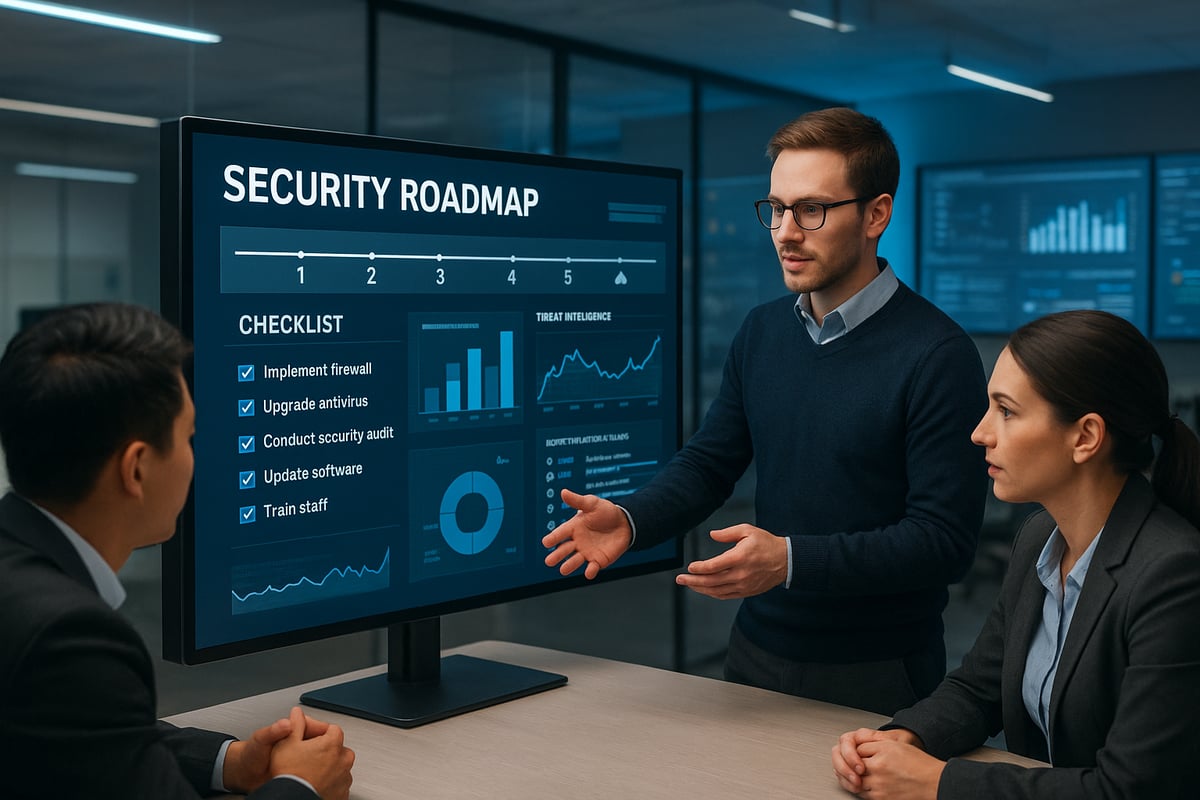
Creating a proactive security roadmap is essential for keeping your systems secure in the face of evolving threats. Rather than relying on static defenses, organizations must regularly assess, prioritize, and adapt their security strategies. This ongoing process ensures systems secure remain resilient and responsive to new risks.
Assessing Your Current Security Posture
Regular security assessments are the foundation of keeping systems secure. Start by conducting detailed audits using frameworks like NIST or CIS Controls. These tools help identify gaps in your defenses and provide a baseline for improvement.
Incorporate third-party penetration testing and vulnerability scans to uncover hidden risks. Many organizations have strengthened their systems secure by acting on insights from these assessments. Schedule these reviews at least annually, and after major changes, to ensure continuous visibility.
Setting Priorities and Allocating Resources
With assessment data in hand, focus on what matters most to keep systems secure. Identify critical assets, map potential risks, and prioritize them based on business impact.
Allocate your cybersecurity budget strategically. Studies show a strong return on investment for layered security initiatives. Balance spending across technology, processes, and people. Gaining executive buy-in and fostering cross-departmental support is key for sustained systems secure improvements.
Continuous Improvement and Staying Ahead of Threats
Securing systems is never a one-time effort. Commit to continuous improvement by monitoring threats, updating defenses, and leveraging external expertise. Managed security services and threat intelligence feeds offer valuable insights to keep your systems secure in a dynamic environment.
Organizations that adapt quickly to emerging technologies and attack vectors thrive. Stay informed through industry groups, ongoing training, and regular reviews. This proactive mindset ensures your systems secure remain strong well into the future.
Now that you’ve seen how rapidly threats are evolving and why a proactive approach is essential, you might be wondering what the next steps look like for your business. Securing your systems in 2026 isn’t just about technology—it’s about having expert support you can trust, so you can focus on what matters most. At Delphi Systems Inc., we help small businesses in Lethbridge stay ahead with managed IT services, robust cybersecurity, and dependable support. If you’re ready to make your business safer and more resilient, let’s have a conversation.
Call us now

