

Data breaches cost businesses millions of dollars annually and can irreparably damage customer trust. For small businesses operating in competitive markets, a single security incident can mean the difference between growth and closure. Understanding data protection in cyber security has become essential for any organization that collects, processes, or stores sensitive information. This comprehensive guide explores the critical elements that safeguard your business data against evolving threats while maintaining operational efficiency.
Understanding the Foundations of Data Protection
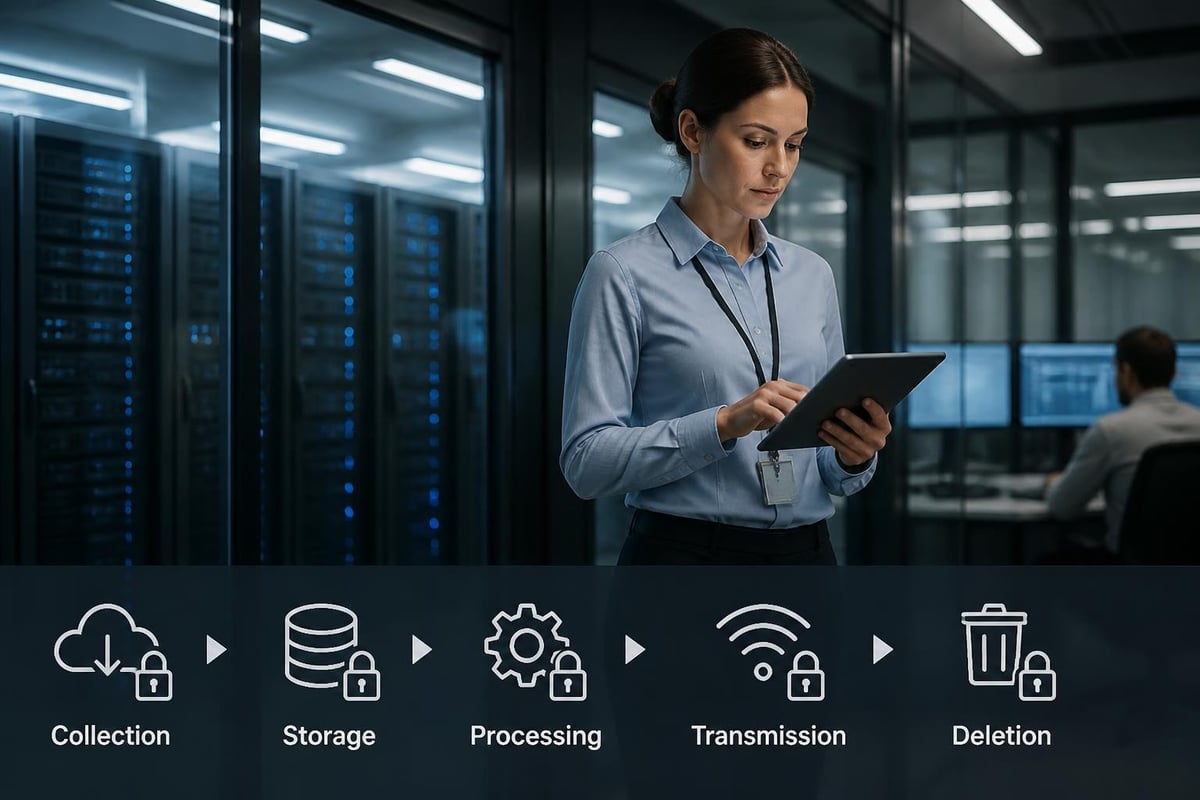
Data protection in cyber security encompasses the strategies, technologies, and practices that prevent unauthorized access, corruption, or theft of digital information. This discipline extends beyond simple password protection to include comprehensive frameworks that address every stage of the data lifecycle.
Core Components of Effective Data Protection
Organizations must consider multiple layers when building their security infrastructure. Encryption converts readable data into coded format that requires specific keys for decryption. Access controls ensure only authorized personnel can view or modify sensitive information. Backup systems create redundant copies that enable recovery after incidents.
The fundamental principles of data protection provide a framework for implementing these safeguards:
- Data minimization: collect only necessary information
- Purpose limitation: use data only for stated objectives
- Storage limitation: retain data only as long as needed
- Integrity and confidentiality: maintain accuracy and restrict access
- Accountability: demonstrate compliance with protection measures
The Evolving Threat Landscape
Cyber threats continue to grow in sophistication and frequency. Ransomware attacks now target specific industries with customized approaches. Phishing schemes use artificial intelligence to create convincing impersonations. Insider threats, whether malicious or accidental, compromise systems from within trusted networks.
Small businesses face unique vulnerabilities because they often lack dedicated security teams yet maintain valuable customer data. Attackers recognize this gap and specifically target organizations with limited resources. Understanding these threats enables businesses to prioritize their defensive measures effectively.
Critical Elements of Cyber Security Data Protection
Implementing robust data protection requires integrating multiple security disciplines into a cohesive strategy. Each element addresses specific vulnerabilities while contributing to overall system resilience.
Network Security and Perimeter Defense
Your network serves as the primary gateway for data transmission and communication. Firewalls monitor incoming and outgoing traffic based on predetermined security rules. Intrusion detection systems identify suspicious activities that may indicate attempted breaches. Virtual private networks encrypt connections for remote workers accessing company resources.
Network segmentation divides infrastructure into isolated zones, limiting the potential spread of compromises. For instance, separating customer databases from general employee networks creates additional barriers against unauthorized access. Regular network monitoring identifies unusual patterns that warrant investigation.
Endpoint Protection and Device Management
Every device connecting to your network represents a potential entry point for threats. Laptops, smartphones, tablets, and desktop computers all require consistent security policies. Antivirus software provides baseline protection against known malware. Endpoint detection and response tools offer advanced capabilities for identifying and neutralizing sophisticated attacks.
| Security Measure | Primary Function | Implementation Priority |
|---|---|---|
| Antivirus Software | Detect and remove malware | High |
| Patch Management | Fix known vulnerabilities | Critical |
| Device Encryption | Protect data on lost/stolen devices | High |
| Mobile Device Management | Enforce policies on smartphones/tablets | Medium |
| Application Whitelisting | Allow only approved programs | Medium |
Device encryption ensures that even if hardware falls into wrong hands, the stored information remains inaccessible without proper credentials. Automatic patch management keeps operating systems and applications current with the latest security updates.
Data Security Strategies for Business Continuity
Effective data protection in cyber security extends beyond preventing breaches to ensuring operational resilience during and after incidents. Businesses must prepare for various scenarios while maintaining service availability.
Backup and Recovery Systems
Regular backups form the cornerstone of business continuity planning. The 3-2-1 backup rule recommends maintaining three copies of data on two different media types with one copy stored offsite. This approach protects against hardware failures, natural disasters, and ransomware attacks.
Automated backup solutions eliminate human error and ensure consistency. Testing recovery procedures validates that backups function correctly when needed. Recovery time objectives and recovery point objectives define acceptable downtime and data loss thresholds for different business functions.
Cloud-based backup services offer several advantages for small businesses:
- Automatic synchronization ensures current data protection
- Geographic redundancy stores copies in multiple locations
- Scalable storage accommodates growing data volumes
- Reduced infrastructure costs eliminate on-premises hardware requirements
- Professional management provides expert oversight

Incident Response Planning
Despite best preventive efforts, organizations must prepare for security incidents. Documented response plans outline specific steps for different scenarios. Incident response teams include representatives from IT, management, legal, and communications departments.
Early detection minimizes damage by enabling swift containment. Forensic analysis identifies attack vectors and affected systems. Communication protocols manage both internal coordination and external notifications to customers, partners, and regulatory authorities.
Compliance and Regulatory Considerations
Data protection regulations impose legal obligations that vary by jurisdiction, industry, and data types. Understanding applicable requirements helps businesses avoid penalties while building customer confidence.
Key Regulatory Frameworks
The General Data Protection Regulation (GDPR) affects any organization handling European Union residents' data. The California Consumer Privacy Act (CCNPA) establishes rights for California residents. Health Insurance Portability and Accountability Act (HIPAA) governs healthcare information. Payment Card Industry Data Security Standard (PCI DSS) applies to credit card processing.
Canadian businesses must comply with the Personal Information Protection and Electronic Documents Act (PIPEDA), which establishes ground rules for collecting, using, and disclosing personal information. Provincial legislation may impose additional requirements depending on operating location.
Implementing Compliance Measures
Compliance begins with comprehensive data inventories that document what information exists, where it resides, who accesses it, and how long it remains stored. Privacy impact assessments evaluate risks associated with data processing activities. The guidance on protecting sensitive personal information offers practical frameworks for maintaining compliance.
Regular audits verify that security controls function as intended and meet regulatory standards. Documentation demonstrates accountability to regulators and stakeholders. Training ensures employees understand their responsibilities regarding data handling.
Access Control and Authentication Methods
Restricting data access to authorized individuals represents a fundamental security principle. Properly configured access controls prevent both external attacks and internal misuse while enabling legitimate business activities.
Authentication Technologies
Password policies establish minimum complexity requirements, mandatory rotation schedules, and prohibitions against reuse. However, passwords alone provide inadequate protection against modern threats. Multi-factor authentication requires additional verification beyond passwords, such as biometric scans, hardware tokens, or one-time codes sent to registered devices.
Single sign-on solutions simplify user experience by allowing one set of credentials to access multiple applications. This centralization facilitates better password management while reducing support requests. However, compromised credentials potentially expose more systems, making strong authentication critical.
Role-Based Access and Privilege Management
Organizations should implement the principle of least privilege, granting users only the permissions necessary for their specific job functions. Role-based access control assigns permissions to defined roles rather than individual users. This approach simplifies administration as employees change positions.
Privileged access management specifically controls administrative accounts with elevated permissions. These high-value targets require additional safeguards:
- Separate credentials for administrative tasks
- Time-limited access grants
- Detailed activity logging
- Regular access reviews
- Just-in-time provisioning
Regular access audits identify dormant accounts, excessive permissions, and violations of separation of duties. Automated tools flag anomalous access patterns that may indicate compromised credentials or insider threats.
Encryption and Data Protection Technologies
Data security relies heavily on encryption to render information unreadable without proper decryption keys. Understanding different encryption methods enables appropriate selection for various use cases.
Encryption at Rest and in Transit
Data at rest includes information stored on hard drives, databases, cloud storage, and backup media. Full-disk encryption protects entire storage volumes. File-level encryption secures specific documents or directories. Database encryption safeguards structured information within management systems.
Data in transit moves across networks between systems or locations. Transport Layer Security (TLS) encrypts web traffic, protecting online transactions and communications. Virtual private networks create encrypted tunnels for remote access. Email encryption prevents unauthorized reading of messages during transmission.
| Encryption Type | Primary Use Case | Strength Consideration |
|---|---|---|
| AES-256 | File and disk encryption | Industry standard, highly secure |
| RSA-2048/4096 | Key exchange, digital signatures | Longer keys provide greater security |
| TLS 1.3 | Web traffic, API communications | Latest version with improved performance |
| PGP/GPG | Email encryption | Requires key management |

Key Management Best Practices
Encryption effectiveness depends entirely on proper key management. Lost keys make data permanently inaccessible. Compromised keys expose encrypted information to unauthorized parties. Key management systems centralize storage, rotation, and access control for encryption keys.
Hardware security modules provide tamper-resistant environments for key generation and storage. Key rotation schedules regularly replace encryption keys to limit exposure from potential compromises. Separation of duties ensures no single individual controls all aspects of key management.
Employee Training and Security Awareness
Technology alone cannot secure data without informed, vigilant users. Human factors contribute to most security incidents, whether through social engineering attacks, configuration errors, or policy violations.
Building Security-Conscious Culture
Effective training programs begin during employee onboarding and continue throughout employment. Initial sessions cover fundamental concepts like password hygiene, phishing recognition, and acceptable use policies. Regular refresher training addresses emerging threats and reinforces core principles.
Simulated phishing campaigns test employee awareness while identifying individuals requiring additional support. These exercises provide valuable metrics for measuring program effectiveness. Recognition programs reward security-conscious behaviors, encouraging positive habits.
Practical Security Guidelines for Daily Operations
Employees need clear, actionable guidance for common scenarios. Clean desk policies prevent visual exposure of sensitive information. Secure disposal procedures ensure proper destruction of documents and media. Mobile device guidelines address working from public locations.
Social engineering awareness helps staff recognize manipulation attempts:
- Verify identities before sharing information
- Question unusual requests, especially those creating urgency
- Confirm changes to payment or account details through known channels
- Report suspicious communications to IT security teams
- Never click links or download attachments from unknown sources
The comprehensive approach to data security emphasizes that technical controls must align with organizational processes and human behaviors to achieve effective protection.
Monitoring, Logging, and Threat Detection
Continuous monitoring provides visibility into network activities, enabling early detection of security incidents. Comprehensive logging creates audit trails for investigating events and demonstrating compliance.
Security Information and Event Management
SIEM systems aggregate logs from multiple sources, including firewalls, servers, applications, and security tools. Correlation engines identify patterns indicating potential threats. Automated alerts notify security teams of suspicious activities requiring investigation.
Baseline behavior profiles establish normal patterns for users, devices, and applications. Deviations trigger alerts for unusual login times, unexpected data access, or abnormal traffic volumes. Machine learning algorithms improve detection accuracy by recognizing subtle indicators that rule-based systems might miss.
Log Management and Retention
Effective logging balances comprehensiveness with storage costs and performance impacts. Critical systems require detailed logging of authentication attempts, configuration changes, and data access. Retention periods must satisfy both operational needs and regulatory requirements.
Centralized log storage prevents tampering and ensures availability during investigations. Regular log reviews identify trends and potential issues before they escalate. Automated analysis tools process high volumes of log data, highlighting entries requiring human attention.
Cloud Security and Hybrid Environments
Modern businesses increasingly rely on cloud services for storage, applications, and infrastructure. Data protection in cyber security must extend across on-premises systems and cloud platforms while maintaining consistent security postures.
Shared Responsibility Model
Cloud providers secure the underlying infrastructure while customers protect their data, applications, and access controls. Understanding this division prevents dangerous assumptions about provider responsibilities. Configuration errors in cloud environments frequently expose data due to misunderstandings about default security settings.
Identity and access management becomes critical when managing cloud resources. Federated authentication extends on-premises directories to cloud services. Cloud access security brokers provide visibility and control over cloud application usage. Encryption should protect data before uploading to cloud storage.
Multi-Cloud and Hybrid Strategies
Organizations often use multiple cloud providers for different services or geographic requirements. This approach requires consistent security policies across platforms. Centralized management tools provide unified visibility and control. The distinctions between data protection and data security become particularly important when navigating different provider models.
Hybrid environments combining on-premises infrastructure with cloud services need secure connectivity. Direct connections or VPNs protect data in transit between environments. Unified backup strategies ensure comprehensive protection regardless of data location.
Third-Party Risk Management
External vendors, service providers, and business partners often require access to systems or data. These relationships introduce risks that demand careful management and oversight.
Vendor Security Assessments
Due diligence processes evaluate potential vendors' security practices before engagement. Security questionnaires gather information about controls, certifications, and incident history. On-site assessments or third-party audits verify claimed capabilities for critical vendors.
Contractual obligations should specify security requirements, including:
- Data handling and protection standards
- Incident notification timeframes
- Right to audit provisions
- Liability and insurance requirements
- Data return or destruction upon contract termination
Ongoing Vendor Monitoring
Vendor risk doesn't end with contract signing. Continuous monitoring tracks vendor security posture through automated tools and periodic reassessments. Industry certifications like SOC 2 or ISO 27001 provide independent validation of security programs.
Access controls limit vendor permissions to only necessary systems and data. Time-bound credentials automatically expire when projects complete. Activity logging monitors vendor actions within your environment.
Emerging Technologies and Future Considerations
Data protection in cyber security continues evolving as new technologies create both opportunities and challenges. Forward-thinking organizations prepare for emerging trends while maintaining current defenses.
Artificial Intelligence and Machine Learning
AI enhances security through improved threat detection, automated response, and predictive analytics. However, attackers also leverage AI to create more sophisticated attacks. Adversarial machine learning attempts to manipulate AI security systems. Organizations must understand both defensive and offensive AI capabilities.
Privacy-preserving techniques like differential privacy and federated learning enable data analysis while protecting individual information. Homomorphic encryption allows computations on encrypted data without decryption. These technologies balance security requirements with operational needs.
Zero Trust Architecture
Traditional perimeter-based security assumes internal networks are trustworthy. Zero trust eliminates this assumption, requiring verification for every access request regardless of source. Implementation involves micro-segmentation, continuous authentication, and strict access controls.
This approach particularly benefits organizations with remote workers, cloud services, and bring-your-own-device policies. The comparison of data protection, security, and privacy highlights how zero trust principles apply across these interrelated domains.
Practical Implementation for Small Businesses
Small businesses face budget and resource constraints that require strategic prioritization. Focusing on fundamental controls delivers significant security improvements without overwhelming costs.
Cost-Effective Security Measures
Managed service providers offer enterprise-grade security capabilities at predictable monthly costs. This model provides access to specialized expertise, advanced tools, and 24/7 monitoring without full-time staff requirements. Fixed-rate fee structures enable accurate budgeting while ensuring comprehensive coverage.
Open-source security tools provide powerful capabilities without licensing fees. Free or low-cost cloud services include basic security features suitable for many small business needs. Employee training delivers exceptional return on investment by reducing human-factor incidents.
Building Incremental Improvements
Security maturity develops through progressive enhancements rather than attempting comprehensive transformation overnight. Initial priorities should address:
- Strong authentication across all systems
- Regular backup with tested recovery procedures
- Patch management for operating systems and applications
- Basic network security with firewalls and segmentation
- Employee awareness training on common threats
Regular assessments identify gaps and guide investment decisions. Metrics track improvement over time, demonstrating progress to stakeholders. Scalable solutions accommodate business growth without requiring replacement.
Protecting business data requires comprehensive strategies that integrate technology, processes, and people into cohesive security programs. Small businesses in Lethbridge and surrounding areas need expert guidance to implement effective data protection in cyber security without diverting focus from core operations. Delphi Systems Inc. delivers managed IT services that maintain peak network operation while securing your infrastructure through proactive monitoring, cybersecurity solutions, and reliable backup systems. Contact us today to discuss how our fixed-rate IT services can strengthen your data protection while increasing productivity.

