

Small businesses increasingly rely on cloud infrastructure to manage operations, store sensitive data, and enable remote work capabilities. As this migration accelerates in 2026, the importance of cyber security on cloud platforms has never been more critical. The shared responsibility model between cloud providers and customers creates unique challenges that require careful planning and implementation. Understanding these security dynamics helps businesses protect their assets while maximizing the benefits of cloud computing.
Understanding the Cloud Security Landscape
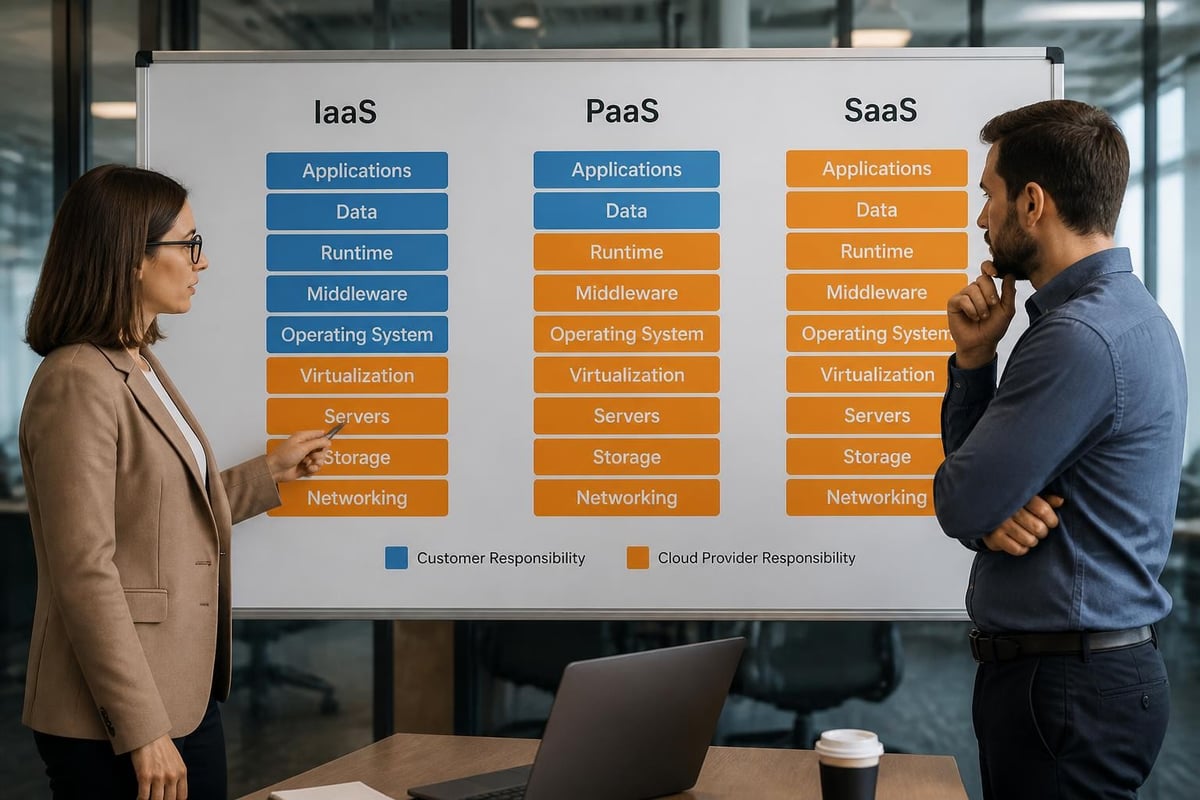
The foundation of cyber security on cloud platforms rests on recognizing that security is a partnership. Cloud providers secure the infrastructure itself, including physical servers, network equipment, and virtualization layers. Your business maintains responsibility for everything built on top of that foundation: data, applications, access controls, and user management.
This shared responsibility framework varies depending on the service model you choose. Infrastructure as a Service (IaaS) requires the most security management on your end, while Software as a Service (SaaS) shifts more responsibility to the provider. Platform as a Service (PaaS) falls somewhere in between, creating a balance that works well for many small businesses.
Key Threat Vectors in Cloud Environments
Modern cloud environments face several distinct security challenges that differ from traditional on-premises infrastructure. Data breaches remain the most financially damaging threat, often resulting from misconfigured storage buckets or inadequate access controls. Account hijacking through stolen credentials poses another significant risk, particularly when multi-factor authentication isn't enforced.
Common cloud security threats include:
- Misconfigured cloud storage exposing sensitive data publicly
- Insufficient identity and access management controls
- Insecure APIs allowing unauthorized system access
- Malicious insiders with elevated privileges
- Advanced persistent threats targeting cloud infrastructure
- Denial of service attacks overwhelming resources
The National Cyber Security Centre provides comprehensive guidance on identifying and mitigating these threats in cloud environments. Their resources help organizations build fundamental security knowledge applicable across various cloud platforms.
Essential Security Controls for Cloud Deployments
Implementing robust cyber security on cloud systems requires a multi-layered approach that addresses vulnerabilities at every level. Identity and access management (IAM) serves as the cornerstone of cloud security, controlling who can access which resources and under what conditions.
Identity and Access Management Best Practices
Proper IAM implementation prevents unauthorized access while enabling legitimate users to perform their duties efficiently. Start by enforcing the principle of least privilege, granting users only the minimum permissions necessary for their roles. Regular access reviews ensure permissions remain appropriate as roles change over time.
Critical IAM components:
- Multi-factor authentication for all user accounts
- Role-based access control mapping permissions to job functions
- Privileged access management for administrative accounts
- Single sign-on integration reducing password fatigue
- Automated provisioning and deprovisioning maintaining current access lists
Strong password policies remain fundamental despite newer authentication methods. Require complex passwords with minimum lengths of 14 characters, and implement password rotation schedules for sensitive accounts. Consider password managers to help employees maintain unique credentials across systems.
Data Protection and Encryption Strategies
Protecting data throughout its lifecycle represents a core element of cyber security on cloud platforms. Encryption serves as your last line of defense, rendering data useless to unauthorized parties even if other controls fail.
| Encryption Type | Use Case | Implementation Consideration |
|---|---|---|
| At-rest encryption | Stored data in databases, file systems | Provider-managed or customer-managed keys |
| In-transit encryption | Data moving between locations | TLS 1.3 minimum standard |
| End-to-end encryption | Sensitive communications | Key management complexity |
| Application-level encryption | Specific data fields | Performance overhead |
Choose encryption key management carefully. Provider-managed keys offer simplicity but less control. Customer-managed keys provide greater security control but require robust key management procedures. Many businesses benefit from a hybrid approach, using provider-managed keys for standard data and customer-managed keys for highly sensitive information.
Network Security and Monitoring
Network segmentation creates security boundaries within cloud environments, limiting the potential impact of security breaches. Virtual private clouds (VPCs) isolate your resources from other tenants, while subnets within VPCs further segment resources based on security requirements and access patterns.
Implementing Effective Network Controls
Firewalls and security groups control traffic flow between network segments and the internet. Configure these controls to deny all traffic by default, then explicitly allow only necessary communications. Document every exception to maintain clear security policies over time.
Network security layers:
- Perimeter security controlling internet-facing access points
- Internal segmentation separating production, development, and testing environments
- Micro-segmentation isolating individual workloads
- DDoS protection defending against volumetric attacks
Continuous monitoring detects suspicious activities before they escalate into serious incidents. The CISA CDM program demonstrates how government agencies approach continuous diagnostics and mitigation in cloud environments, offering valuable lessons for private sector organizations.
Log Management and Security Analytics
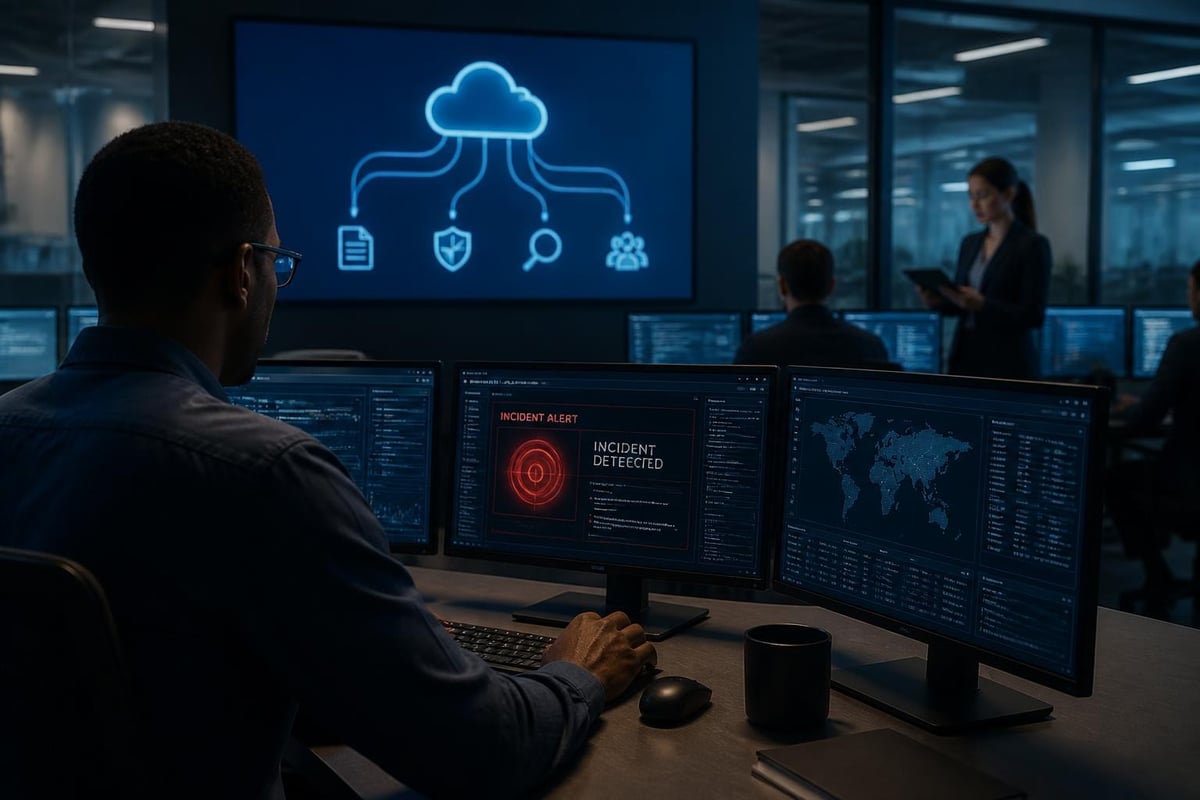
Comprehensive logging captures events across your cloud infrastructure, providing the raw data necessary for threat detection and incident investigation. Enable logging for all cloud services, including compute instances, storage buckets, databases, and network traffic.
Centralize logs in a dedicated security information and event management (SIEM) system. This consolidation enables correlation analysis, identifying patterns that indicate security incidents. Retain logs for sufficient periods to support forensic investigations and compliance requirements, typically 90 days for operational logs and longer for audit logs.
Compliance and Governance Frameworks
Cyber security on cloud platforms must align with regulatory requirements and industry standards applicable to your business. Understanding these frameworks helps structure your security program and demonstrates due diligence to customers and partners.
Common Compliance Standards
Different industries face varying regulatory requirements for data protection and security controls. Healthcare organizations must comply with HIPAA regulations, while financial services firms adhere to PCI DSS for payment card data. General data protection regulations like GDPR apply broadly across industries when handling personal information of EU residents.
| Standard | Focus Area | Key Requirements |
|---|---|---|
| SOC 2 | Service organization controls | Security, availability, confidentiality |
| ISO 27001 | Information security management | Risk assessment, control implementation |
| PCI DSS | Payment card data | Encryption, access control, monitoring |
| HIPAA | Healthcare information | Privacy, security, breach notification |
Cloud providers often maintain certifications for major compliance frameworks, inheriting some compliance requirements through the shared responsibility model. Review your provider's compliance documentation and attestation reports to understand which controls they manage versus those remaining your responsibility.
Security Assessment and Testing
Regular security assessments validate the effectiveness of your cyber security on cloud implementations. Vulnerability scanning identifies known weaknesses in systems and applications, while penetration testing simulates real-world attacks to discover exploitable vulnerabilities.
Schedule assessments quarterly at minimum, with additional testing after significant infrastructure changes. Third-party assessors provide objective evaluation and fresh perspectives on your security posture. The Cloud Compliance Authority offers extensive resources for understanding compliance requirements across various frameworks.
Incident Response and Business Continuity
Despite strong preventive controls, security incidents may still occur. Effective incident response minimizes damage and recovery time when breaches happen. Develop a documented incident response plan specific to cloud environments, addressing unique challenges like shared infrastructure and provider dependencies.
Building an Incident Response Framework
Your incident response plan should define clear roles, responsibilities, and communication protocols. Designate an incident response team with representatives from IT, management, and relevant business units. Establish contact information for cloud provider support teams and external security experts who can assist during major incidents.
Incident response phases:
- Preparation through planning, training, and tool deployment
- Detection and analysis identifying security events requiring response
- Containment limiting incident scope and preventing spread
- Eradication removing threat actors and closing vulnerabilities
- Recovery restoring normal operations safely
- Lessons learned improving processes based on incident insights
Practice your incident response procedures through tabletop exercises and simulated incidents. These drills reveal gaps in plans and build muscle memory for responders, improving performance during actual emergencies.
Backup and Disaster Recovery Planning
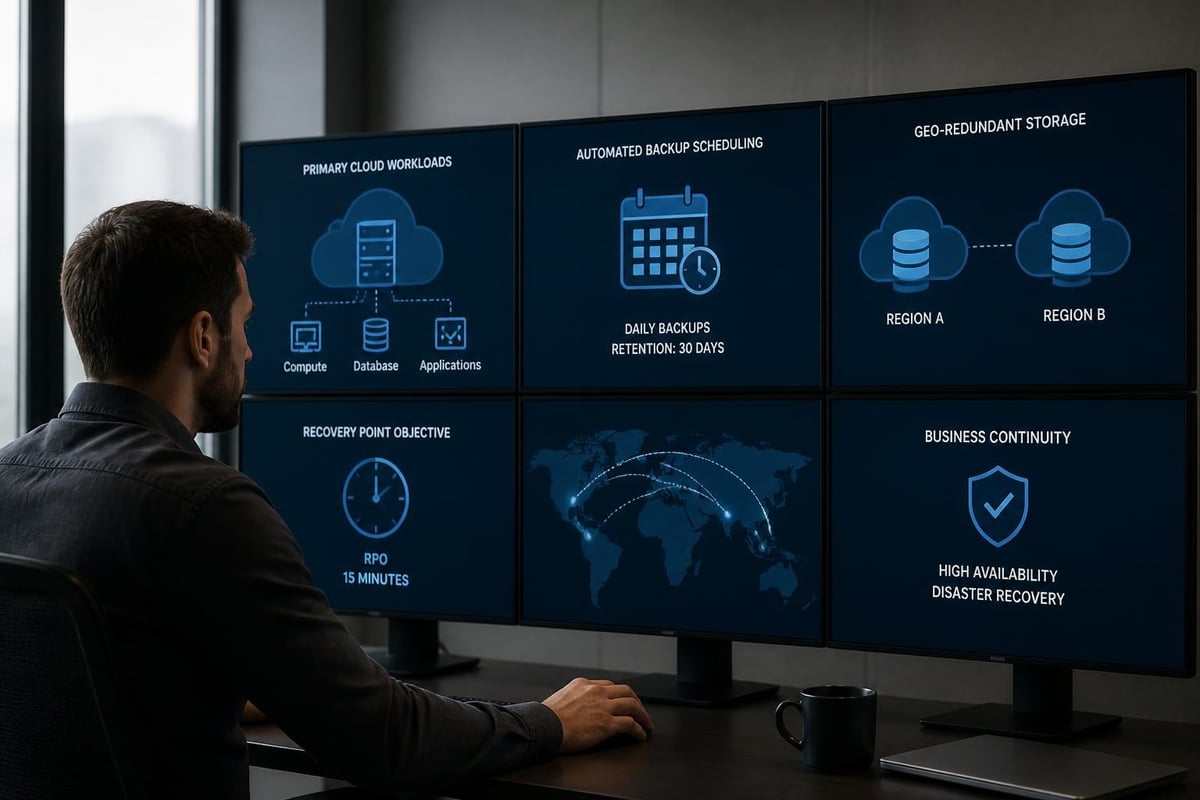
Robust backup strategies protect against data loss from security incidents, system failures, or human errors. Implement the 3-2-1 backup rule: maintain three copies of data, on two different media types, with one copy offsite. Cloud environments simplify offsite storage through geographic redundancy.
Define recovery time objectives (RTO) and recovery point objectives (RPO) for each system based on business impact. Mission-critical systems may require near-zero RTOs with frequent backups, while less critical systems tolerate longer recovery windows. Test backup restoration regularly to verify data integrity and restoration procedures.
Securing Remote Access and Endpoints
Remote work models increase the importance of secure access to cloud resources from diverse locations and devices. Virtual private networks (VPNs) encrypt traffic between remote users and cloud infrastructure, but modern zero-trust architectures offer enhanced security through continuous verification.
Zero Trust Security Principles
Zero trust architecture assumes no user or device is inherently trustworthy, requiring verification for every access request regardless of location. This approach particularly suits cloud environments where traditional network perimeters no longer exist.
Implement device health checks before granting access, verifying endpoint security software is current and no malware is detected. Session-based authentication continuously validates user identity throughout access sessions, immediately revoking access if suspicious behavior occurs. Understanding current threat research helps inform zero trust policy development based on real-world attack patterns.
Employee Training and Security Awareness
Technology controls alone cannot ensure cyber security on cloud platforms. Human factors contribute to most security incidents, making employee training essential for comprehensive protection. Develop ongoing security awareness programs addressing cloud-specific risks and best practices.
Training topics for cloud security:
- Recognizing phishing attempts targeting cloud credentials
- Proper data classification and handling procedures
- Secure collaboration using cloud tools
- Password hygiene and multi-factor authentication
- Reporting suspicious activities promptly
- Understanding personal security responsibilities
Conduct training during onboarding and refresh it quarterly. Use varied formats including videos, interactive modules, and simulated phishing exercises to maintain engagement and reinforce concepts. Track participation and assessment results to identify areas requiring additional focus.
Building a Security-Conscious Culture
Security awareness extends beyond formal training to everyday practices and organizational culture. Leadership must demonstrate commitment to security through resource allocation and personal adherence to policies. Recognize employees who identify security issues, encouraging proactive threat reporting.
Make security guidelines accessible and practical. Overly complex policies reduce compliance, while clear, reasonable requirements enable employees to work securely without excessive friction. Regular communication about emerging threats and security updates keeps security top of mind across the organization.
Vendor Management and Third-Party Risk
Cloud environments typically involve multiple vendors beyond your primary cloud provider. SaaS applications, security tools, and specialized services create an ecosystem requiring coordinated security management. Each vendor connection represents a potential attack vector requiring careful evaluation and monitoring.
Third-Party Security Assessment
Evaluate vendor security practices before granting access to your environment or data. Request security certifications, penetration testing results, and incident response capabilities. Review service level agreements for security commitments and breach notification requirements.
| Assessment Criteria | Key Questions | Risk Level |
|---|---|---|
| Data access scope | What data will the vendor access or store? | High |
| Security certifications | Does the vendor maintain relevant certifications? | Medium |
| Incident response | How quickly will they notify you of breaches? | High |
| Data location | Where is data physically stored and processed? | Medium |
Maintain an inventory of all third-party integrations with your cloud environment. Review this inventory regularly, removing unused integrations that create unnecessary exposure. Consider implementing a vendor risk management platform to track assessments and ongoing monitoring systematically.
Emerging Technologies and Future Considerations
The cyber security on cloud landscape continues evolving with new technologies and threat vectors. Artificial intelligence and machine learning enhance both security capabilities and attack sophistication. Container orchestration platforms like Kubernetes introduce new security considerations around microservices architectures.
Preparing for Quantum Computing Threats
Quantum computing advances threaten current encryption methods, requiring proactive preparation. While large-scale quantum computers capable of breaking modern encryption remain years away, organizations should begin planning migration paths to quantum-resistant cryptography. Monitor developments in post-quantum cryptographic standards and assess which systems require eventual updates.
Serverless computing and edge computing distribute workloads in ways that complicate traditional security approaches. These architectures require rethinking security controls around ephemeral resources and distributed data processing. Stay informed about evolving best practices through resources like the Department of Defense cloud security guidance, which addresses emerging technologies alongside established practices.
Protecting your business in the cloud requires comprehensive strategies addressing technology, processes, and people. As threats evolve and cloud adoption grows, maintaining robust cyber security on cloud platforms becomes increasingly critical for business success. Delphi Systems Inc. helps Lethbridge area businesses navigate these challenges through expert managed IT services, providing the cybersecurity expertise and proactive monitoring small businesses need to operate securely in the cloud. Contact our team to discuss how we can strengthen your cloud security posture while keeping your IT infrastructure running at peak performance.

