


The digital landscape of 2026 presents unprecedented challenges for small businesses managing their technology infrastructure. Network and IT security has evolved from a simple firewall installation into a comprehensive strategy that protects against sophisticated threats targeting every aspect of business operations. For companies in Lethbridge and surrounding areas, understanding the current security landscape is essential for maintaining competitive advantage and protecting customer trust. The convergence of cloud computing, remote work environments, and Internet of Things devices has expanded the attack surface exponentially, requiring businesses to adopt modern security frameworks that go beyond traditional perimeter defense.
Understanding Modern Network and IT Security Threats
Today's threat landscape bears little resemblance to the challenges businesses faced just five years ago. Cybercriminals have industrialized their operations, using automation and artificial intelligence to identify vulnerabilities at scale. Ransomware attacks have become more targeted, with attackers researching organizations thoroughly before launching campaigns designed to maximize disruption and payment likelihood.
The proliferation of Internet of Things devices in business environments has created new entry points for malicious actors. According to recent research on IoT attacks and business security measures, compromised IoT devices now serve as gateways into corporate networks, often bypassing traditional security measures entirely. Smart thermostats, security cameras, and even connected printers can become launching points for broader network infiltration.
The Evolution of Attack Vectors
Network and IT security professionals now track multiple threat categories simultaneously:
- Phishing and social engineering campaigns that target employee credentials through sophisticated impersonation
- Supply chain attacks that compromise trusted vendors to gain access to customer networks
- Zero-day exploits that target previously unknown vulnerabilities before patches become available
- Insider threats from employees who intentionally or accidentally compromise security protocols
- Advanced persistent threats that establish long-term presence within networks to extract data gradually
Understanding these threats requires continuous education and monitoring. Small businesses often lack dedicated security teams, making them attractive targets for attackers who assume defenses will be weaker than enterprise environments.

Implementing Zero Trust Architecture
The traditional security model of trusting everything inside the network perimeter has proven inadequate for modern business environments. Zero Trust Network Access represents a fundamental shift in how organizations approach network and IT security, operating on the principle that no user or device should be trusted by default, regardless of location.
Core Principles of Zero Trust
Zero Trust implementation requires rethinking access controls across the entire infrastructure. Rather than granting broad network access once authentication succeeds, this framework enforces granular permissions based on multiple factors including user identity, device health, location, and requested resource sensitivity.
Verification happens continuously, not just at the initial login. If a user's behavior pattern changes or their device shows signs of compromise, access can be restricted or revoked immediately. This dynamic approach to network and IT security proves particularly valuable for businesses supporting remote workers who connect from various locations and devices.
| Zero Trust Component | Traditional Approach | Zero Trust Approach |
|---|---|---|
| Network Access | Full access after login | Least-privilege, segmented |
| Device Trust | Assumed if domain-joined | Verified continuously |
| User Authentication | Password-based | Multi-factor required |
| Lateral Movement | Generally unrestricted | Blocked by default |
| Monitoring | Perimeter-focused | All traffic inspected |
Implementation requires careful planning and phased deployment. Small businesses should prioritize critical assets first, establishing Zero Trust controls around sensitive data and customer information before expanding to the entire infrastructure.
Essential Network Security Technologies
Modern network and IT security relies on multiple defensive layers working in concert. No single technology provides complete protection, making strategic deployment of complementary solutions essential for comprehensive defense.
Firewall Systems and Intrusion Detection
Next-generation firewalls have evolved far beyond simple port blocking. These systems inspect traffic at the application layer, identifying threats based on behavior patterns rather than just signatures. Network security tools and best practices emphasize the importance of configuring firewalls to deny all traffic by default, permitting only specifically authorized communications.
Intrusion detection and prevention systems monitor network traffic for suspicious patterns, automatically blocking potential threats before they can establish footholds. These systems learn normal network behavior over time, improving their ability to distinguish legitimate activity from reconnaissance or attack attempts.
Endpoint Protection and Response
Every device connecting to the business network represents a potential vulnerability. Comprehensive endpoint protection goes beyond traditional antivirus software to include:
- Real-time threat detection using behavioral analysis
- Application whitelisting to prevent unauthorized software execution
- Device encryption to protect data on lost or stolen equipment
- Patch management systems ensuring timely security updates
- Mobile device management for smartphones and tablets
The convergence of endpoint security with network monitoring creates visibility across the entire infrastructure, enabling security teams to track threats as they move between systems.
Cybersecurity Priorities for 2026
The security landscape continues evolving rapidly, requiring businesses to adapt their strategies to address emerging challenges. Recent analysis of key cybersecurity areas requiring fresh thinking in 2026 highlights critical focus areas that directly impact network and IT security planning.
Addressing the Skills Gap
Organizations worldwide struggle to find qualified security professionals, creating a talent shortage that leaves many businesses vulnerable. Small companies in regional markets like Lethbridge face particular challenges competing for scarce expertise against larger organizations offering premium compensation packages.
Managed service providers bridge this gap by delivering enterprise-grade security capabilities without requiring in-house specialists. This approach provides access to experienced professionals who monitor multiple client environments, gaining broader threat intelligence than any single organization could develop independently.
Vulnerability Management at Scale
The number of discovered vulnerabilities continues growing each year, with thousands of new Common Vulnerabilities and Exposures published monthly. Prioritizing which patches to deploy immediately versus those that can wait requires understanding both vulnerability severity and actual business risk.
Automated vulnerability scanning should run continuously, identifying weaknesses before attackers can exploit them. However, scanning alone provides insufficient protection-organizations must establish processes ensuring critical patches deploy within hours or days of release, not weeks or months.
Network Monitoring and Threat Intelligence
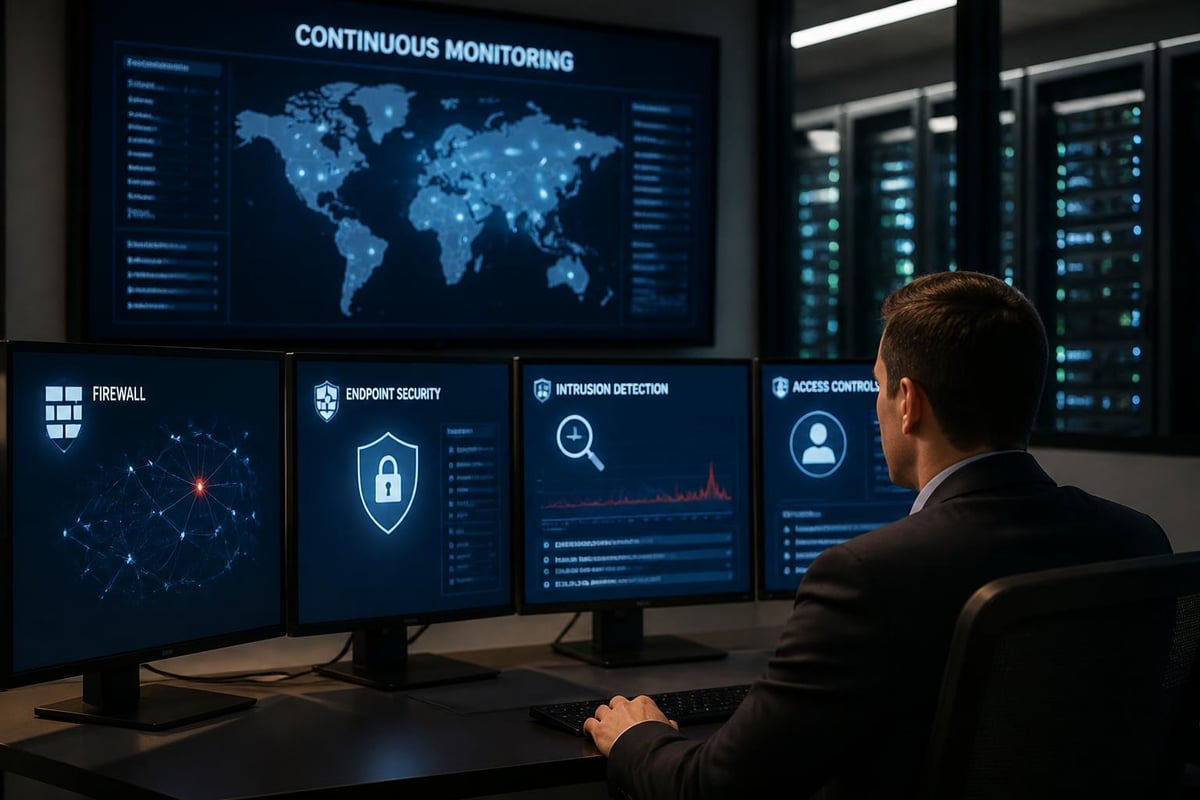
Effective network and IT security depends on visibility. Organizations cannot protect against threats they cannot see, making comprehensive monitoring essential for modern defense strategies.
Real-Time Traffic Analysis
Network monitoring tools track all traffic flowing across business infrastructure, establishing baselines for normal activity patterns. Deviations from these baselines trigger alerts, enabling rapid response to potential security incidents. Modern systems analyze millions of events per second, using machine learning to identify subtle indicators of compromise that human analysts might miss.
Key metrics for network security monitoring include:
- Unusual outbound connections that might indicate command-and-control communication
- Abnormal data transfer volumes suggesting data exfiltration attempts
- Failed authentication patterns that reveal brute-force attacks
- Geographic anomalies such as logins from unexpected countries
- Protocol violations indicating malformed traffic or exploit attempts
Security Information and Event Management
SIEM platforms aggregate logs from across the entire infrastructure, correlating events to identify complex attack patterns. A single failed login attempt means little, but hundreds of failures across multiple accounts within minutes clearly indicates an attack in progress.
These systems provide the forensic data necessary for understanding how breaches occurred and what data attackers accessed. Following a security incident, detailed logs enable reconstruction of attacker actions, supporting both remediation and regulatory compliance requirements.
Best Practices for Small Business Security
Implementing effective network and IT security requires more than just deploying technology. Organizations must establish processes and policies that support security objectives while enabling business operations.
Authentication and Access Control
Strong authentication mechanisms form the foundation of secure access control. Multi-factor authentication should be mandatory for all systems containing sensitive data, combining something users know (passwords), something they have (mobile devices or security tokens), and potentially something they are (biometric verification).
Following network security best practices, organizations should implement role-based access controls that grant employees only the permissions necessary for their specific job functions. When employees change roles or leave the company, access rights must be updated or revoked immediately.
Regular Security Assessments
Network and IT security is not a one-time project but an ongoing process requiring regular evaluation and adjustment. Quarterly security assessments should include:
- Penetration testing to identify exploitable vulnerabilities
- Security configuration reviews ensuring systems follow hardening guidelines
- Access control audits verifying appropriate permission assignments
- Incident response plan testing through tabletop exercises
- Employee security awareness evaluations
Documentation of assessment findings and remediation actions provides evidence of due diligence, important for both regulatory compliance and cyber insurance requirements.

Cloud Security Considerations
The migration to cloud computing has fundamentally transformed network and IT security requirements. Organizations no longer control the physical infrastructure hosting their data, requiring new approaches to security management.
Shared Responsibility Model
Cloud providers secure the infrastructure, but customers remain responsible for protecting their data, applications, and user access. Understanding this division of responsibilities proves critical for maintaining adequate security posture.
| Security Layer | Provider Responsibility | Customer Responsibility |
|---|---|---|
| Physical Security | Complete | None |
| Network Infrastructure | Complete | Configuration |
| Virtualization Platform | Complete | None |
| Operating Systems | Patching availability | Deployment |
| Applications | None | Complete |
| Data | Encryption at rest | Access controls, encryption in use |
| User Access | Authentication infrastructure | Identity management |
Multi-Cloud and Hybrid Environments
Many organizations now operate across multiple cloud platforms while maintaining some on-premises infrastructure. This complexity creates security challenges as different platforms use varying security models and management interfaces.
Consistent security policies must apply regardless of where data resides. Identity federation enables single sign-on across platforms while maintaining centralized access control. Network segmentation ensures that a breach in one environment cannot automatically compromise others.
Data Protection and Privacy
Network and IT security ultimately exists to protect information assets. Organizations must understand what data they collect, where it resides, who can access it, and how it flows through business processes.
Encryption Strategies
Data encryption should apply both at rest and in transit. Files stored on servers, backup systems, and employee devices require encryption to prevent unauthorized access if physical media is lost or stolen. Network traffic must use secure protocols ensuring that intercepted communications reveal nothing to eavesdroppers.
Encryption key management often represents the weakest link in otherwise solid encryption implementations. Keys must be stored separately from encrypted data, with access controls ensuring that only authorized processes can retrieve them. Regular key rotation limits the impact of potential compromises.
Backup and Recovery Planning
Even the most robust network and IT security cannot prevent all possible disasters. Comprehensive backup strategies ensure business continuity following ransomware attacks, hardware failures, or natural disasters.
The 3-2-1 backup rule provides a proven framework: maintain three copies of data, on two different media types, with one copy stored offsite. Cloud backup services simplify offsite storage while providing rapid recovery capabilities.
Regulatory Compliance and Security
Various regulations impose specific security requirements on businesses handling sensitive information. Understanding applicable compliance obligations helps organizations prioritize security investments and avoid potentially devastating penalties.
Common Regulatory Frameworks
Different industries face different regulatory requirements, but common themes emerge across frameworks:
- Data protection requirements mandating encryption and access controls
- Breach notification obligations requiring prompt disclosure of security incidents
- Regular security assessments validating ongoing compliance
- Employee training programs ensuring staff understand security policies
- Audit trail maintenance documenting who accessed what data and when
Canadian businesses must comply with privacy regulations governing personal information handling, requiring appropriate safeguards against unauthorized access and disclosure.
Documentation and Audit Preparation
Demonstrating compliance requires maintaining detailed documentation of security policies, procedures, and controls. Network and IT security assessments should generate reports showing how current implementations satisfy regulatory requirements.
Regular internal audits help identify gaps before external auditors discover them. These reviews should examine technical controls, policy compliance, and employee adherence to security procedures.
Employee Training and Security Culture
Technology alone cannot secure an organization. Employees make decisions every day that either strengthen or undermine network and IT security, making security awareness training essential for comprehensive protection.
Developing Security Awareness
Effective training programs go beyond annual checkbox compliance exercises to create genuine security awareness. Employees should understand:
- How to recognize phishing emails and suspicious communications
- Why strong, unique passwords matter for each account
- The risks of using unauthorized applications or devices
- Proper procedures for handling sensitive information
- Who to contact when security incidents occur
Simulated phishing campaigns test employee vigilance while providing teaching opportunities. Employees who click on test phishing links receive immediate training explaining what made the message suspicious.
Building Security Into Business Processes
Security works best when integrated naturally into daily workflows rather than imposed as burdensome additional steps. Processes should make secure choices the default option requiring no extra effort, while insecure shortcuts require conscious decisions to bypass protections.
For example, automatic encryption of email attachments containing sensitive data removes the burden from employees to remember when encryption is necessary. Similarly, single sign-on reduces password fatigue while improving security through centralized access control.
Emerging Technologies and Future Trends
The network and IT security landscape continues evolving as new technologies create both opportunities and challenges. Understanding emerging trends helps organizations prepare for future requirements.
Artificial Intelligence in Security
AI-powered security tools analyze vast datasets to identify threats that traditional signature-based systems miss. Machine learning models detect subtle anomalies indicating compromise, while automated response systems contain threats before human analysts can investigate.
However, attackers also leverage AI to enhance their capabilities, creating more sophisticated phishing campaigns and automating reconnaissance activities. The evolving landscape of network security reflects this ongoing arms race between defensive and offensive AI applications.
Post-Quantum Cryptography
The development of quantum computers threatens current encryption standards, potentially rendering today's secure communications vulnerable to future decryption. Organizations must begin planning transitions to quantum-resistant cryptographic algorithms, even though practical quantum computers remain years away.
Managed Security Services Benefits
Many small businesses lack the resources to implement and maintain comprehensive network and IT security programs internally. Managed security service providers deliver enterprise-grade protection at predictable costs, enabling organizations to focus on core business activities.
Advantages of Outsourced Security
Professional security management provides several key benefits:
- 24/7 monitoring and response catching threats outside business hours
- Access to specialized expertise across multiple security domains
- Threat intelligence sharing benefiting from insights across many client environments
- Predictable costs through fixed-rate fee structures
- Scalability adapting protection as business needs evolve
Rather than attempting to build security capabilities from scratch, businesses can leverage providers' existing infrastructure and expertise, achieving better protection at lower total cost.
Selecting the Right Security Partner
Choosing a managed security provider requires evaluating both technical capabilities and business alignment. The provider should demonstrate experience with similar organizations, understand industry-specific compliance requirements, and communicate clearly about security posture and ongoing threats.
References and case studies showing successful security program implementations provide valuable insights into provider capabilities. Response time guarantees and service level agreements establish clear expectations for support quality.
Protecting business networks and IT infrastructure requires comprehensive strategies addressing technology, processes, and people. The security challenges facing small businesses in 2026 demand expertise and resources that few organizations can develop independently. Delphi Systems Inc. delivers complete managed IT services throughout Lethbridge and surrounding areas, providing the network monitoring, cybersecurity, and IT support that keep businesses secure and productive. With fixed-rate pricing and proven expertise maintaining peak network performance, Delphi Systems enables you to focus on growing your business while experts handle your security infrastructure.

