

Small businesses across Lethbridge and surrounding areas are increasingly migrating their operations to cloud platforms, drawn by promises of scalability, cost savings, and operational flexibility. However, this digital transformation brings a complex landscape of vulnerabilities that many organizations struggle to understand and address. As companies entrust sensitive business data, customer information, and critical applications to cloud environments, they face an evolving array of threats that can compromise operations, damage reputations, and result in significant financial losses. Understanding these risks is the first step toward building a resilient security posture that protects business continuity.
The Expanding Threat Landscape in Cloud Environments
Cloud computing security threats have grown more sophisticated and diverse as cybercriminals develop new tactics to exploit vulnerabilities in cloud infrastructure. Unlike traditional on-premises systems where businesses maintain direct control over physical security, cloud environments introduce a shared responsibility model that can create confusion about who manages which security aspects.
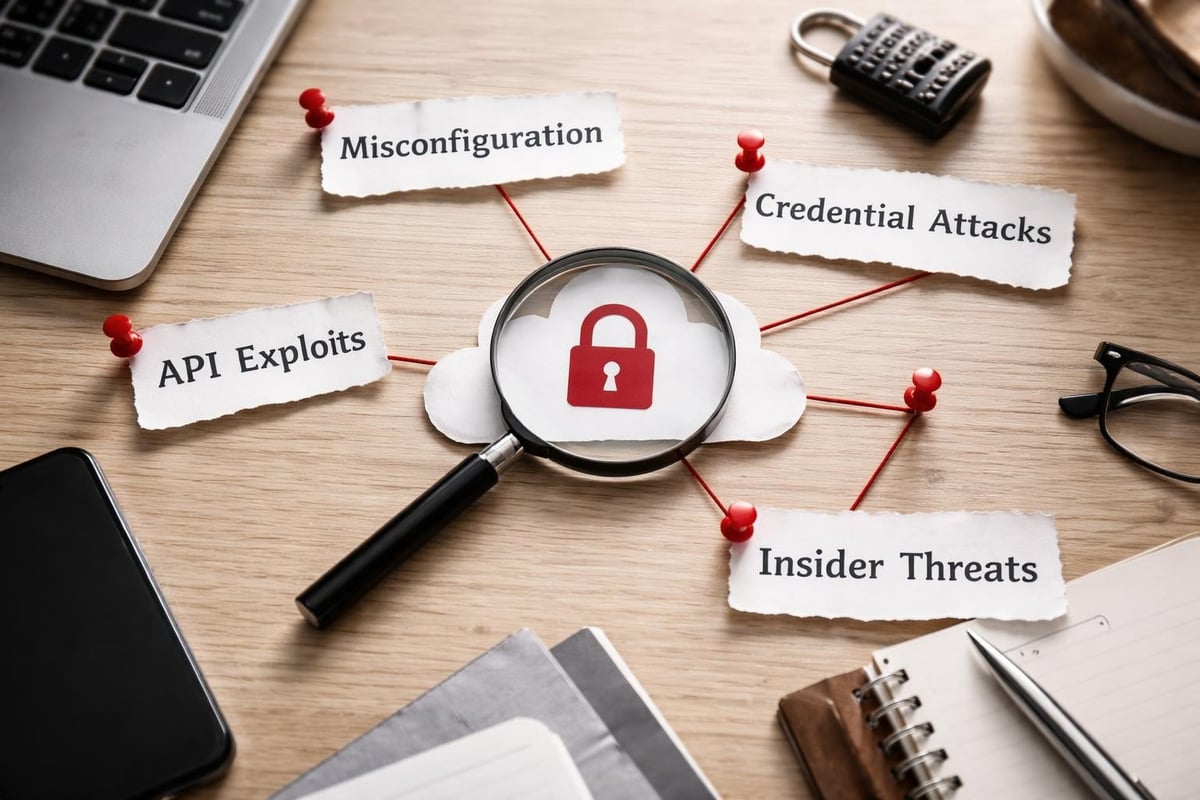
The most prevalent categories of threats include:
- Data breaches resulting from misconfigured storage buckets and access controls
- Account hijacking through credential theft and phishing campaigns
- Insider threats from current or former employees with elevated privileges
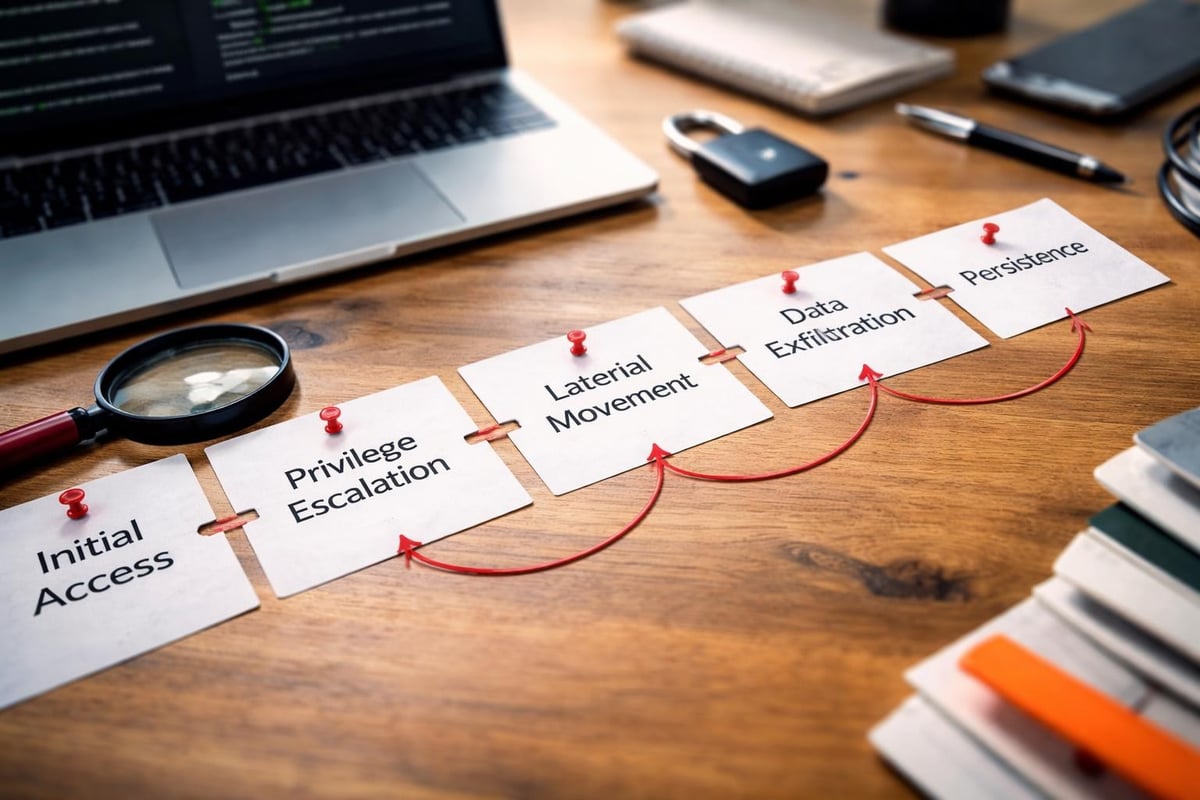
- Advanced persistent threats that establish long-term access to cloud resources
- Distributed denial-of-service attacks targeting cloud infrastructure
According to research on cloud computing security risks, organizations often underestimate the complexity of securing multi-tenant environments where multiple customers share underlying infrastructure. This shared architecture creates unique vulnerabilities that differ substantially from traditional IT security models.
Misconfiguration: The Leading Cause of Exposure
Misconfigurations represent the single largest category of cloud computing security threats facing organizations today. When IT teams incorrectly configure security settings, storage permissions, or network access controls, they inadvertently create pathways for unauthorized access to sensitive information.
Common misconfiguration scenarios include:
- Public storage buckets containing confidential business records or customer data
- Overly permissive identity and access management policies granting excessive privileges
- Disabled encryption for data at rest or in transit
- Open network ports exposing management interfaces to the internet
- Inadequate logging and monitoring preventing detection of suspicious activities
The challenge intensifies because cloud platforms offer hundreds of configuration options across multiple services. Small businesses without dedicated cloud security expertise often lack the knowledge to properly secure these complex environments. Understanding vulnerabilities in cloud computing requires continuous assessment and validation of security configurations.
Data Security and Privacy Challenges
Maintaining control over sensitive information represents a fundamental concern when migrating to cloud platforms. Cloud computing security threats targeting data include unauthorized access, accidental deletion, ransomware encryption, and regulatory compliance violations.
| Threat Type | Business Impact | Prevention Strategy |
|---|---|---|
| Data Loss | Permanent loss of critical records | Regular backups, version control |
| Data Leakage | Competitive disadvantage, regulatory fines | Encryption, DLP solutions |
| Unauthorized Access | Compliance violations, privacy breaches | Multi-factor authentication, least privilege |
| Ransomware | Operational disruption, financial loss | Immutable backups, network segmentation |
Encryption and Access Control
Protecting data requires a multi-layered approach combining encryption, access management, and monitoring. Encryption ensures that even if unauthorized parties access storage systems, they cannot read the information without proper decryption keys. However, many organizations fail to implement encryption comprehensively across all data states.
Critical encryption requirements include:
- Encryption at rest for all stored data using strong algorithms
- Encryption in transit using TLS protocols for data moving between systems
- Key management systems separating encryption keys from encrypted data
- Application-level encryption for highly sensitive information
Access control mechanisms determine who can view, modify, or delete information within cloud environments. Role-based access control (RBAC) assigns permissions based on job functions, ensuring employees access only the resources necessary for their responsibilities. Regular access reviews identify and remove unnecessary permissions that accumulate over time.
Identity and Authentication Vulnerabilities
Compromised credentials provide attackers with legitimate access to cloud resources, allowing them to bypass many security controls. Cloud computing security threats targeting authentication systems include password attacks, phishing campaigns, and session hijacking.
The shared responsibility model in cloud security places authentication and access management squarely in the customer's domain, making proper identity security essential for protecting cloud assets.
Multi-Factor Authentication and Privileged Access
Multi-factor authentication (MFA) adds critical protection by requiring users to provide multiple forms of verification before accessing cloud systems. Even if attackers obtain passwords through phishing or data breaches, they cannot complete authentication without the second factor.
Organizations should prioritize MFA implementation for:
- Administrative accounts with elevated privileges
- Remote access to cloud management consoles
- Access to systems containing sensitive business data
- Service accounts used by applications and automation tools
Privileged access management (PAM) solutions provide additional controls for accounts with administrative permissions. These tools enforce just-in-time access provisioning, session recording, and automated credential rotation to minimize the window of opportunity for credential misuse.

API Security and Application-Layer Threats
Application programming interfaces (APIs) enable communication between cloud services and applications, but they also introduce significant security challenges. Cloud computing security threats targeting APIs include injection attacks, broken authentication, excessive data exposure, and insufficient rate limiting.
Modern cloud architectures rely heavily on APIs for service integration, making API security crucial for overall platform protection. Attackers exploit API vulnerabilities to extract data, modify configurations, or disrupt service availability.
Common API Vulnerabilities
Organizations must address several categories of API weaknesses to maintain secure cloud operations:
- Broken object-level authorization allowing users to access resources belonging to other accounts
- Broken authentication enabling attackers to assume legitimate user identities
- Excessive data exposure returning more information than necessary in API responses
- Lack of resources and rate limiting permitting abuse and denial-of-service attacks
- Security misconfiguration exposing sensitive endpoints or using default credentials
Regular API security testing identifies vulnerabilities before attackers can exploit them. This includes penetration testing, fuzzing, and automated scanning for common weaknesses. API gateways provide centralized security enforcement for authentication, authorization, and rate limiting across multiple services.
Insider Threats and Third-Party Risks
Not all cloud computing security threats originate from external attackers. Insider threats involving current or former employees, contractors, or business partners represent a significant category of risk that organizations often overlook until an incident occurs.
Insider threats manifest in several forms:
- Malicious insiders intentionally stealing or sabotaging data
- Negligent employees accidentally exposing information through policy violations
- Compromised accounts controlled by external attackers masquerading as legitimate users
- Third-party vendors with excessive access to cloud resources
| Risk Category | Example Scenario | Mitigation Approach |
|---|---|---|
| Malicious Insider | Employee downloads customer database before resignation | User behavior analytics, data loss prevention |
| Negligent User | Administrator accidentally deletes production database | Change management, backup verification |
| Compromised Account | Attacker uses stolen credentials to access cloud console | Anomaly detection, geo-fencing |
| Vendor Risk | Third-party contractor misconfigures security settings | Vendor assessment, limited access scope |
Monitoring and Behavioral Analysis
Detecting insider threats requires continuous monitoring of user activities and identifying deviations from normal behavior patterns. User and entity behavior analytics (UEBA) solutions establish baselines for typical activities and alert security teams when anomalies occur.
Effective insider threat programs combine technical controls with clear policies, employee training, and incident response procedures. Regular access reviews ensure that employees retain only the permissions necessary for current responsibilities, especially after role changes or project completions.
Advanced Persistent Threats and Nation-State Actors
Sophisticated threat actors, including state-sponsored groups, target cloud infrastructure to establish long-term access for espionage, intellectual property theft, or future attack campaigns. These advanced persistent threats (APTs) use multiple techniques to infiltrate networks, evade detection, and maintain persistence over extended periods.
Research on espionage ecosystems reveals how nation-state actors develop specialized tools and tactics specifically designed to compromise cloud environments. These groups possess resources and expertise far exceeding typical cybercriminals, making them particularly dangerous adversaries.
Detection and Response Strategies
Organizations facing cloud computing security threats from sophisticated actors must implement comprehensive detection and response capabilities. Traditional signature-based security tools often fail to identify novel attack techniques used by APT groups.
Advanced detection requirements include:
- Behavioral analytics identifying subtle deviations from normal operations
- Threat intelligence integration providing context about known adversary tactics
- Network traffic analysis detecting command-and-control communications
- Endpoint detection and response monitoring cloud workloads and virtual machines
- Security information and event management aggregating data across multiple sources
Incident response planning ensures organizations can quickly contain and remediate security breaches when they occur. Response plans should address cloud-specific scenarios including account compromise, data exfiltration, and resource hijacking for cryptocurrency mining.
Compliance and Regulatory Considerations
Cloud computing security threats extend beyond technical vulnerabilities to encompass compliance and regulatory risks. Organizations operating in regulated industries must ensure their cloud deployments meet specific security and privacy requirements.
Common regulatory frameworks affecting cloud security include:
- Health Insurance Portability and Accountability Act (HIPAA) for healthcare information
- Payment Card Industry Data Security Standard (PCI DSS) for payment processing
- General Data Protection Regulation (GDPR) for European customer data
- Canadian privacy legislation including PIPEDA for personal information
Compliance violations resulting from inadequate cloud security can trigger substantial fines, legal liabilities, and reputational damage. Small businesses must understand which regulations apply to their operations and implement appropriate controls to maintain compliance.
Security Auditing and Documentation
Regular security audits verify that cloud configurations align with compliance requirements and internal security policies. These assessments identify gaps between current practices and regulatory expectations, allowing organizations to remediate issues before regulators discover them.
Documentation requirements for compliance include:
- Security policies and procedures governing cloud resource usage
- Access control matrices defining who can access which systems
- Incident response plans addressing security breach scenarios
- Data classification schemes identifying sensitive information categories
- Vendor management procedures for third-party service providers
Building Resilient Cloud Security Programs
Addressing cloud computing security threats requires comprehensive programs combining technology, processes, and people. Organizations should adopt defense-in-depth strategies implementing multiple layers of security controls to protect against various attack vectors.
Essential Program Components
Technology foundations:
- Next-generation firewalls and network segmentation
- Cloud security posture management (CSPM) tools
- Identity and access management platforms
- Security information and event management systems
- Data loss prevention solutions
Process requirements:
- Change management procedures for configuration modifications
- Vulnerability management programs addressing identified weaknesses
- Patch management ensuring timely security updates
- Backup and recovery processes protecting against data loss
- Incident response playbooks guiding breach response activities
People factors:
- Security awareness training educating employees about threats
- Specialized cloud security expertise through hiring or partnerships
- Clear roles and responsibilities for security functions
- Executive support for security initiatives and investments
Small businesses often lack the internal resources to build and maintain comprehensive cloud security programs independently. Partnering with experienced managed service providers gives organizations access to specialized expertise, advanced security tools, and 24/7 monitoring capabilities without the overhead of building internal teams.
Continuous Monitoring and Improvement
Cloud computing security threats evolve continuously as attackers develop new techniques and exploit emerging vulnerabilities. Static security measures quickly become obsolete, requiring organizations to adopt continuous monitoring and improvement approaches.
Continuous security processes include:
- Real-time monitoring of cloud resources for suspicious activities
- Regular vulnerability scanning identifying new weaknesses
- Security metrics tracking program effectiveness over time
- Threat intelligence integration providing awareness of emerging risks
- Periodic security assessments validating control effectiveness
Organizations should establish security metrics measuring both technical controls and program maturity. Key performance indicators might include mean time to detect security incidents, percentage of resources with current security patches, and compliance audit findings.
Understanding the risks of cloud computing helps organizations prioritize security investments based on actual threat landscapes rather than assumptions. Regular risk assessments identify which threats pose the greatest danger to specific business operations, allowing focused resource allocation.
Security Automation and Orchestration
Automation reduces the manual effort required to maintain cloud security while improving consistency and response times. Security orchestration platforms automate routine tasks including:
- Responding to common security alerts with predefined actions
- Enforcing security policies across multiple cloud platforms
- Generating compliance reports aggregating data from various sources
- Remediating known vulnerabilities through automated patching
- Isolating compromised resources to prevent lateral movement
Organizations implementing security automation should start with high-volume, low-complexity tasks before expanding to more sophisticated use cases. This incremental approach allows teams to build confidence in automated systems while maintaining human oversight for critical decisions.
Emerging Threats and Future Considerations
The cloud security landscape continues evolving as new technologies, threat actors, and attack techniques emerge. Cloud computing security threats in 2026 reflect trends including increased supply chain attacks, AI-powered threats, and expanding attack surfaces from hybrid cloud deployments.
Emerging threat categories:
- Machine learning poisoning affecting AI-driven security tools
- Quantum computing threats to current encryption standards
- Container and Kubernetes-specific vulnerabilities
- Serverless architecture security gaps
- Edge computing security challenges
Organizations should monitor security trends and adjust their programs accordingly. Staying informed about cloud security challenges enables proactive adaptation rather than reactive scrambling when new threats emerge.
Protecting cloud infrastructure from evolving security threats requires expertise, advanced tools, and constant vigilance that many small businesses struggle to maintain independently. Delphi Systems Inc. provides comprehensive managed IT services specifically designed to help Lethbridge area businesses secure their cloud environments while focusing on core operations. With fixed-rate pricing and specialized expertise in cloud security, cybersecurity, and network monitoring, we help organizations build resilient infrastructure that protects against today's threats while adapting to tomorrow's challenges. Contact Delphi Systems Inc. to discuss how our managed services can strengthen your cloud security posture and safeguard your business operations.

